
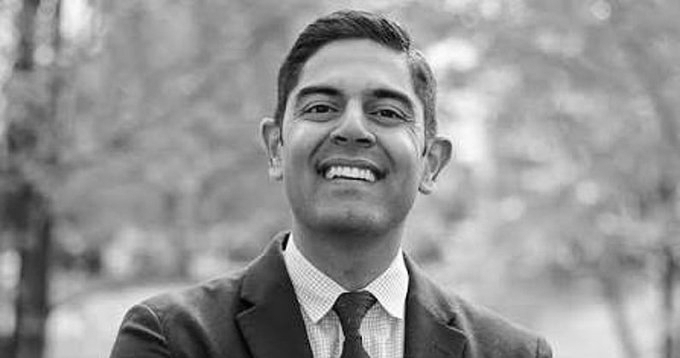
Ranjeev Puri Eyes Historic Bid to Become Michigan’s First Indian-American House Speaker
Indian-origin lawmaker Ranjeev Puri is seeking to make history by becoming the first Indian-American Speaker of a state House of Representatives in the United States. His bid depends on the November 3 elections, when Democrats will attempt to wrest control of Michigan’s House from Republicans.
Puri, 42, currently serves as the Michigan House Democratic Leader and is seeking re-election from the state’s 24th House District. He faces Republican candidate Allison Kay Fuller. If he retains his seat and Democrats win a majority, Puri could be positioned to become Speaker of the 110-member chamber, currently led by Republican Matt Hall.
Born to Punjabi immigrant parents, Puri made history in 2020 by becoming the first Sikh American elected to Michigan’s state legislature. He is serving his third term and became Democratic caucus leader in January 2025.
US Congresswoman Haley Stevens has publicly backed his potential elevation, expressing confidence that Democrats can flip the state House and make Puri the country’s first Indian-American state House Speaker. Stevens is set to leave Congress after failing to secure the Democratic nomination for the US Senate race.
Before entering politics, Puri worked in Michigan’s automotive industry, including business and technology initiatives at Fiat Chrysler. He studied economics at Ohio State University and earned an MBA from the University of Chicago Booth School of Business in 2014. His interest in politics grew through his involvement in Barack Obama’s presidential campaigns in 2008 and 2012.
As a lawmaker, Puri has focused on gun safety, infrastructure and economic development. He also chaired the House Appropriations Subcommittee on Transportation, contributing to work on Michigan’s transportation budget.
Puri’s potential elevation would mark a milestone for Indian-American representation in state-level political leadership. Michigan has an estimated 127,000 residents of Indian origin, accounting for around 1.27 per cent of its population, according to the Indian American Voter Atlas.