
Ramayana Part 1: Balancing Mythology, Technology And Spirituality
Walking into a theatre to watch the Ramayana comes with expectations beyond entertainment. Audiences look forward to experiencing its devotional, spiritual and philosophical dimensions. Unfortunately, that is where the film leaves something to be desired.
The story is familiar to almost everyone. Therefore, the real challenge is presenting it in a way that makes audiences experience it afresh. The director deserves appreciation for keeping audiences engaged for nearly three hours while covering only around 20–30 per cent of the larger narrative.
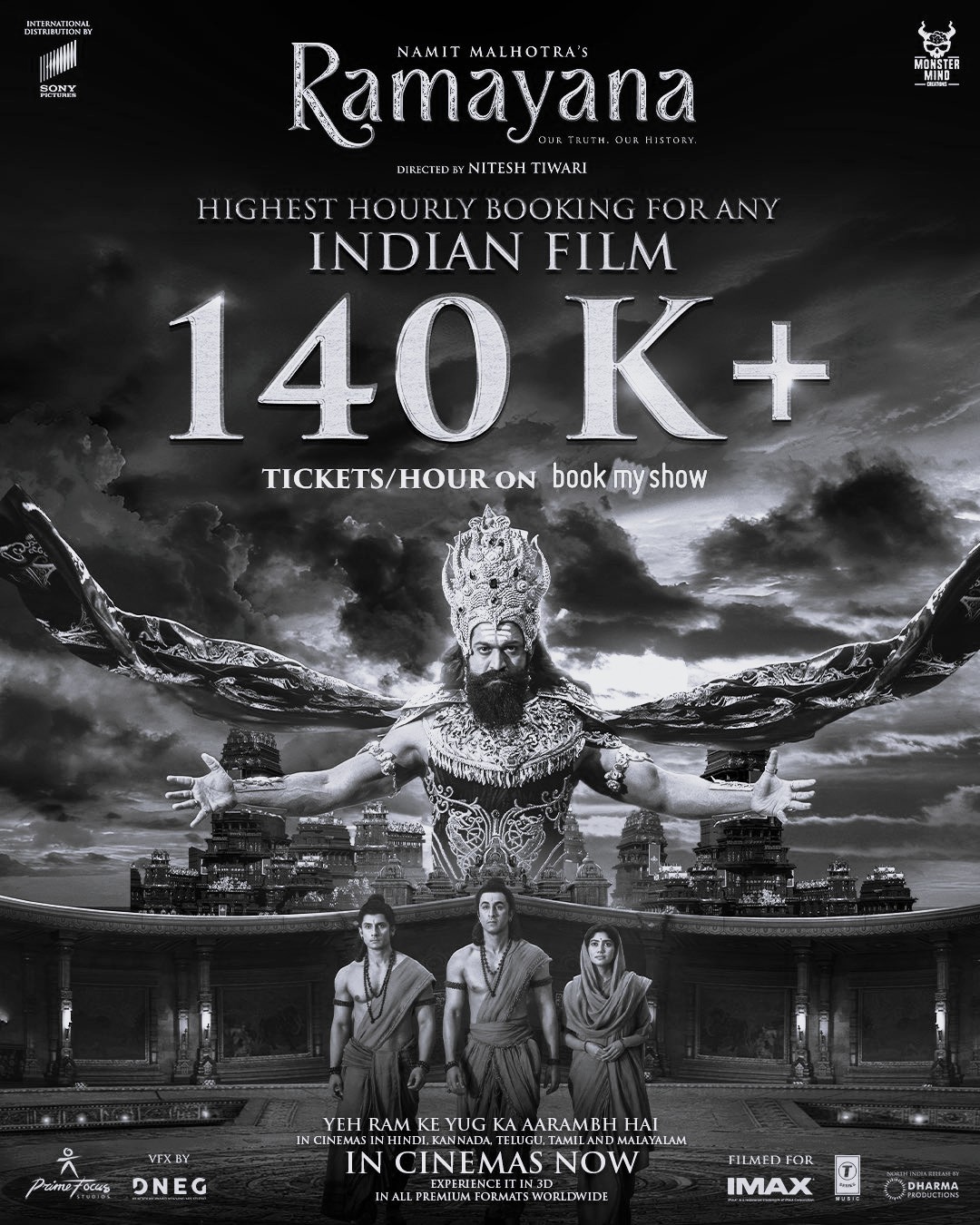
The visual presentation is undoubtedly impressive. Action sequences involving Thataki, forest demons, the mighty Kumbhakarna and the confrontation between Ravana and Jatayu around the Pushpaka Vimana offer spectacular moments. Yash as Ravana and Ranbir Kapoor as Rama bring impressive screen presence. The portrayal of Ravana's oppressed community also introduces an interesting perspective. However, Ravana deserved greater intellectual and poetic depth to establish his stature as a scholar.
While cinematography and sound design are technically sound, several elevation shots remind audiences of Baahubali, Brahmastra, KGF and Pushpa. Extensive animation occasionally makes characters appear unnatural. Costumes, sets and production design look grand but do not always add meaning to the narrative. Music, too, needed greater poetic and devotional depth. Personally, I found Adipurush's songs more memorable.
One achievement deserving special appreciation is Brahma AI's lip-synchronisation technology. It makes dubbed versions remarkably natural, allowing characters to appear as though they are speaking the audience's language. This is a significant innovation for multilingual Indian cinema.
The director also introduces lighter moments through Lakshmana's curious nature. Although the screenplay loses momentum occasionally, strategically placed action sequences sustain audience engagement. The film concludes with Jatayu's defeat and Sita being taken away in the Pushpaka Vimana, leaving considerable scope for subsequent chapters.
Having read Ranganayakamma's Ramayana Vishavruksham, I believe conventional interpretations deserve questioning. What was necessarily wrong with Kaikeyi fighting for her son's future? Even today, mothers stand firmly behind their children, fight for their rights and seek better opportunities for them. Kaikeyi's actions can also be understood through this familiar maternal instinct rather than simply being dismissed as jealousy or manipulation. Similarly, could Manthara not be viewed as a loyal attendant reminding her queen of her rights? Was Bharata entirely undeserving of the throne? Such questions reveal the philosophical complexity of the epic.
The larger purpose of devotional cinema deserves particular attention. At a time when society witnesses hatred, atrocities against women, child abuse, intolerance and declining trust in commitments and promises, films rooted in spiritual traditions have an important role to play. They should encourage compassion, equality, patience, righteousness and respect for every human being. Mainstream commercial cinema often prioritises action and drama; films like Ramayana should go further by inspiring positive change. The dialogues make a meaningful attempt to communicate these values, and I feel the film achieves around 50 per cent of its larger purpose.
There is nothing wrong with using modern technology to attract younger audiences, but does every mythological film need exaggerated characters and elevation sequences? The greatness of the Ramayana lies not in how large its characters appear on screen, but in how deeply their stories resonate with audiences.
Ultimately, the challenge for devotional cinema is not simply to make our epics look magnificent, but to make their values meaningful enough for future generations to practise.
Rating: 3.5/5