
Ramayana caught in culture war after Rahman’s ‘divisive cinema’ remarks
The upcoming epic Ramayana: Part 1 , directed by Nitesh Tiwari and set for a Diwali 2026 release, has become the centre of a heated debate following remarks by Oscar-winning composer A.R. Rahman in a BBC interview . When asked why he appeared less active in mainstream Hindi cinema in recent years, Rahman said he felt there had been a “shift in power” in Bollywood and suggested that “communal” factors played some role. Speaking about recent hits, he referred to Chhaava as “divisive,” even while acknowledging that the film’s theme celebrated bravery. Those statements quickly went viral, sparking outrage among social media users who accused him of disrespecting Hindi cinema.
The backlash soon turned into organised boycott campaigns calling for Rahman’s removal from the project. Old controversies, including past allegations of musical copying and family disputes, were revived, while unrelated past remarks by Ramayana cast members, Ranbir Kapoor and Sai Pallavi were also brought into the conversation.
Several prominent figures criticised Rahman publicly. Actor Kangana Ranaut called his comments “prejudiced and hateful.” Writer Taslima Nasreen rejected his claims of communal discrimination, pointing to Muslim actors’ continued success in Bollywood. Lyricist and screenwriter Javed Akhtar disagreed with the notion of bias in the industry, and Union Minister G. Kishan Reddy also dismissed the claim. Author Shobhaa De labelled his comments as insensitive and unnecessary.
At the same time, Rahman received significant support. Veteran actor Paresh Rawal called him “our pride” and defended him. Filmmaker Imtiaz Ali said Rahman’s remarks were misconstrued and added that he had never personally experienced communal bias in Bollywood. Other supporters included writer-comedian Varun Grover , playback singers Chinmayi Sripaada and Sithara Krishnakumar, composer Kailas Menon, filmmaker Rahul Dholakia, and Rahman’s daughters Khatija and Raheema, all of whom condemned the personal attacks and online trolling, emphasising respect and artistic freedom.
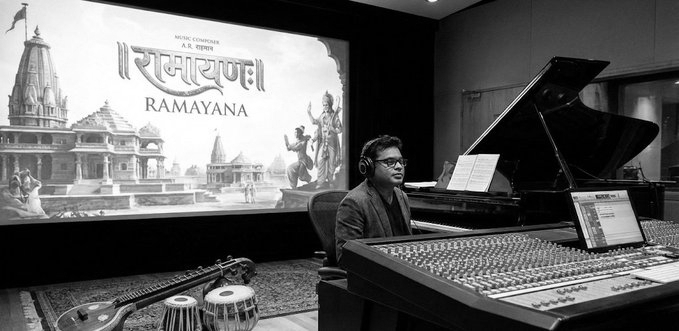
Rahman himself issued a statement saying, “I never intended to hurt anyone’s sentiments,” and stressed that his words had been misinterpreted. He emphasised that “art should transcend faith and politics” and highlighted the diverse team behind Ramayana , including his collaboration with Grammy-winning composer Hans Zimmer, noting, “ Ramayana is Hindu, I’m Muslim, Hans Zimmer is Jewish… I value all ,” to underline his respect for all cultural identities.
Supporters have also pointed to Rahman’s personal background, which has long been part of public record. Born A. S. Dileep Kumar in Tamil Nadu into a Hindu family, he converted to Islam in his youth after his family was influenced by a Sufi healer during a difficult period following his father’s death. Over the years, Rahman has often explained that spirituality, rather than strict religious identity, shapes his music and worldview, a nuance his defenders say is being ignored amid the current controversy.
Part of what makes Ramayana significant is its massive scale, with a combined budget for both parts estimated at around ₹4,000 crore , making it one of the most expensive projects in Indian cinema. Despite the intense debate and calls for Rahman’s removal, there has been no official change to the music team or production plans. Insiders confirm the project remains on track for its Diwali 2026 release , while discussions about artistic freedom, faith and identity continue to rage across social media and entertainment circles.