
Ram Charan's Peddi Review: Powerful Emotions Rescue a Wobbly Script
After years of delays, endless speculation and the familiar uncertainty that now follows most star-led pan-India productions, Peddi finally arrives carrying both excitement and scepticism in equal measure. By the time it reached theatres, it was carrying more than expectations.
Peddi is ultimately one of those films where emotion frequently defeats logic. The difference is that it does so with remarkable conviction. Time and again, the film asks the audience to ignore what their head is saying and trust what their heart is feeling. More often than not, it succeeds.
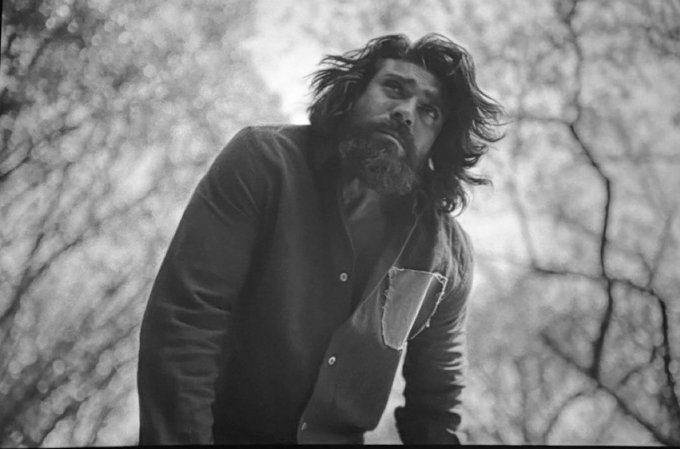
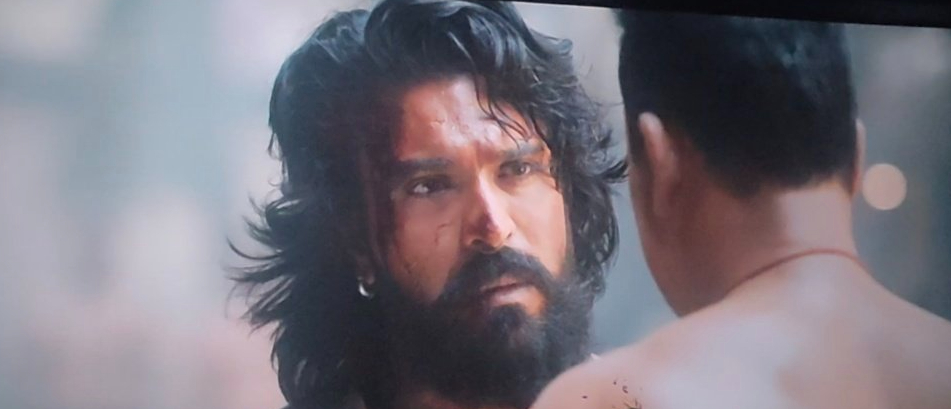
A large part of that success belongs to Ram Charan. His introduction is the kind of scene that reminds you why star entries continue to exist. Though these days, half the audience seems more interested in recording them than watching them. As phones rise across theatres, so does Charan's command over the film. From that point onwards, he becomes its beating heart.
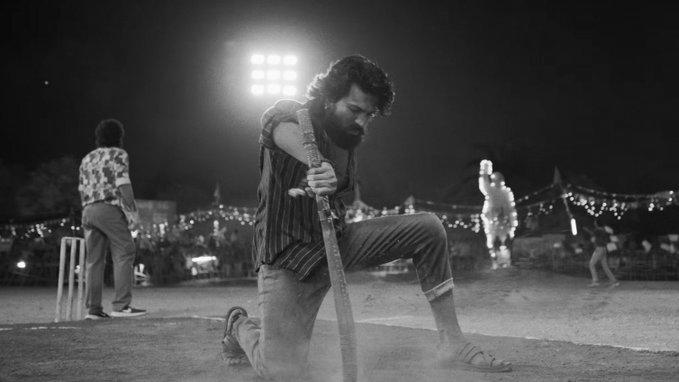
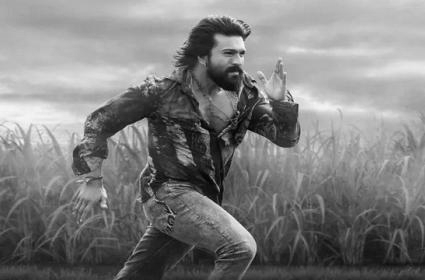
The transformation is not merely physical. Charan changes posture, body language, energy and attitude with impressive ease. Peddi begins as a carefree daily wage labourer, occasionally venturing into deeply uncomfortable territory in his interactions with Achiyamma, played by Janhvi Kapoor , before gradually evolving into a man fighting for both personal and collective identity. The emotional build-up, the gradual raising of stakes and the patience with which certain moments are developed ensure that several predictable scenes still land effectively.
Helping him immensely is AR Rahman . The songs take time to settle, but the background score rarely misses a beat. Whether it is triumph, heartbreak, sacrifice or hope, Rahman's music consistently strengthens the film's emotional pulse. The layering of themes, recurring motifs and inventive instrumentation serves as a reminder of why he remains one of cinema's most revered composers. This is easily among his stronger recent works.
The supporting cast also contributes significantly to the film's emotional foundation. Shiva Rajkumar brings tremendous screen presence and dignity to his role. The bond between Peddi and Gournaidu becomes one of the film's strongest emotional pillars. Jagapathi Babu's Appala Soori, despite occasionally drifting into melodrama, effectively establishes both the threat and the stakes.
Visually, Peddi often impresses. R Rathnavelu's cinematography gives the film a distinct identity. Whether it is the raw energy of the wrestling arenas, the texture of the jaggery mills, the dusty roads of the village or the way darkness is used during several night sequences, the visuals constantly reinforce the film's emotional grounding. The village never feels like a set dressed up for a shoot, which many pan-India films fail to achieve.
Which makes the VFX shortcomings all the more noticeable. For a film mounted on this scale, certain sequences carry a visible artificiality that briefly pulls viewers out of the experience. Rathnavelu does his job. The post-production work does not always match his standard.
Set in a nameless village tucked beneath a mountain, the film revolves around a community fighting for something most people would consider ordinary: a railway station . The village does not have basic resources, lacks recognition and, in many ways, lacks an identity of its own. Why does a village without a name desperately need a railway station? How does Peddi's journey as an athlete become tied to that dream? And how does one man's search for identity become intertwined with an entire community's struggle for existence? Those questions form the emotional backbone of the film.
The film's biggest problem , however, is neither technical nor narrative. It is Janhvi Kapoor's character. The issue is not simply that the romantic track feels disconnected from the central story. The issue is how the character is conceived and presented. Nearly every scene featuring her seems designed around objectification rather than character development.
What makes this especially frustrating is that the character actually has potential. As the daughter of a politician who has repeatedly lost elections, she could have played a meaningful role in the larger narrative and political landscape of the story. Instead, she is reduced to little more than visual decoration. The dialogues only worsen matters.
Whether it is lines such as "Is she talking or showing?", "I will touch her once because neither she nor her father will allow me to marry her", or comments about not looking at a girl's face, the film repeatedly mistakes problematic behaviour for romance. Because her screen time is limited, these moments stand out even more. Rather than becoming a minor flaw, they become one of the film's most distracting weaknesses.