
Raksha Bandhan: India’s Unique Rituals and Telugu Cinema’s Emotional Legacy
A Rakhi may be just a thread, but the emotions woven into it can last a lifetime.
In a world filled with countless relationships, the bond between siblings remains one of the most instinctive and intimate. It begins with childhood quarrels, shared secrets, laughter and tears. Years later, jobs, marriages, children and distance may take brothers and sisters into different worlds. Phone calls may become shorter and visits less frequent, but when Raksha Bandhan arrives, many families find a reason to come together again. For a sister, the rakhi is often more than a ritual or a gift in return. It carries an unspoken reassurance “I am here.” And that perhaps explains why the festival continues to hold such a powerful place in Indian family life.
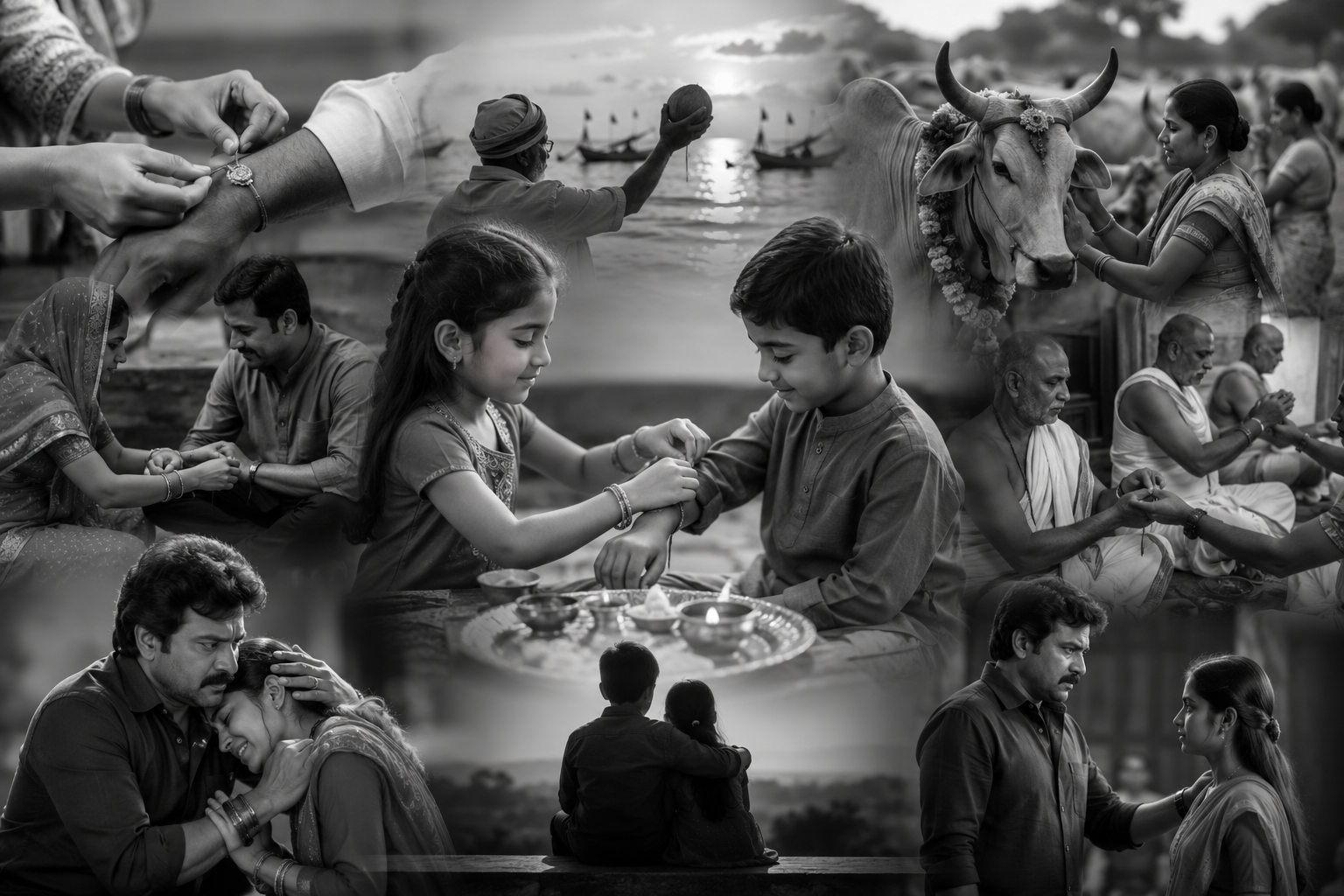
But Raksha Bandhan has a story far bigger than the familiar brother-sister ritual. Celebrated on Shravana Purnima, the festival and the traditions surrounding the day take remarkably different forms across India. Along the Maharashtra coast, people honour the sea; in Odisha, cattle become part of the celebrations; in parts of South India, communities renew the sacred thread; and in a fascinating tribal tradition in Madhya Pradesh, some women tie rakhi to their husbands. One full moon, one thread, but many meanings.
The Story Behind the Sacred Thread
The words Raksha Bandhan broadly refer to a bond of protection. The practice of tying a sacred protective thread has a much wider cultural and religious history and was not always confined to brothers and sisters. One of the best-known traditional narratives is associated with Indra and Shachi, or Indrani. According to a popular scriptural tradition, Shachi tied a sacred protective thread before Indra went into battle against the asuras, and the story is often recalled to explain the ancient symbolism of the raksha thread. Other popular narratives associated with Draupadi and Krishna, as well as Goddess Lakshmi and King Bali, have also shaped the cultural imagination around the festival. Over generations, however, the rakhi became most strongly associated with siblings, finding its most enduring expression in the emotional bond between a brother and sister.
The Rakhi That Brings Families Home
Modern life has changed the way families live. Brothers and sisters who once grew up under the same roof often move to different cities after education, marriage or employment. Work, businesses, children's education and everyday responsibilities can gradually reduce the time families spend together. Sometimes, even small misunderstandings create distances that neither side intended. Yet, festivals have a unique ability to bring people back to their roots, and Raksha Bandhan is one such occasion. For many women, the festival is also a deeply emotional reminder of their parental home. No matter how far life takes them, returning to meet a brother and family often feels like a journey back to childhood. The gift received after tying the rakhi may be cherished, but the greater gift is the reassurance that someone will always stand beside you “I am here.”
One Shravana Purnima, Many Traditions
India's cultural diversity is beautifully reflected in the celebrations associated with the same full-moon day. Raksha Bandhan falls on Shravana Purnima, but different parts of the country observe the occasion in their own distinctive ways. Along the Konkan coast of Maharashtra, the day is celebrated as Narali Pournima, when fishing communities honour the sea and offer prayers to Varuna, the deity associated with waters. Coconuts are offered to the sea, seeking safe journeys and a prosperous fishing season. In Odisha, the occasion is observed as Gamha Purnima, where cattle are honoured for their contribution to agriculture and rural livelihoods. In parts of Tamil Nadu, Kerala and Karnataka, the day is associated with Avani Avittam or Upakarma, an important occasion for Vedic rituals and the ceremonial renewal of the yajnopavita, or sacred thread, among many Brahmin communities. The rituals differ from one region to another, but the underlying symbolism remains similar: a thread represents commitment, responsibility and continuity.
Where Wives Tie Rakhi to Their Husbands
Perhaps one of the most fascinating traditions associated with Raksha Bandhan is reported from the Chhindwara region of Madhya Pradesh. Among sections of the Gond tribal community, some women tie rakhi to their husbands rather than their brothers. To people familiar only with the mainstream sibling ritual, the custom may appear surprising, but it offers another interpretation of the word “raksha.” For these women, the husband is regarded as a lifelong companion who is expected to stand beside his wife through the challenges of life. The rakhi, therefore, becomes a symbol of trust, companionship and support within marriage. The tradition also carries a deeper relationship with nature. Communities closely connected to forests and agriculture express respect towards crops, trees and the natural world, extending the symbolism of the festival beyond human relationships. Traditional rakhis and locally made sacred threads are part of this cultural identity, showing how a simple thread can connect a wife and husband, people and their land, and communities with nature.
Telugu Cinema and the Emotion of Rakhi
If Raksha Bandhan has preserved the emotion of sibling relationships in Indian homes, Telugu cinema has given that sentiment a lasting place on the silver screen. Telugu films have repeatedly returned to stories of brothers and sisters, their childhood affection, quarrels, sacrifices, responsibilities and emotional dependence on one another. Cinema did not create these emotions; it simply brought familiar family experiences to the screen. When a brother sheds tears for his sister, audiences often remember someone from their own lives. When a sister leaves her childhood home after marriage, the separation touches a deeply familiar emotion. This is why the brother-sister sentiment has remained powerful in Telugu storytelling across generations.
From Raktha Sambandham to the Silver-Screen Legacy
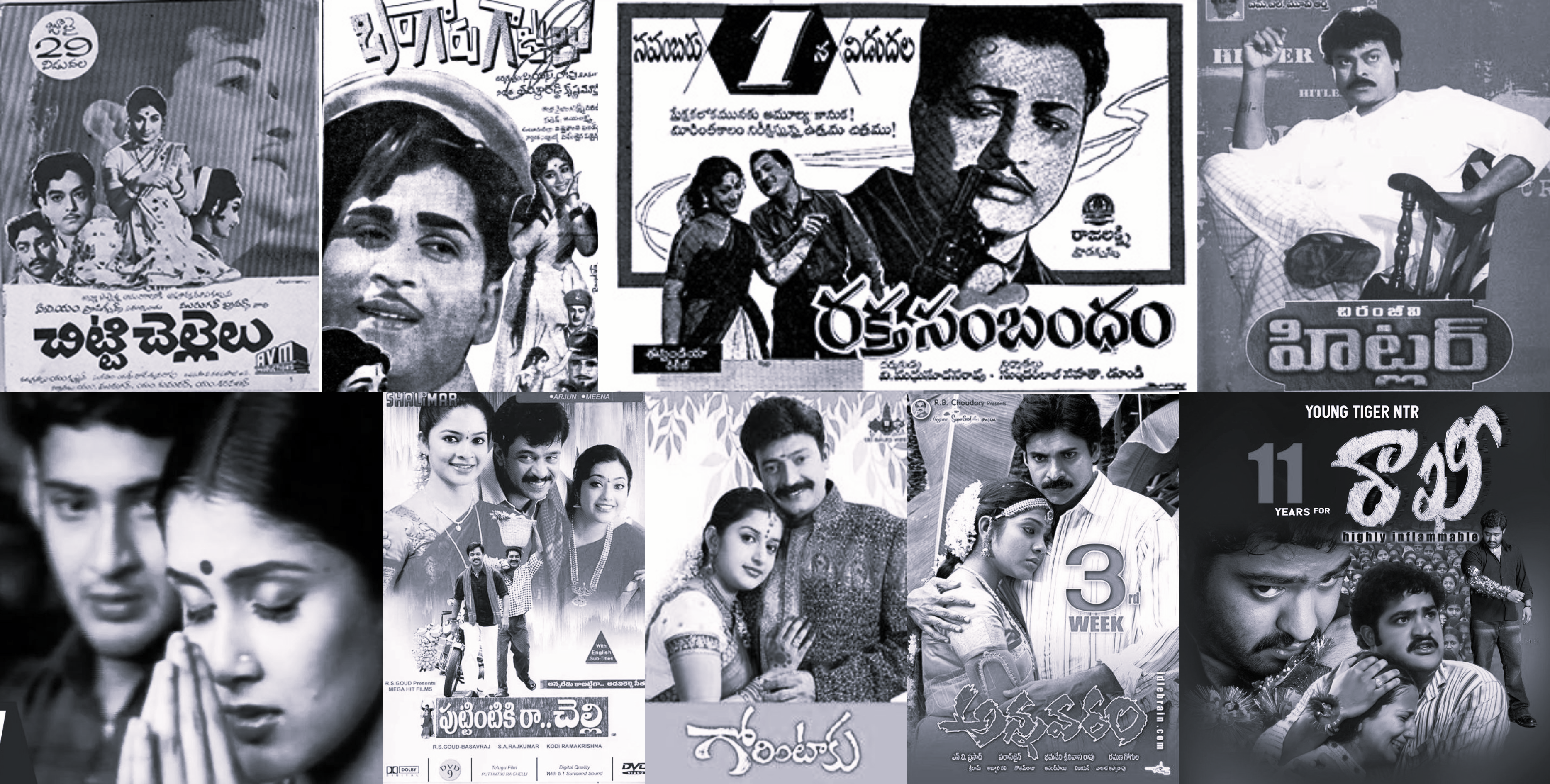
One of the most memorable films in this tradition is Raktha Sambandham (1962), featuring N. T. Rama Rao and Savitri. The film remains strongly associated with the emotional portrayal of a sibling bond, and its very title captured an idea deeply rooted in Indian family life, the relationship of blood. The journey continued with films such as Chitti Chellelu, where the emotional world of an elder brother and his sister became central to the story, and Bangaru Gajulu, which explored affection, sacrifice and responsibility. Songs celebrating the love between siblings added another dimension to these stories, turning cinematic emotions into memories that audiences carried beyond the theatres. Over time, Telugu cinema established a powerful tradition in which a tough hero could face every challenge in the world, but his sister's tears could still become his greatest weakness.
The Rise of Sister Sentiment
By the 1980s and 1990s, the brother-sister relationship had become one of Telugu cinema's most recognisable emotional themes. Stories became larger and more dramatic, but their emotional foundation remained familiar; the brother carried responsibility, while the sister often became his emotional world. Her happiness mattered as much as his own, and her suffering became his suffering. Films explored sacrifice, separation, family honour and the responsibility of an elder sibling. Sometimes, these stories became highly melodramatic, but they also produced some of the most memorable moments in Telugu cinema and established what audiences came to recognise as “chelli sentiment.”
From Hitler to Arjun and Annavaram
In Hitler (1997), Chiranjeevi played an elder brother carrying the responsibility of five sisters, bringing to the screen both the affection and the burden that come with being deeply responsible for loved ones. The film showed that love and protection could also become complicated when affection turned into excessive responsibility. In Arjun, the sibling bond became the emotional foundation of an action-driven story, presenting a brother willing to fight for his sister. The film demonstrated that the responsibility to protect and support a sibling was not limited to age or conventional roles. Annavaram, starring Pawan Kalyan, continued this cinematic tradition by placing the intense emotional bond between a brother and sister at the centre of the narrative. Telugu cinema repeatedly showed that sibling relationships did not always need lengthy speeches; sometimes a song, a glance or the fear of losing a loved one could express everything.
Rakhi: When a Personal Bond Became a Social Question
The 2006 film Rakhi, starring Jr NTR and directed by Krishna Vamsi, took the meaning of protection beyond the boundaries of a single family. While the brother-sister relationship remained the emotional core of the story, the film raised a larger question about the safety and dignity of women in society. It asked whether protecting only one's own sister was enough while remaining silent about the suffering of other women. In that sense, the film expanded the meaning of Raksha Bandhan itself. Protection could not remain confined to one's own home; it had to become a social responsibility.
Gorintaku, Puttintiki Ra Chelli and the Pain of Separation
Films such as Gorintaku and Puttintiki Ra Chelli explored another deeply emotional aspect of the sibling relationship, the pain of separation. Marriage changes a daughter's home, but it does not end her relationship with the family she grew up with. For a brother, watching a sister move into another household can bring a complex mixture of happiness, responsibility and concern. These stories found their emotional strength in a reality familiar to many Indian families: a daughter may leave her childhood home, but she never leaves the hearts of her siblings. The longing to return to one's parental home, especially during festivals, remains a recurring emotional thread in family life.
The Promise Beyond the Thread
Perhaps the most important meaning of Raksha Bandhan lies beyond the ritual itself. Protection is not ownership, and love is not control. In the modern world, protecting someone does not simply mean physical strength or standing in front of danger. It can mean respecting their choices, supporting their ambitions, listening during difficult times and standing beside them without judgment. The same thread that symbolises a sister's bond with her brother can also represent a wife's trust in her husband, a community's gratitude towards nature or a spiritual commitment renewed through ritual.
Across India, Raksha Bandhan may be celebrated in different forms. In one place, a sister ties a thread to her brother; in another, the sea is honoured; elsewhere, cattle and agriculture are celebrated; and in parts of South India, sacred-thread rituals mark spiritual renewal. The distinctive Gond tradition of Madhya Pradesh adds yet another dimension, where the rakhi can symbolise marital companionship and a relationship with nature.
And on the Telugu screen, the same emotion has travelled through generations from Raktha Sambandham and Chitti Chellelu to Hitler, Arjun, Annavaram, Rakhi, Gorintaku and many more.
The rituals may be different. The languages may be different. The stories may be different.
But the emotion remains the same.
To remember. To care. To stand by one another.
A rakhi may be tied around a wrist in a matter of seconds, but the promise behind it can last a lifetime.