
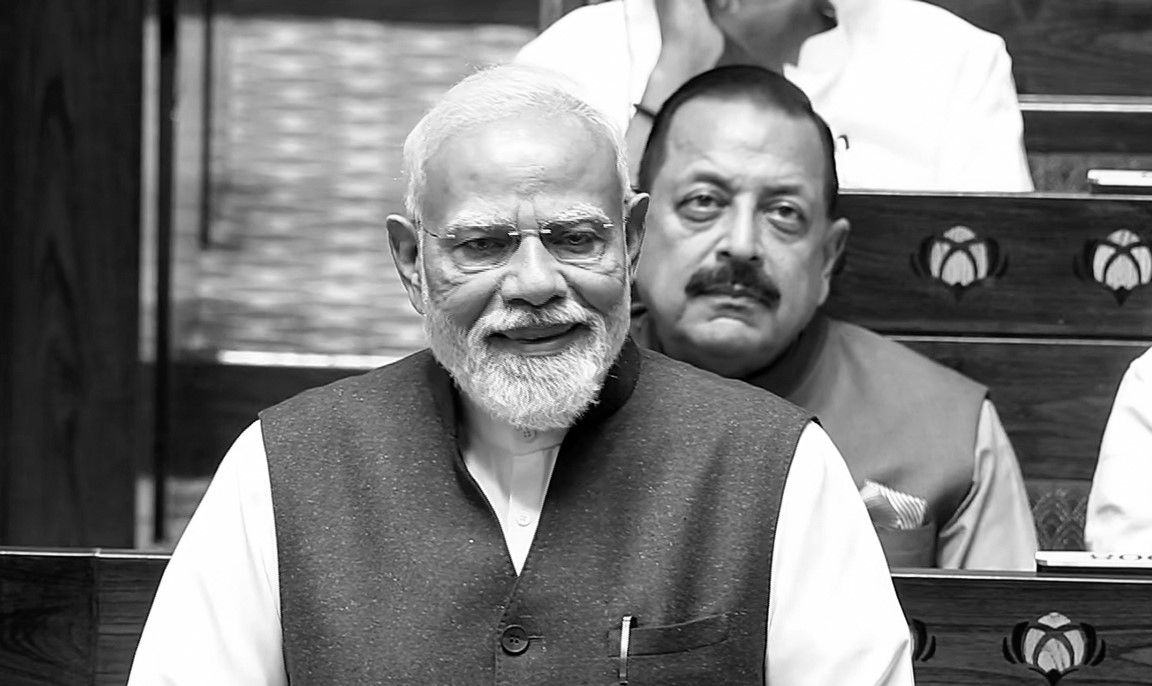
Rajya Sabha Farewell Highlights Continuity, Experience and Democratic Spirit
Prime Minister Narendra Modi’s address in the Rajya Sabha on Wednesday went beyond a customary farewell, emerging as a thoughtful reflection on the enduring spirit of parliamentary democracy and the evolving nature of political life in India. As the Upper House bid goodbye to 59 members retiring between April and July, the moment captured both institutional continuity and generational transition .
Describing Parliament as an “open university,” Modi highlighted how legislative service shapes individuals through exposure to diverse perspectives, complex policymaking, and national challenges. His remarks underscored the Rajya Sabha’s unique role as a chamber of experience and deliberation one that balances the immediacy of electoral politics with the depth of long-term thinking. Unlike the Lok Sabha, the Upper House functions as a stabilising force , ensuring continuity through its staggered retirement system, where one-third of members exit every two years.
The Prime Minister emphasized that such farewell occasions often dissolve political differences, allowing leaders across party lines to acknowledge shared responsibilities and contributions. In a political environment frequently marked by sharp contestation, this moment of collective reflection stood out as a reminder of the collaborative foundation of democratic institutions .
Modi’s assertion that “there is no full stop in politics” carried deeper resonance. By encouraging outgoing members to remain engaged in public life, he pointed to the enduring relevance of experience in shaping governance beyond formal roles. Former parliamentarians often continue to influence policy, mentor younger leaders, and contribute to public discourse extending their impact well beyond their tenure in the House.
Special recognition was given to veteran leaders such as H. D. Deve Gowda, Mallikarjun Kharge, and Sharad Pawar, whose decades-long parliamentary journeys embody institutional memory and resilience. Modi described their continued dedication as exemplary, offering a benchmark for newer legislators navigating the demands of public office.
He also acknowledged the contributions of outgoing Deputy Chairman Harivansh, praising his composed leadership and proactive outreach, particularly his efforts to engage with young citizens across the country. In a lighter moment, Union Minister Ramdas Athawale was described as “evergreen,” reflecting the enduring presence of certain political figures who continue to remain active beyond formal transitions.
Importantly, the farewell comes at a time of shifting political arithmetic in the Upper House, following recent elections that are expected to alter its composition. As new members prepare to enter, the departure of seasoned lawmakers marks not just a ceremonial exit but a strategic transition that could influence legislative dynamics in the years ahead.
Modi also drew attention to the constitutional significance of India’s bicameral system, likening the movement of legislation between the two Houses to seeking a “second opinion.” This process, he noted, enriches debate, refines policymaking, and strengthens democratic outcomes. The Rajya Sabha’s role as a reviewing chamber ensures that laws undergo careful scrutiny rather than hurried approval , reinforcing the quality of governance.
Adding a symbolic layer to the occasion, some of the retiring members witnessed the functioning of Parliament in both the old and the new buildings an experience that reflects a broader transition in India’s democratic journey, blending legacy with modernisation.
Ultimately, the farewell to these 59 members represents more than the conclusion of a parliamentary term. It marks a continuum of democratic renewal , where experience moves beyond the chamber even as new voices step in to shape the nation’s future. Modi’s address framed this transition not as an ending, but as an extension of public service reinforcing the idea that in India’s democracy, leadership evolves, but its purpose endures .