
Rajnath Singh Says India's Zero-Tolerance Policy on Terror Is a 'Line of Action'
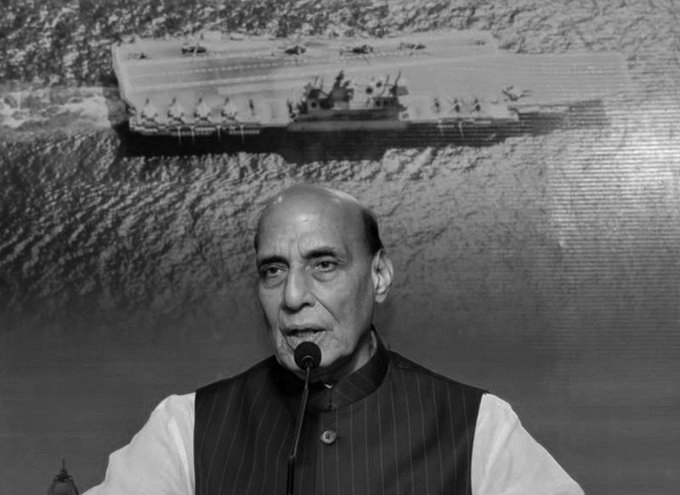
Defence Minister Rajnath Singh on Saturday reiterated India's zero-tolerance approach to terrorism , asserting that the country's policy is backed by decisive action rather than rhetoric. Addressing an event, he said India has clearly conveyed its stand against terrorism to the global community while highlighting the country's growing strength in indigenous defence manufacturing .
Sending a strong message to Pakistan , Singh said, " Zero tolerance against terrorism is not merely a statement for us, but a Line of Action. " Referring to Operation Sindoor , he added that India has demonstrated its willingness to act beyond its borders. "We will strike against terrorism not just at the doorstep but by entering the house. The whole world saw this during Operation Sindoor," he said.
The Defence Minister said India's expanding defence capabilities have strengthened its position as a credible global security partner , with its strategic influence growing from the Indian Ocean to the Indo-Pacific . He noted that India's annual defence production has reached a record Rs 1.78 lakh crore in 2025-26 , compared with around Rs 40,000 crore a decade ago.
Singh also highlighted the sharp rise in defence exports , which have increased from Rs 686 crore in 2013-14 to over Rs 38,000 crore in 2025-26 , with Indian-made defence equipment now reaching nearly 100 countries . He expressed confidence that India would achieve its target of Rs 3 lakh crore in defence production and Rs 50,000 crore in defence exports by 2029 .
Describing Operation Sindoor as a major example of technology-driven warfare , Singh said advanced indigenous systems such as Akashteer, the Akash missile system and BrahMos played a key role. He credited the Modi government for promoting self-reliance through defence reforms, simplified export policies and the establishment of defence industrial corridors in Uttar Pradesh and Tamil Nadu, strengthening India's defence manufacturing ecosystem and reducing dependence on imports.