
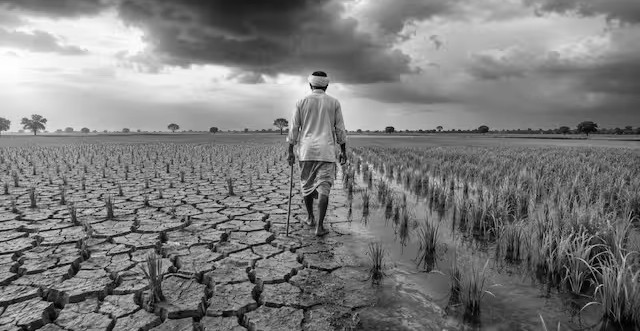
Rajasthan’s Weak Monsoon Raises Drought Fears: Why Farmers, Livestock and Rural Jobs Are at Risk
Rajasthan’s weakening monsoon has raised concerns over a possible drought-like situation, with former chief minister Ashok Gehlot urging the government to act before rainfall shortages translate into wider distress. He has claimed that 17 districts, including Jaipur, face drought-like conditions, while Pali, Jalore, Banswara, Jaisalmer and Udaipur have recorded deficits of 40-55 per cent.
A prolonged deficit could intensify agricultural stress, particularly for rain-fed crops. Insufficient soil moisture during crop development can reduce yields and raise input and irrigation costs. Persistently dry conditions could also weaken soil moisture available for the upcoming rabi season, affecting winter crops and farm incomes.
Livestock face a parallel threat as green fodder becomes scarce and drinking-water sources shrink. Higher feed costs, falling milk production and livestock distress could place additional pressure on small farmers and pastoral households.
The groundwater situation could deteriorate as farmers and communities increasingly depend on borewells and other underground sources. Poor rainfall recharge combined with greater extraction can deepen water tables and intensify drinking-water shortages, particularly in already stressed areas.
The employment impact could be significant statewide too. Reduced farm activity can cut demand for agricultural labour, while lower harvests squeeze household incomes. This may increase dependence on public employment and encourage distress migration.
Rajasthan’s drought-management framework emphasises early warning, continuous monitoring and advance preparedness rather than waiting for a crisis. Recommended measures include securing drinking-water supplies, strengthening foodgrain stocks and distribution, and expanding employment support for affected households. For livestock, authorities recommend fodder depots, movement of fodder from surplus to deficit areas, subsidies and veterinary support.
For agriculture, contingency planning, crop-damage assessment, crop insurance, efficient irrigation and a shift towards less water-intensive crops can reduce vulnerability. Water conservation, groundwater monitoring, rainwater harvesting and restoration of traditional water bodies can improve resilience.
Gehlot has specifically urged Chief Minister Bhajanlal Sharma to review the situation with concerned departments and prepare for water, food, fodder and employment needs. The priority, therefore, is early intervention before rainfall deficiency becomes a full-scale livelihood crisis.