
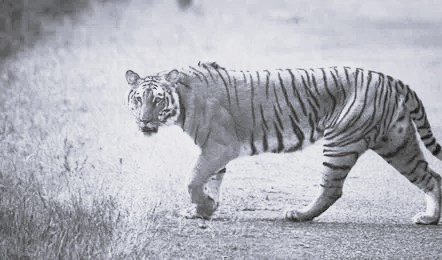
Rajasthan gets Pench tigress in major push to boost genetic diversity
In a major boost to Rajasthan’s tiger conservation programme, a three-year-old tigress from Madhya Pradesh’s Pench Tiger Reserve was successfully airlifted to Ramgarh Vishdhari Tiger Reserve in Bundi district, marking a crucial step to improve genetic diversity in the state’s tiger population.
The tigress, identified as PN-224, was flown from Pench to Jaipur in an Indian Army MI-17 helicopter late Sunday night as part of a carefully planned inter-state relocation exercise. From Jaipur, she was transported by road under tight security to Ramgarh Vishdhari and released into a specially prepared enclosure at Bajalia on Monday morning, forest officials said.
Officials described the operation as a significant milestone in strengthening long-term tiger conservation in Rajasthan, which has been working to establish Ramgarh Vishdhari as a viable habitat and corridor for big cats. The helicopter journey took around two-and-a-half hours.
Before the transfer, forest teams in Pench located the tigress resting under dense vegetation and tranquillised her under strict veterinary supervision. A detailed medical examination found her temperature, heartbeat and breathing to be normal.
The tigress was airlifted at 4.55 pm, with Jaipur chosen as the landing point due to security and logistical considerations. Officials said preparations for the relocation had been underway for several weeks.
“She is healthy and under continuous monitoring,” officials said, adding that she will remain in the enclosure for observation before being gradually acclimatised to her new habitat.
Ramgarh Vishdhari was chosen because it is ready, strategically located, and crucial for connecting Rajasthan’s tiger landscapes.
India has previously used tiger relocation as an effective conservation tool. In Rajasthan, Sariska Tiger Reserve saw tigers reintroduced from Ranthambore after the species went extinct due to poaching in 2004–05, helping restore a breeding population.
A similar success was recorded at Panna Tiger Reserve in Madhya Pradesh; it had lost its entire tiger population by 2009, mainly due to poaching. To revive the population, conservationists relocated both tigresses and male tigers from other reserves like Bandhavgarh and Kanha.
Rajasthan also relocated tigers to Mukundra Hills to expand habitats beyond Ranthambore. These cases show that the Pench tigress’s move to Ramgarh Vishdhari follows a proven conservation strategy.