
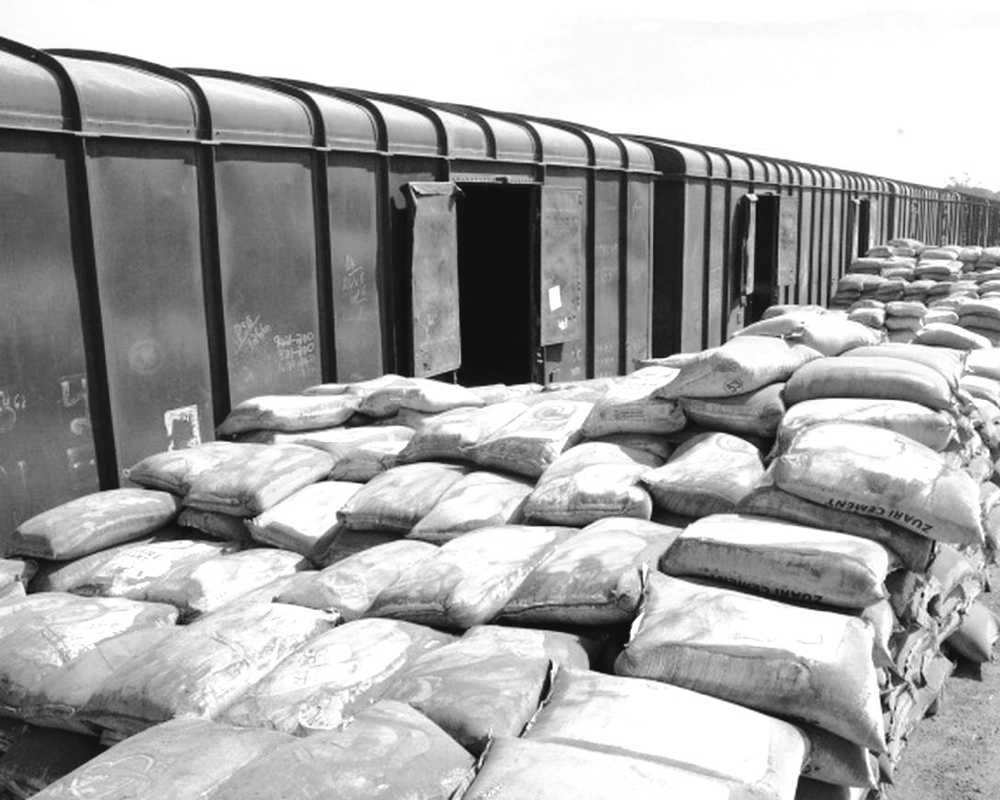
Railways introduces uniform 90-paise per GTKM rate for cement transport to lower costs for homebuyers
The Indian Railways has announced a major reform to reduce cement transportation costs across the country, a move aimed at making housing more affordable for middle-class families. Union Railway Minister Ashwini Vaishnaw unveiled the initiative on Tuesday after an event held at Rail Bhawan, New Delhi on the Bulk Cement Terminal Policy and Container Rate Rationalization.
Under the new framework, Railways has introduced a uniform transportation rate of 90 paise per GTKM (Gross Tonne-Kilometre) for bulk cement movement. In simple terms, transporting 1 tonne of cement for 1 kilometre will now cost Rs 0.90. This replaces the older slab-based rate system, which often ranged between Rs 1.50 and Rs 2.50 per GTKM, depending on distance and region.
While reducing the rate to 0.90 rupees per GTKM may seem small, the savings add up over large shipments. For example, a wagon carrying 50 tonnes of cement over 500 km would cover 25,000 GTKM (calculated as weight in tonnes × distance in km). Under the old rate of Rs 2 per GTKM, the transport cost would have been Rs 50,000. With the new rate of Rs 0.90 per GTKM, the cost comes down to Rs 22,500, resulting in a saving of Rs 27,500 per truckload.
Union Minister of Railways of India Vaishnaw highlighted that cement is a key component in home construction, and transportation costs make up a significant portion of its overall price. “Today, the cost of cement is a major factor in the dream of middle-class families building their own homes. This reform will directly help reduce those expenses,” he said.
As part of the initiative, Railways has also introduced a special tank container designed for bulk cement transport. These containers can be filled directly at cement factories and transported across the country to where they are needed, lowering logistics costs and streamlining supply chains.
The minister noted that this uniform rate system allows cement manufacturers to better plan plant locations, transportation routes, and unloading terminals. By reducing uncertainty in transport costs, the reform is expected to optimize cement movement, improve efficiency, and ultimately reduce prices for consumers.
Industry experts say this move is likely to boost cement demand while easing the financial and logistical load of new house construction for the common man.
Vaishnaw added that this initiative is part of a decade-long series of reforms implemented under Prime Minister Narendra Modi, aimed at improving Railways’ efficiency, transparency, and cost-effectiveness. The new system is expected to have a major impact on the housing sector, particularly for middle-class families constructing their own homes.