
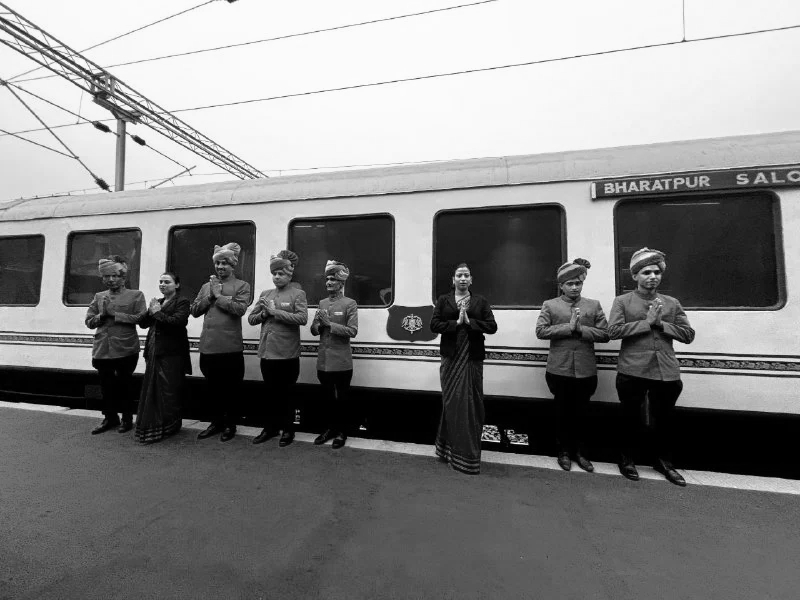
Railway Ministry Faces Heat Over Luxury Train Travel by 336 Officials
The Railway Ministry has come under political scrutiny after DMK MP V.S. Matheswaran alleged that 336 railway officials travelled on India's luxury tourist trains over the past 12 years by using railway travel passes, raising questions over the use of public funds and the ministry's accountability. The controversy has intensified after the ministry gave seemingly contradictory replies in Parliament on whether such travel is permitted under the Railway Servants (Pass) Rules, 1986.
The issue involves three of India's premium rail tourism products - Palace on Wheels, Maharajas' Express, and Deccan Odyssey - operated by the Indian Railway Catering and Tourism Corporation (IRCTC) and State Tourism Development Corporations. With ticket prices ranging from ₹4.5 lakh to ₹26 lakh per passenger, the trains cater primarily to luxury tourists, making any official travel on them a matter of public interest.
In a reply to Parliament on July 22, 2026, the Railway Ministry disclosed that 336 railway officials had travelled on these luxury trains over the past 12 years using railway passes. However, when Matheswaran sought the names, designations and travel details of the officials, the ministry provided only the total number. The MP further pointed to a 2022 Lok Sabha reply, which stated that officials could travel on luxury trains with their families while on official duty. In contrast, the ministry's response on July 29, 2026, clarified that the Pass Rules permit family travel only on regular trains such as Rajdhani, Shatabdi, Duronto, Humsafar, Gatiman and Vande Bharat, adding that no amendment has been made to extend the rules to luxury tourist trains.
According to ministry data, 155 officials travelled on Palace on Wheels out of 12,278 passengers, 145 on Maharajas' Express among 11,522 passengers, and 36 on Deccan Odyssey out of 8,106 passengers. While officials accounted for less than 2 per cent of total passengers on each train, the opposition argues that the high cost of these services warrants greater public scrutiny.
The controversy also highlights an apparent legal ambiguity. Earlier parliamentary records show the Railway Ministry had justified such journeys as official inspection visits carried out under Memorandums of Understanding (MoUs) between the Railways, IRCTC and State Tourism Development Corporations, rather than solely under the Railway Servants (Pass) Rules. According to the ministry, these inspections are meant to assess hospitality, catering, housekeeping, safety, rolling stock performance, passenger amenities and overall service quality, with officials required to submit inspection reports to improve operational standards.
The issue is not new. The Parliamentary Standing Committee on Railways had earlier expressed concern over complimentary travel on luxury trains and recommended stricter guidelines to prevent misuse of public resources. The ministry, however, defended the practice, stating that inspection visits are sanctioned only subject to berth availability and are necessary to maintain internationally recognised services such as the Maharajas' Express, which has won multiple World Travel Awards.
Matheswaran has alleged that the ministry's latest clarification contradicts its earlier stand, raising concerns over whether Parliament was misled and whether public funds were used without adequate legal backing. While no independent audit or investigation has established financial misconduct, the controversy has intensified demands for greater transparency, clearer rules governing official travel on luxury trains, and stronger parliamentary oversight of government expenditure.