
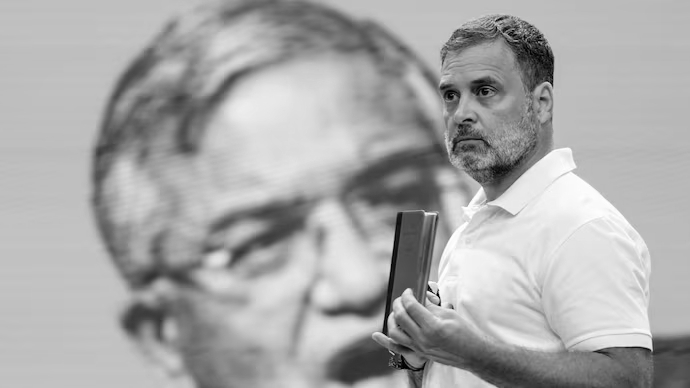
Rahul’s hydrogen bomb, will it backfire on Congress?
As the 2025 Bihar Assembly elections approach, Congress leader Rahul Gandhi has launched an aggressive campaign around “vote chori” or vote theft, linking it to the Special Intensive Revision (SIR) exercise. He calls SIR an “institutionalised mechanism for stealing votes” and has promised a major revelation,a so-called “hydrogen bomb”,to expose alleged electoral manipulation across India.
Rahul Gandhi has already claimed illegal deletion of votes in Karnataka and fake additions in Maharashtra. During his press briefings, he warned that similar manipulations could occur in Bihar, Uttar Pradesh, and other states. The campaign has drawn huge crowds, especially during his Bihar Voter Adhikar Yatra, where he marched with allies like Tejashwi Yadav and Mukesh Sahani, raising the issue of systemic electoral fraud.
However, the campaign comes with serious risks. Surveys show that the SIR issue has very little traction with Bihar voters. According to the Vote Vibe Bihar Elections 2025 survey, only 21% of voters see SIR as a significant concern, while issues like unemployment, electricity, roads, corruption, and law and order dominate public priorities. In rural areas, where most seats lie, only 19% view SIR as a top issue. The India Today CVoter Mood of the Nation survey also indicates that 64% of people believe elections are free and fair, leaving little room for Rahul Gandhi’s narrative to resonate.
Even within Congress, there is growing unease. Leaders fear that overemphasis on SIR and vote chori may alienate allies in the Mahagathbandhan and strain the alliance’s cohesion. Tejashwi Yadav’s RJD is focused on migration, jobs, and governance issues, largely ignoring the SIR controversy. Rahul’s single-track messaging could isolate Bihar-based allies and risk delegitimising the party’s own democratic credibility if the “hydrogen bomb” fails to make the expected impact.
The strategy also raises broader questions about political messaging. By emphasizing alleged fraud without formal complaints or evidence accepted by the Election Commission, Rahul risks presenting a narrative that could be dismissed as hype. Critics argue that this approach may energize a section of urban supporters but fail to connect with the rural majority whose immediate concerns are jobs, public services, and local governance.
In essence, Rahul Gandhi’s hydrogen bomb is a high-stakes gamble. It could dramatically spotlight electoral irregularities, or it could backfire, damaging Congress’s credibility and unity. With Bihar’s elections looming, the real test will be whether the message translates into voter support,or whether the hydrogen bomb detonates in the party’s own backyard.
Key Takeaways:
• Rahul Gandhi’s campaign heavily targets alleged electoral fraud via the SIR exercise.
• Ground realities show voters are more concerned with unemployment, public services, and local issues than SIR.
• The campaign risks alienating allies in the Mahagathbandhan and delegitimising Congress if evidence fails to convince.
• Bihar polls may be the litmus test for whether such a high-risk, high-drama strategy succeeds or backfires.