
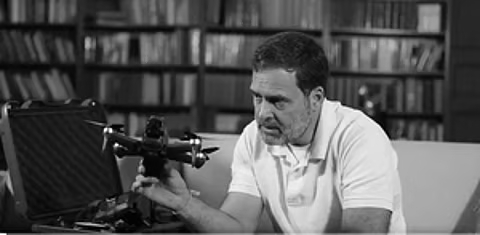
Rahul Gandhi alleges govt ‘covering up’ foreign surveillance via Chinese CCTV, AI
Rahul Gandhi alleges the govt is ‘covering up’ the full extent of foreign surveillance via Chinese CCTV cameras, banned apps, and foreign AI platforms, warning this puts national security and citizen privacy at risk. He said officials are obfuscating facts on surveillance systems , and described the alleged veil of secrecy as a “deliberate conspiracy to keep India in the dark.”
Rahul Gandhi stated, “Yet, Chinese cameras remain installed inside government buildings. Banned Chinese apps are resurfacing under changed names. Foreign AI platforms are processing sensitive data. And the government has absolutely nothing to say about this,” highlighting contradictions between the public ban on Chinese CCTV equipment and its continued use in sensitive areas.
He pressed the government in Parliament on the origin, security certification, and risk assessments of these surveillance systems, and criticised the Ministry’s response as “plenty of verbiage but no answers,” noting, “the ministry’s response contained no figures, no answers - not even the name of a single platform.” Rahul Gandhi warned that five years after admitting that one million Chinese cameras posed data transfer risks , authorities still haven’t disclosed whether current systems are secure.
Security experts have underscored the dangers of unsecured surveillance technology, especially given recent global conflicts where compromised systems have been repurposed for warfare intelligence. In the ongoing Israel–Iran conflict , for example, hacked surveillance networks reportedly provided real‑time battlefield insights, enabling adversaries to monitor high‑value movements and coordinate tactical strikes, highlighting how camera networks can become intelligence assets in war . Independent cybersecurity analyses show that internet‑connected cameras with weak safeguards are targeted for reconnaissance and can be manipulated to support battlefield operations.
In response to mounting concerns, the government has tightened cybersecurity and data protection frameworks , including new Standardisation Testing and Quality Certification (STQC) requirements that took effect April 1, barring sale of non‑certified CCTV products from major Chinese manufacturers unless they meet strict encryption, firmware and security benchmarks. Authorities cite these reforms as steps toward reducing foreign exposure in critical infrastructure.
State governments, such as in Delhi, have begun phased replacement of Chinese‑origin cameras with systems meeting updated standards, though critics argue enforcement and transparency on surveillance technologies remain inadequate. The debate continues on whether current measures fully safeguard against surveillance exploitation in both civilian and military domains .