
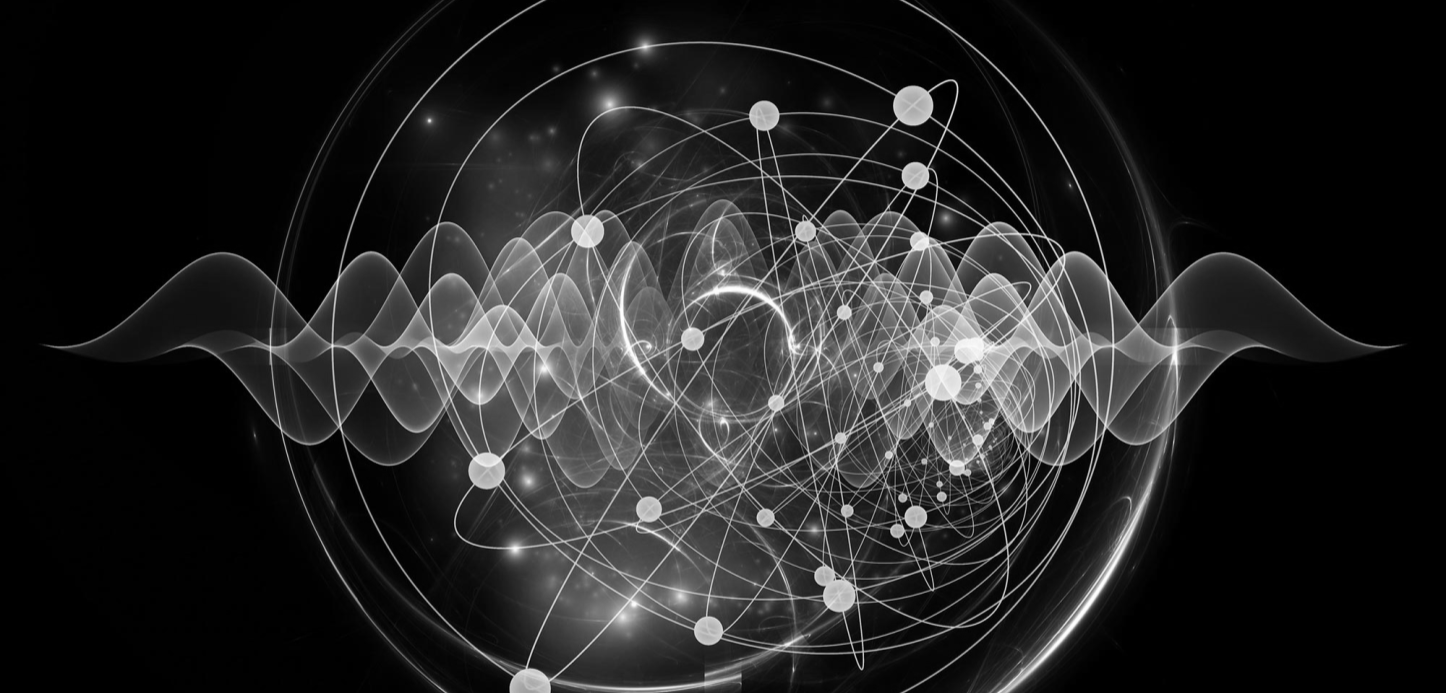
Quantum leap - The future is tiny
Imagine a world where a coin can be both heads and tails at the very same time, or where two particles thousands of miles apart instantly communicate. This is the reality of the subatomic world, governed by Quantum Physics. Often called the "weird science," Quantum Physics explores the realm of the incredibly small atoms, electrons, and photons and it is fundamentally rewriting the laws of our universe.
Quantum vs. Classical - Where reality splits
To understand Quantum Physics, we must first look at Classical Physics (or physical science). Classical Physics is the science of the everyday world: how a cricket ball flies, how a car drives, and how gravity pulls an apple down. This science is completely predictable; if you know the starting conditions, you know the end result.
Quantum Physics, however, deals with the microscopic world, where the rules completely break down. Here, particles do not behave like objects; they behave like ghosts. Classical Physics says a light switch is either ON or OFF. Quantum Physics says an electron is both ON and OFF at the same time a state called superposition until you actually look at it. Instead of certainty, the quantum world is based on probability. This focus on probability, movement, and energy at the atomic scale is what makes Quantum Physics radically different from the predictable rules of the physical world we experience daily.
The power of the small - Why It matters
Although it sounds complicated, Quantum Physics is already vital to modern life. It is the core science behind almost every piece of technology invented in the last 70 years. Without quantum mechanics, we would not have the microchips that power our smartphones and computers, the precision of lasers, or the advanced diagnostic power of MRI machines in hospitals.
But the future is even more exciting. Researchers are leveraging quantum phenomena like superposition and entanglement (where two particles are linked and affect each other instantly) to build the next generation of technology. The biggest breakthrough is the Quantum Computer. These machines will be exponentially faster than today’s supercomputers, capable of solving complex problems in medicine, material science, and data analysis that are currently impossible.
New career pathways in the quantum age
The rise of quantum technology is creating an entirely new industrial sector, opening up high-demand, high-paying career paths. Experts are needed to design, build, and maintain these futuristic systems.
Students interested in this field should focus on physics, mathematics, and computer science. Key career opportunities include: Quantum Computing Engineers who develop the hardware and software for new computers; Quantum Researchers who explore new phenomena; Data Scientists specializing in quantum algorithms to solve big data problems; and Quantum Cybersecurity Specialists who build unhackable communication networks. The quantum revolution is here, and it promises to transform the job market, offering a chance to work at the absolute frontier of human knowledge.