
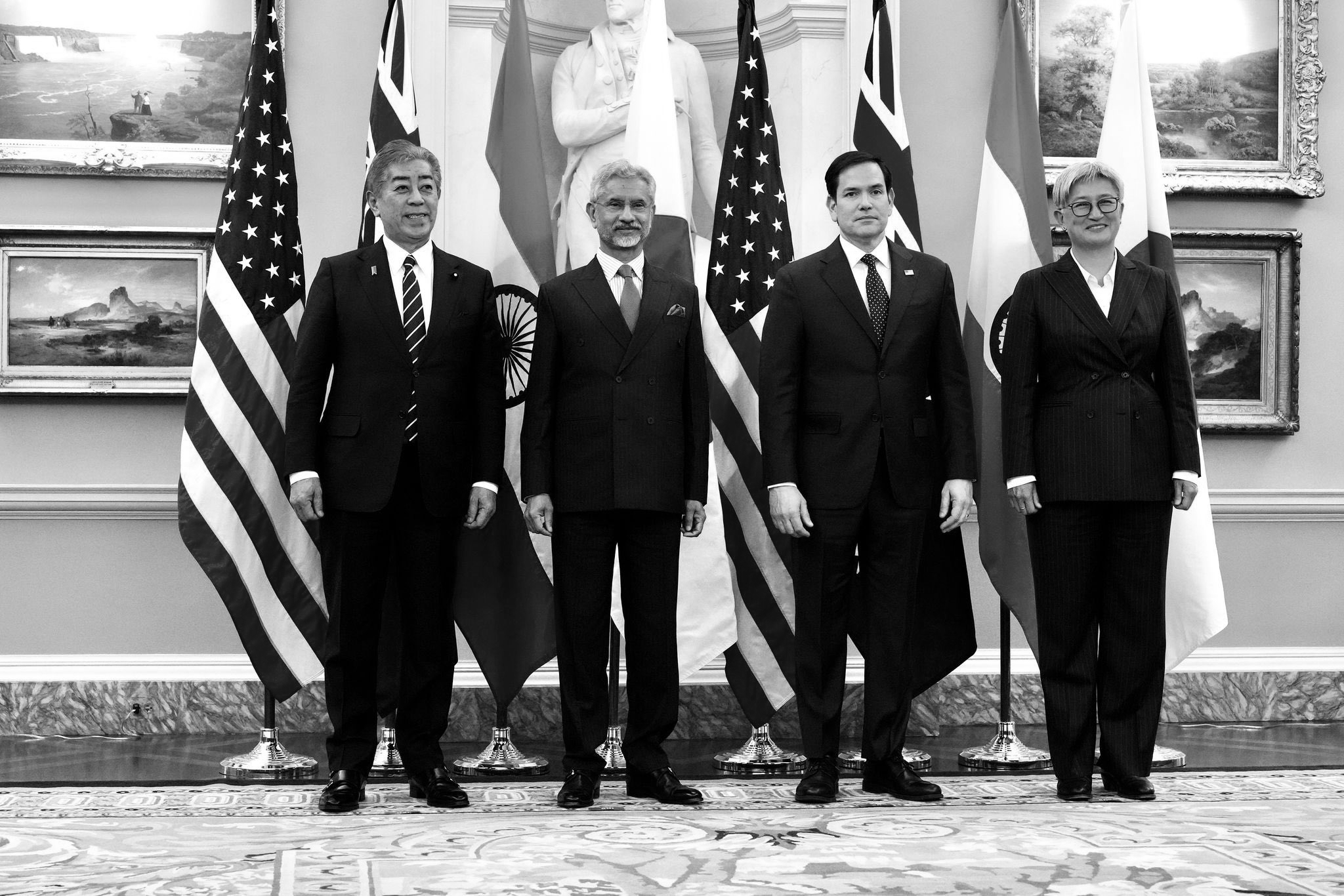
Quad Meets Again as Indo-Pacific Security Takes Centre Stage
US Secretary of State Marco Rubio arrived in Manila, Philippines, for a series of high-level ASEAN meetings and the Quad Foreign Ministers' Meeting, as the four Indo-Pacific democracies seek to deepen strategic coordination amid rising geopolitical tensions, maritime security concerns and evolving regional challenges.
Rubio's visit, scheduled from July 19 to 23, includes participation in the ASEAN Post-Ministerial Conference, the East Asia Summit (EAS) Foreign Ministers' Meeting, the ASEAN Regional Forum (ARF) and bilateral meetings with senior leaders from across the Indo-Pacific. According to the US State Department, the visit reflects Washington's commitment to advancing a free, open, secure and prosperous Indo-Pacific while strengthening its partnership with ASEAN and the Philippines.
A key highlight of the visit will be the Quad Foreign Ministers' Meeting, the second ministerial gathering in just two months, underscoring the growing importance of the grouping amid an increasingly complex regional security landscape. The previous meeting, held in New Delhi in May, was attended by External Affairs Minister S. Jaishankar, Marco Rubio, Japanese Foreign Minister Toshimitsu Motegi and Australian Foreign Minister Penny Wong. Ahead of the meeting, US Ambassador to India Sergio Gor reiterated that the United States remains committed to a free and open Indo-Pacific, describing the Quad partners as essential to achieving that vision.
Established in 1967, the Association of Southeast Asian Nations (ASEAN) comprises 10 member states and has become a cornerstone of regional diplomacy, economic integration and security dialogue. Through platforms such as the EAS and ARF, ASEAN brings together major powers, including India, the United States, China, Japan, Australia and Russia, reinforcing its central role in shaping the Indo-Pacific's strategic architecture.
The Quad, comprising India, the United States, Japan and Australia, has evolved into a strategic partnership promoting a rules-based Indo-Pacific through cooperation on maritime security, cybersecurity, critical and emerging technologies, artificial intelligence, resilient supply chains, clean energy, health security and humanitarian assistance.
The ministers are expected to discuss a wide range of regional issues, including South China Sea tensions, freedom of navigation, the political crisis in Myanmar, critical mineral and semiconductor supply chains, counter-terrorism, climate resilience and disaster response. The agenda is also likely to cover the impact of instability in the Middle East on global energy security and maritime trade.
The Manila meetings assume added significance as the Indo-Pacific remains at the centre of global strategic competition. For India, the discussions provide another opportunity to advance its Act East Policy and SAGAR (Security and Growth for All in the Region) vision while strengthening cooperation with like-minded partners to promote peace, stability and economic resilience across one of the world's most strategically important regions.