
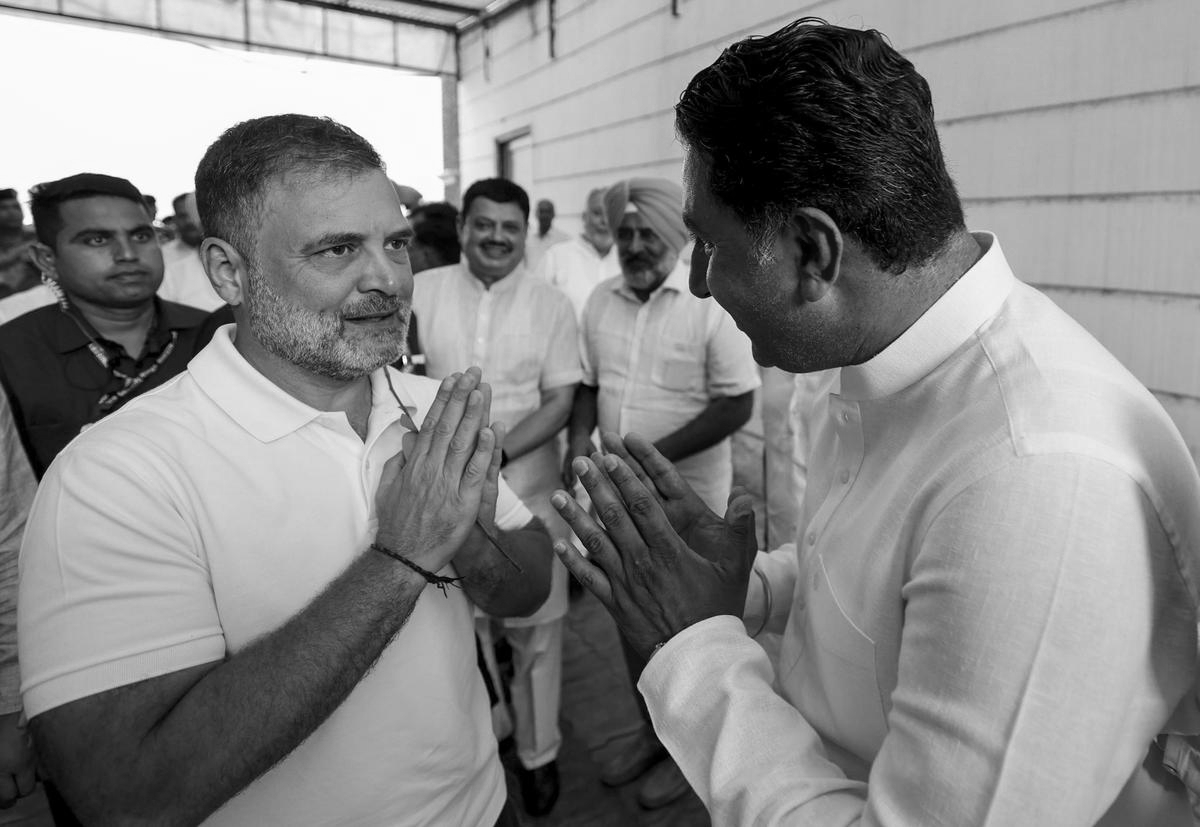
Punjab’s worst floods in decades, Rahul meets survivors
Punjab is grappling with one of the worst flood disasters in decades, with the swollen Sutlej, Beas, and Ravi rivers, along with heavy rains in the region and neighboring Himachal Pradesh and Jammu & Kashmir, inundating large swathes of farmland and villages. Over 56 lives have been lost, and nearly 1.98 lakh hectares of crops lie destroyed, leaving thousands of families struggling for basic necessities.
In the midst of this crisis, Congress leader Rahul Gandhi visited flood-hit areas of Amritsar, including Ghonewal village in Ajnala, one of the worst-affected locations. Accompanied by Punjab Congress chief Amrinder Singh Raja Warring, Leader of Opposition Partap Singh Bajwa, Amritsar MP Gurjeet Singh Aujla, and other party leaders, Gandhi met survivors, heard their grievances, and assessed the damage on the ground. Sitting among villagers, he directly interacted with families whose homes were submerged, bringing attention to their urgent needs.
After Ghonewal, Gandhi was scheduled to pay obeisance at the historic Gurdwara Baba Budha Sahib in Ramdas and later visit flood-hit areas in Gurdaspur district.
The visit also comes after Prime Minister Narendra Modi’s aerial survey of the affected areas on September 9, following which the central government announced an additional Rs 1,600 crore relief for the state, supplementing Rs 12,000 crore already allocated. Several Union ministers have since visited Punjab to monitor the situation, but ground-level engagement by political leaders remains crucial for timely relief and rebuilding efforts.
Analysts say Gandhi’s visit is both a humanitarian gesture and a political signal in a state heading toward elections. By personally assessing the flood-hit regions, he seeks to highlight governance gaps while emphasizing the need for swift disaster management and equitable aid distribution. Punjab’s floods expose longstanding infrastructure challenges in flood management and river regulation, making such visits more than symbolic,they underscore the urgency of systemic reforms alongside immediate relief.
Rahul Gandhi’s walk through submerged streets and conversations with survivors reminded many that crises in India demand not just government funds but direct, empathetic engagement. In an era of social media and instant criticism, balancing domestic priorities with political optics has become increasingly complex for national leaders.