
Punjab Congress Chief Moves Court To Block ZEE5 Series ‘Lawrence Of Punjab’
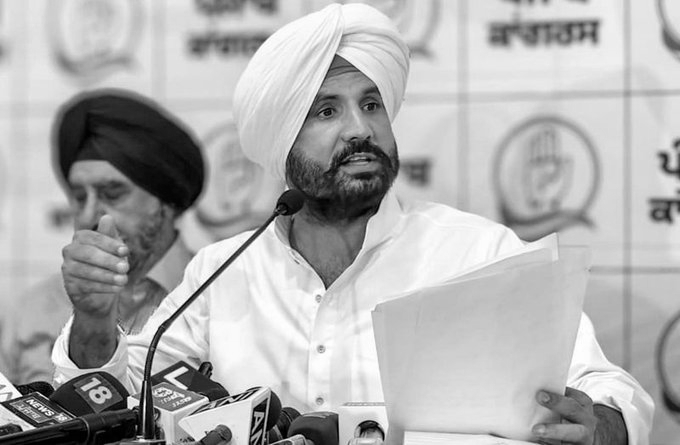
Punjab Congress chief Amrinder Singh Raja Warring has escalated his opposition to the upcoming ZEE5 docu-series , “Lawrence of Punjab” , announcing that he will file a Public Interest Litigation (PIL) in the Punjab and Haryana High Court seeking a ban on its release .
Warring alleged that the series risks glorifying gangster culture and could have a dangerous influence on young viewers , especially by presenting a criminal narrative in an engaging entertainment format. He argued that such portrayals can distort social values and mislead impressionable audiences.
The docu-series, scheduled for release on April 27 , is based on gangster Lawrence Bishnoi , who is currently lodged in a Gujarat jail and faces multiple criminal cases across India. Bishnoi is one of the key accused in the murder of singer Sidhu Moosewala , along with several other serious cases being investigated by law enforcement agencies.
According to the makers, the series attempts to explore Bishnoi’s life as a case study of crime, politics, ideology, student culture, and media influence , rather than a straightforward glorification. However, Warring strongly rejected this framing, stating that it risks turning criminals into role models and normalising violence.
He further said that the content is an insult to Punjab, Punjabi identity and Punjabiyat , arguing that the state, known for its spiritual and cultural legacy, should not be associated with a notorious gangster. He also criticised what he described as the silence of state and central authorities on the issue.
Warring additionally referred to the broader concern around Lawrence Bishnoi’s criminal network , which has been linked to multiple high-profile cases and has even been designated a terrorist entity by Canada in 2025 , underscoring its alleged international reach and violent activities.
The controversy has intensified further with criticism that the series attempts to reframe or humanise a convicted criminal narrative , with opposition voices arguing that it could indirectly legitimise gang violence. Some critics have also objected to comparisons or narrative framing that could be seen as placing such figures alongside socially respected icons, calling it deeply problematic.