
Punjab begins first caste based socioeconomic survey across villages
Punjab has already begun its first-ever caste-based socioeconomic survey , a major exercise aimed at understanding the living conditions of different communities and shaping more targeted welfare policies.
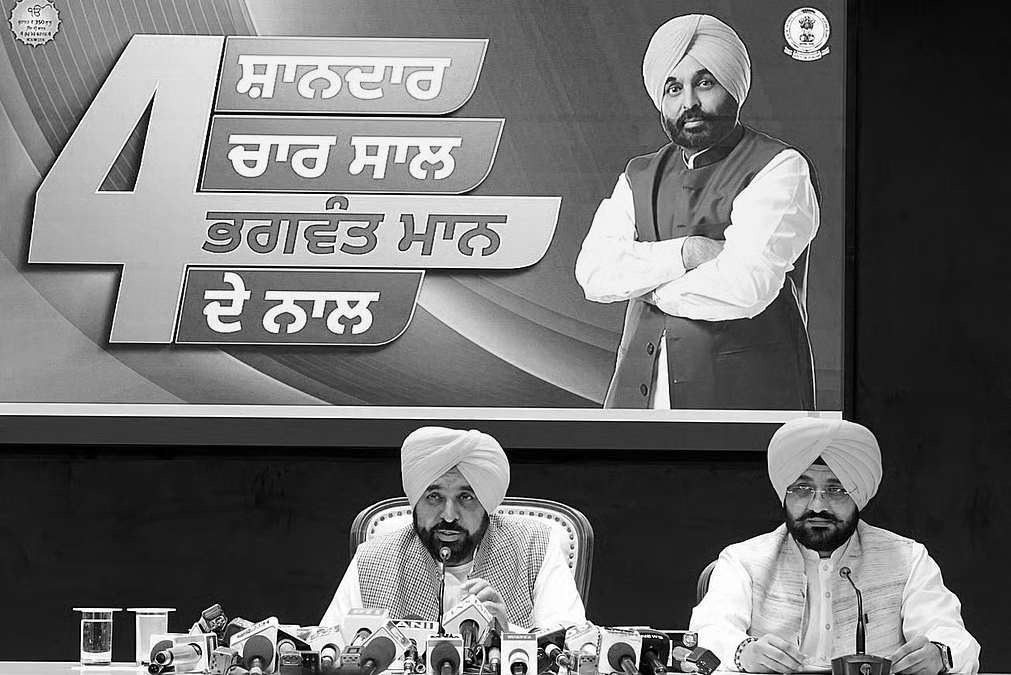
Chief Minister Bhagwant Singh Mann said the survey started on April 1 and will gather information on the social and economic status of households across the state. The government believes the data will help ensure balanced development and better policy planning for all sections of society.
Mann said the survey will be conducted with strict confidentiality of personal information. The aim, he explained, is to understand ground realities related to income levels, access to resources and living standards so that welfare schemes can be designed more effectively.
To carry out the exercise, the state government has deployed around 28,000 enumerators , and the survey is expected to cost about Rs 250 crore .
Presenting the four-year report card of the Rural Development and Panchayat Department, the chief minister also highlighted increased investment in village infrastructure and welfare programmes. He said Rs 3,847 crore has been spent on rural development over the past four years, compared with Rs 1,883 crore between 2017 and 2022.
In 2025-26 alone, the government spent Rs 2,367.64 crore on rural development works. Of this, Rs 1,030.94 crore was used to build Panchayat buildings, libraries, Anganwadi centres and playgrounds, while Rs 1,336.70 crore went towards drinking water, sanitation and other essential services.
The government has also cleared illegal encroachments on Panchayat land, generating Rs 1,842.78 crore in revenue through land leasing over four years. In 2025-26, around 1.35 lakh acres were leased, earning Rs 520.54 crore.
Mann said the state is developing around 3,000 rural playgrounds at a cost of Rs 1,166 crore to encourage youth participation in sports and keep them away from drugs. Work has already begun on 2,400 grounds, most of which are expected to be completed by June.