
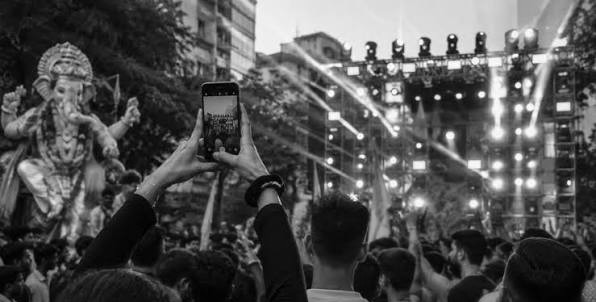
Pune’s Ganeshotsav Sound Debate: Residents Seek Ban, Organisers Offer Noise-Control Measures
Pune’s Ganesh festival has triggered a debate over loud music, with residents demanding a ban on high-decibel DJ systems while Ganesh mandals argue for regulated celebrations.
Residents protested near Goodluck Cafe Chowk, saying excessive sound during festival processions makes them ill, disturbs neighbourhoods and forces some to leave Pune for two or three days during immersion. Protesters stressed that their campaign is not against any religion or caste, but against noise that has become a public nuisance.
Religious festivals do not receive an automatic legal exemption. Under the Noise Pollution (Regulation and Control) Rules, 2000, loudspeakers and public-address systems require written permission. Their normal operating window is 6 am to 10 pm. The state can designate up to 15 festive days a year when use may continue until midnight, subject to official orders and conditions. Prescribed ambient limits remain applicable, with residential areas generally capped at 55 dB(A) during the day and 45 dB(A) at night.
In Pune, the district administration has granted conditional relaxation on 15 designated festival days in 2026, allowing loudspeakers until midnight. Police and local authorities can impose additional conditions and take action against violations.
Ganesh mandals, however, have objected to what they describe as selective targeting. One representative questioned why critics focus on mandals while overlooking pollution in the Mutha river. Organisers have proposed measures to reduce noise without ending musical celebrations.
Mandal representatives said they have resolved not to use equipment such as pressure-mid and plasma systems, which they believe can increase sound intensity. They also promised to ensure that mandals follow administrative guidelines.
The dispute is therefore not about whether music should be allowed. It is about how celebrations can continue without overwhelming residents. Mandals favour regulation rather than a blanket ban, while protesters want stronger protection from high-decibel sound, particularly during immersion processions. With Ganeshotsav beginning on September 14, enforcement of permissions, equipment restrictions and noise limits will determine whether the two sides can find workable common ground.