
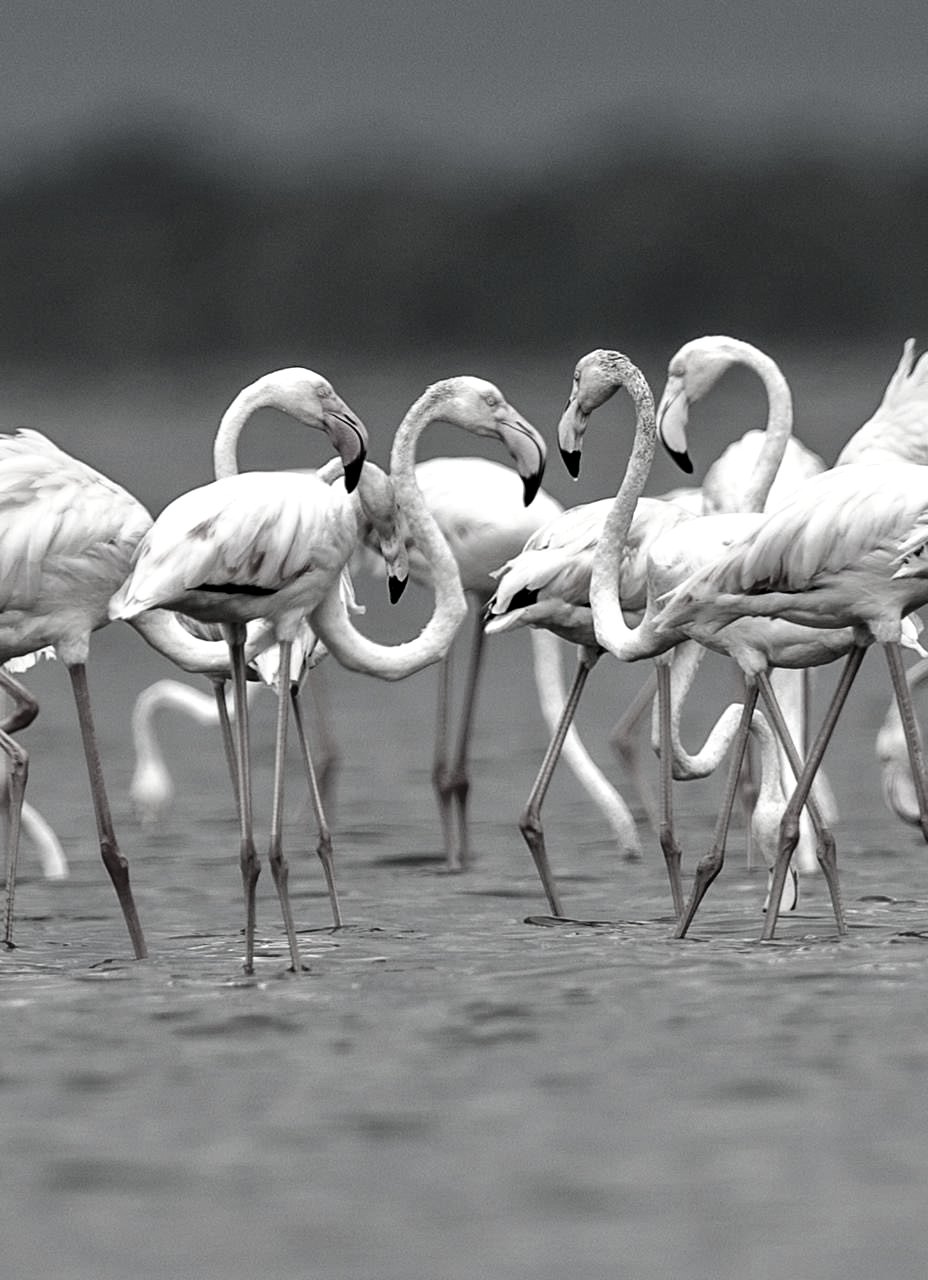
Pulicat Lake emerges as a key winter haven for migratory Flamingos
Preparations are under way for the annual Flamingo Festival at Pulicat Lake, one of India’s most important wintering grounds for migratory birds. The festival, jointly organized by the Andhra Pradesh Forest Department, the Tirupati District Administration, and the Andhra Pradesh Tourism Department, is expected to be held in early January 2025. Official dates have not yet been announced, but the event is traditionally conducted in the first or second week of January, coinciding with the peak arrival of flamingos.
Every winter, thousands of Greater Flamingos (Phoenicopterus roseus) and other migratory birds travel thousands of kilometres from Siberia, Iran, Afghanistan, and Central Asia to reach the Pulicat Lake region, located on the border of Andhra Pradesh and Tamil Nadu. The birds stay between October and March, using the lake and surrounding wetlands for feeding and resting. Their annual return has been recorded for over a century, with formal scientific monitoring carried out since the 1970s, after the Nelapattu Bird Sanctuary was notified in 1976.
The Flamingo Festival was first introduced in 2001 to celebrate these migratory visitors and to raise public awareness about wetland conservation. Since then, it has evolved into one of the state’s major eco-tourism events, drawing 50,000 to 1,00,000 visitors each year, including birdwatchers, students, researchers, and tourists. The event is usually spread across Sullurpeta, Atakanithippa, and the Nelapattu Bird Sanctuary, where visitors are provided opportunities for bird watching, photography, and environmental education.
As part of the festival, exhibitions on wetland biodiversity, eco-club activities, and cultural programmes highlighting local traditions are expected to be held. Bird-watching towers, interpretation centres, and viewing platforms established under the Pulicat Eco-Tourism Project are being utilized to offer visitors safe and guided access to sensitive habitats.
According to forest officials, special attention is being given to the protection of flamingo feeding and nesting areas, particularly after recent experiences with cyclones such as Michaung (2023). Measures have been taken to ensure that salinity levels and food availability remain favourable for the birds. Routine monitoring of the lake area by forest staff has been intensified during the migratory months.
Pulicat Lake, covering nearly 759 square kilometres, is India’s second-largest brackish water lagoon, after Chilika in Odisha. It supports over 80 species of migratory and resident birds, and serves as a crucial ecological zone along India’s east coast. The adjoining Nelapattu Bird Sanctuary, spread over 458 hectares, provides an important nesting habitat for pelicans and other water birds.
Officials have stated that the state government aims to develop Pulicat as a sustainable eco-tourism destination while maintaining ecological balance. Efforts are being taken to promote community participation, regulate fishing, restore mangroves, and prevent encroachments in sensitive areas. It has been indicated that these measures are designed to make Pulicat a safer and more permanent habitat for flamingos in the long term.
Although flamingos traditionally visit only during winter, occasional sightings have been reported in the summer months over the past two years, suggesting improving habitat conditions. Wildlife experts have noted that this is a positive sign of ecosystem recovery, though Pulicat remains primarily a seasonal stopover for migratory species.
The official schedule for the Flamingo Festival 2025 is expected to be announced by the Tirupati District Collector’s office in December. Once confirmed, detailed programmes, visitor arrangements, and eco-tourism activities will be released by the Forest Department.