
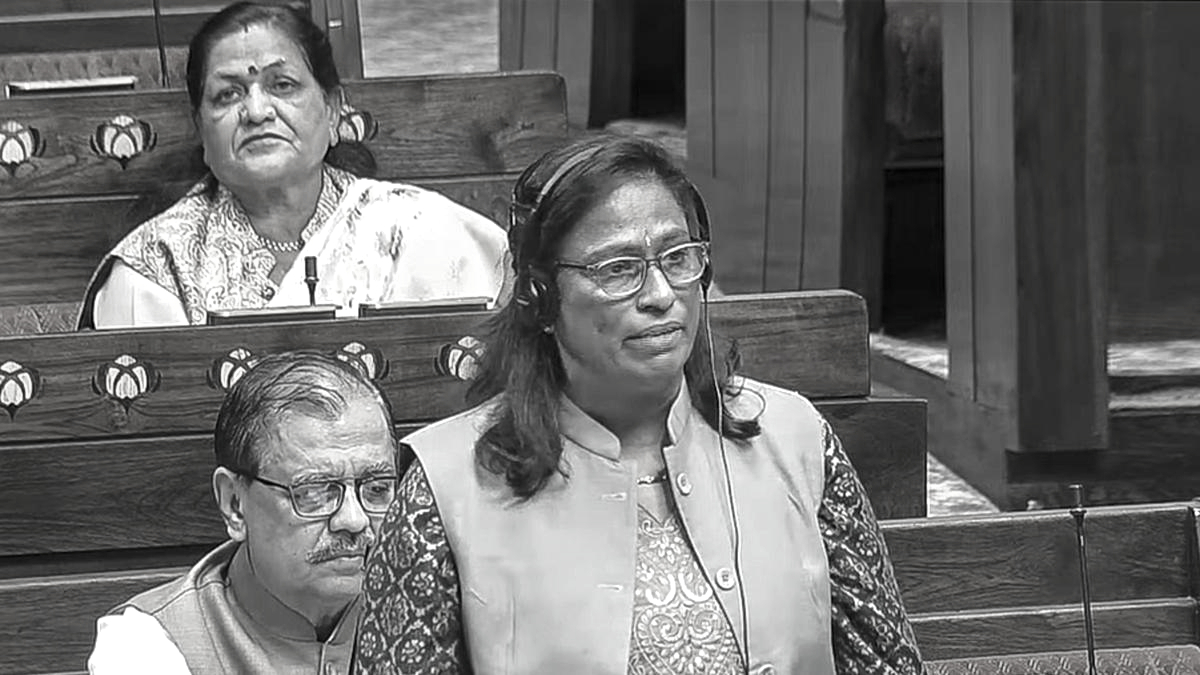
PT Usha Urges Govt to Promote Indigenous Anti-Doping Kits Under ‘Make in India’
A call for urgent government intervention in the domestic production of anti-doping testing kits was made on Friday in the Rajya Sabha by Indian Olympic Association President and Rajya Sabha member P.T. Usha , who said that indigenous manufacturing was needed to reduce costs, improve transparency and strengthen India’s anti-doping system. Her appeal was made under the ‘Make in India’ initiative by highlighting India’s dependence on foreign suppliers and the impact such reliance had on testing timelines and credibility.
It was pointed out by Usha that high-quality dope-testing kits continued to be largely imported, with two Swiss companies Berlinger and LockCon currently supplying most of the sample collection kits used in the country. According to international procurement data, such kits are known to cost between USD 100 and 170 per unit (₹8,500 to ₹14,000) , while a complete doping control package may cost up to ₹18,500 per test , excluding import duties and specialised handling requirements. The dependence on foreign kits was said to have led to higher expenditure, delays caused by international shipping processes and operational reliance on external agencies.
Usha stated that indigenous production would be vital at a time when India was aspiring to host the 2036 Olympic Games , for which the International Olympic Committee (IOC) had emphasised the need for substantial improvement in India’s anti-doping record. India has repeatedly figured among the top five nations with doping violations globally , prompting calls for stronger domestic capabilities.
Emphasis was also placed by her on the strict quality requirements mandated for anti-doping kits worldwide. Kits approved for use in doping control are required to meet the World Anti-Doping Agency (WADA) standards, including tamper-proof sealing, chemical stability, barcode tracking, transport resilience, contamination prevention and compatibility with all WADA-accredited laboratories. They must also comply with ISO/IEC 17025 testing standards , ISO 17712 security norms , and stringent biomedical safety rules. Even minor wear or damage can render a kit invalid, making precision manufacturing essential.
Currently, it was noted that India has only one WADA-accredited laboratory — the National Dope Testing Laboratory (NDTL) in New Delhi . The laboratory regained its accreditation in 2021 after a previous suspension and has since been functioning as the country’s sole facility authorised to analyse samples under global anti-doping regulations. The establishment of a second accredited laboratory was estimated by experts to cost ₹250 crore to ₹400 crore , owing to the need for high-end mass spectrometers, specialised infrastructure, controlled environments, data security systems and international-level scientific manpower. Annual operational costs for such a facility were estimated to be between ₹60 crore and ₹80 crore .
Reference was made by Usha to the government’s ongoing anti-doping efforts, with Sports Minister Mansukh Mandaviya having recently informed the Upper House that 7,751 tests were planned by the National Anti-Doping Agency (NADA) for the current year, an increase from 7,474 tests in 2024 and 5,794 tests in 2023 . It was stated that India’s testing capacity had been expanding but remained affected by the absence of domestic manufacturing and dependence on external suppliers.
Usha stated that the development of indigenous kits would help accelerate testing processes, reduce financial burden, promote research and create new opportunities for technology development in sample collection devices and portable detection tools. It was further said that India could eventually emerge as a global supplier of high-quality anti-doping solutions, aligning the initiative with the government’s Aatmanirbhar Bharat vision.
She added that broader steps were being taken to strengthen the anti-doping ecosystem, including increased awareness campaigns for young athletes, stronger monitoring in training centres, more frequent random testing and strict action against violators to protect clean athletes. She urged the government to launch a national programme for indigenous kit development , support Indian research institutions and start-ups, and further upgrade NADA and regional laboratories with modern equipment and manpower.
A senior ministry source familiar with anti-doping operations said that while Usha’s proposal was welcome, only manufacturing units capable of producing uncompromisingly high-quality kits should be considered, as even slight defects could affect test credibility. It was suggested that the plan be pursued with caution and international-level precision.
Usha concluded that protecting the integrity of sport was not only a regulatory requirement but a national responsibility and that concrete steps were needed to advance India toward a clean and transparent sporting culture.