
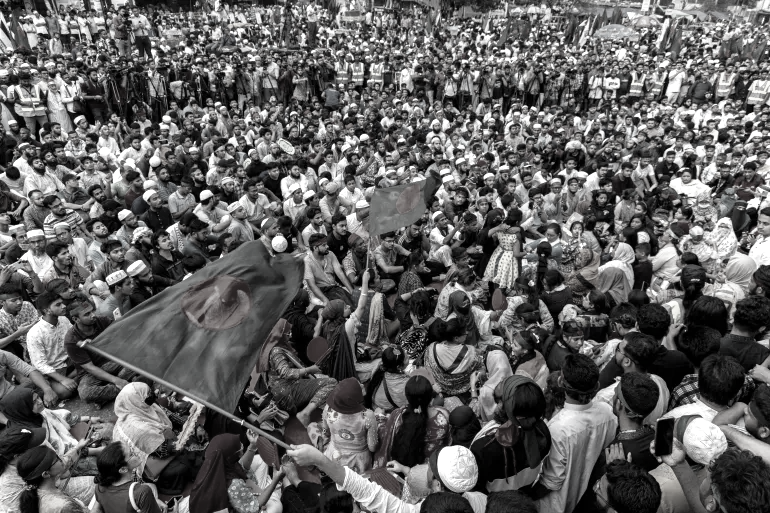
Protests near Indian Mission in Dhaka, Maritime clash strain India-Bangladesh ties
Relations between India and Bangladesh came under renewed strain after a group named July Oikya on December 17 marched toward the Indian diplomatic mission in Dhaka, demanding the extradition of former Prime Minister Sheikh Hasina, who fled to India in August 2024 following student-led unrest in Bangladesh. The protest was stopped short of the Indian High Commission by Bangladeshi police, amid heightened security around the area.
Following the incident, India summoned Bangladesh’s High Commissioner in New Delhi to lodge a strong protest. New Delhi underlined that, under the Vienna Convention on Diplomatic Relations (1961), the host country is obligated to ensure the safety and inviolability of foreign diplomatic missions. As a precautionary measure, an Indian visa application centre in Dhaka was closed early to avoid any untoward incident.
The Indian diplomatic mission in Bangladesh, officially the Indian High Commission in Dhaka, represents New Delhi’s political and consular interests and is protected under international law. Any attempt to target or surround such a mission is treated as a serious diplomatic concern, officials said.
Tensions spilled over to other parts of Bangladesh on December 18, with reports of protests in Rajshahi echoing similar demands related to Hasina’s extradition. The unrest coincided with a separate and serious incident at sea, further complicating bilateral ties.
In the Bay of Bengal, a Bangladeshi vessel allegedly rammed an Indian fishing trawler, resulting in the deaths of two Indian fishermen, according to official sources. The incident has raised concerns over maritime safety and fishermen’s security in shared waters.
Despite these developments, India has continued to extend economic and humanitarian assistance to Bangladesh, underscoring its commitment to the neighbouring country’s stability and development. However, the protests targeting the Indian diplomatic mission and the deadly maritime clash have highlighted growing frictions between the two neighbours.
Diplomatic observers note that the situation is particularly sensitive as Bangladesh heads toward national elections next year, a period often marked by heightened political mobilisation. Both sides are expected to engage through diplomatic channels to prevent further escalation and to safeguard long-standing bilateral cooperation.