
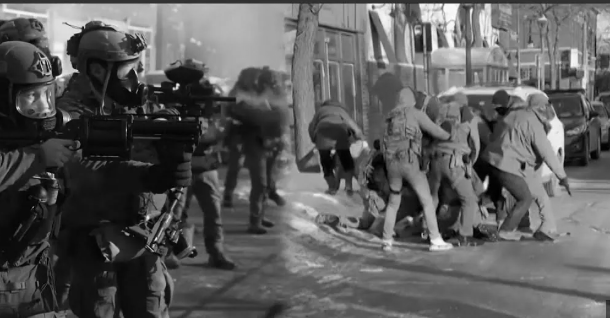
Protests and criticism against ICE intensifies after 2nd Minneapolis shooting
Federal immigration officers shot and killed a 37-year-old man in Minneapolis on Saturday, triggering renewed protests and widespread condemnation amid an ongoing immigration enforcement operation that has deeply divided the city and drawn national attention. The man was identified by his parents as Alex Jeffrey Pretti , an intensive care unit nurse at the Minneapolis Veterans Affairs Health Care System who cared deeply about people and had participated in protests against Immigration and Customs Enforcement (ICE) policies.
The incident occurred during what the Department of Homeland Security described as part of a large immigration crackdown known locally as Operation Metro Surge, a massive enforcement effort that began in late 2025 and has led to thousands of arrests, the detention of immigrants and multiple clashes in Minnesota. Two U.S. citizens, including Pretti and 37-year-old Renée Good, have now been killed by federal agents during the operation, fueling ongoing protests across the Twin Cities and beyond.
In its initial statement, DHS said Pretti “approached federal officers with a handgun” and “violently resisted when officers attempted to disarm him,” prompting agents to fire what the agency called “defensive shots.” The department said the officer who fired was an eight-year veteran of the U.S. Border Patrol and released photos of a handgun it said was recovered at the scene.
Minneapolis Police Chief Brian O’Hara said the mayor’s office and local law enforcement had limited details about what led up to the shooting, but confirmed that Pretti was a lawful gun owner with a permit to carry and had no serious criminal history beyond traffic violations. O’Hara urged calm, telling the public and federal agencies that those operating in the city must act with “discipline, humanity and integrity” and pleading with residents to remain peaceful.
Contradicting the official narrative, multiple bystander videos reviewed by news organizations show Pretti holding a phone, not a gun, as border agents confront him amid a chaotic protest scene. Footage captures officers pepper-spraying him while he appears to try to shield or help others, then wrestling him to the ground. As he lay pinned by multiple agents, dozens of shots can be heard in rapid succession. Independent assessments of video footage suggest roughly six to 10 shots were fired over a few seconds, some after Pretti was already restrained and no longer visibly armed.
The shooting sparked angry scenes on the streets. Protesters screamed at federal officers, chanting “ICE out now,” blocked intersections, and dragged dumpsters into the road. Videos also show agents deploying tear gas and flash bangs, wielding batons, and at times shoving demonstrators. An officer was heard responding mockingly to crowds by saying, “Boo hoo.”
Pretti’s family released a statement describing him as a kind and compassionate caregiver who wanted to make a difference through his work and his advocacy. They strongly disputed the official account, saying he was not holding a weapon when he was attacked and urging the public to seek the truth about his death.
Political reactions were swift and intense. Minnesota Governor Tim Walz said he had been in contact with the White House and urged President Donald Trump to end the immigration enforcement operation in Minnesota, describing it as deeply destabilizing. Trump defended federal officers on social media, posting images of the handgun DHS cited and asking: “What is that all about? Where are the local Police? Why weren’t they allowed to protect ICE Officers?” He blamed state and local officials for inciting unrest.
Democratic leaders including Senators Amy Klobuchar and Tina Smith, and Representatives Angie Craig and Ilhan Omar, condemned the shooting and called for ICE’s withdrawal from Minneapolis. Omar described federal actions as violating constitutional rights under the guise of immigration enforcement. Other lawmakers, including Senate Democratic Leader Chuck Schumer, linked the incident to broader funding debates in Congress, saying they would oppose spending bills that include DHS funding unless reforms were made.
Across the country, protests in solidarity with Minneapolis have taken place in cities such as New York, Washington D.C., and Milwaukee, as activists and community groups call for accountability, transparency and an end to aggressive federal immigration enforcement.