
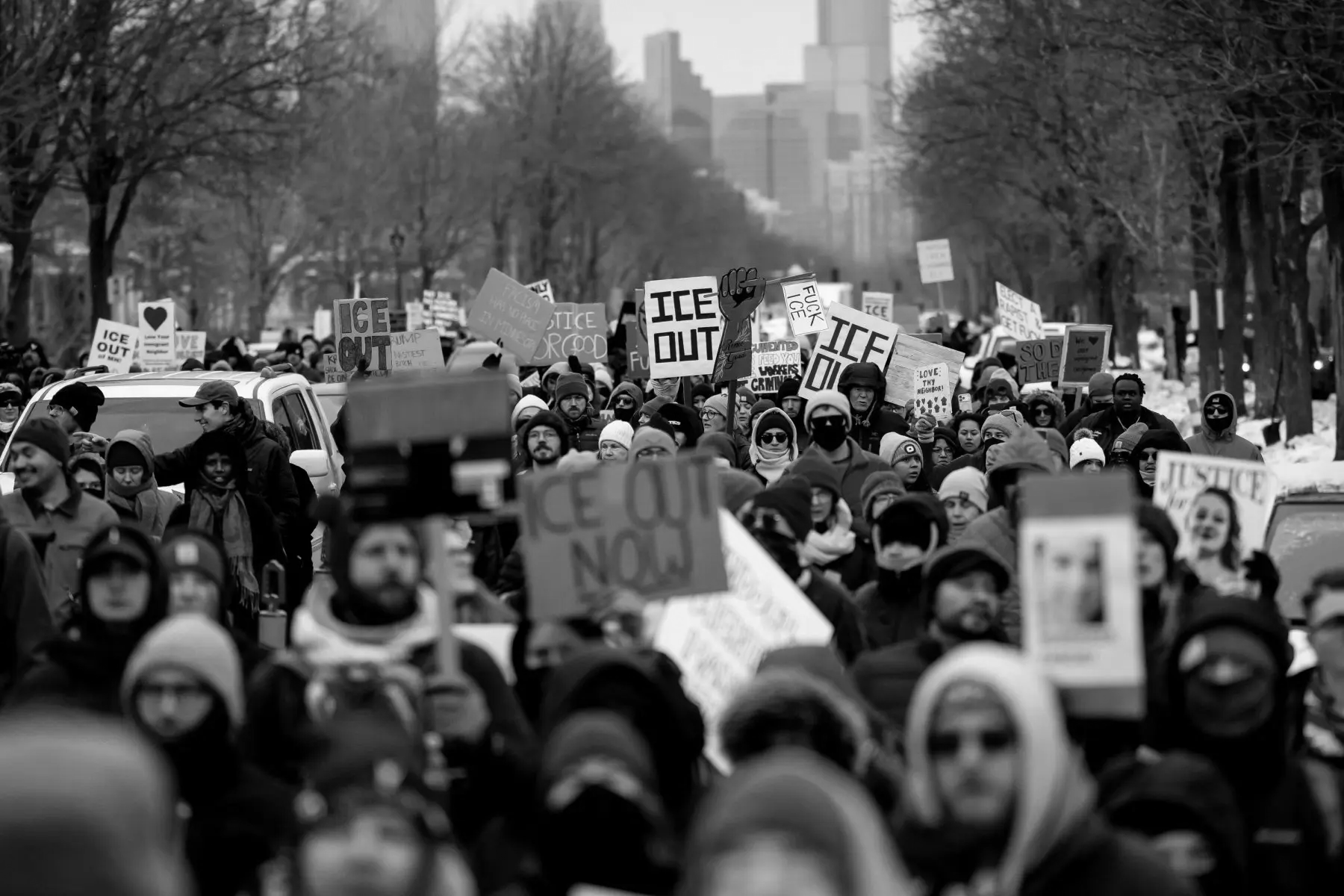
Protests against ICE spread across U.S. after shooting in Minneapolis
Thousands of people marched in Minneapolis and cities across the United States this weekend following the fatal shooting of 37-year-old Renee Nicole Good by an Immigration and Customs Enforcement (ICE) officer and the wounding of two protesters in Portland, Oregon. Activists, families, and community leaders say the incidents reflect excessive federal force, while the Trump administration and its supporters insist agents acted in self-defense during legally sanctioned enforcement operations.
In Minneapolis, tens of thousands rallied under the banner “ICE Out for Good” , chanting slogans such as “Abolish ICE,” “ICE out now!” “Say her name Renee Good,” and “No justice, no peace get ICE off our streets!” Across more than 1,000 nationwide locations , protests combined mourning, calls for systemic change, and demands for federal accountability. Organizers framed the demonstrations as resistance against militarized enforcement and broader threats to immigrant communities.
Federal authorities and the Trump administration defended the ICE officer, repeatedly asserting that he fired in self-defense after Good’s vehicle moved toward him. President Donald Trump described the incident as “ a terrible scene ,” criticized opponents for undermining law enforcement, and framed Good’s actions as a threat to federal officers. Vice President JD Vance echoed the self-defense argument , calling the shooting “a tragedy of her own making.” Homeland Security Secretary Kristi Noem said the officer followed his training and acted to protect himself and others. Officials cited the officer’s past experience , noting he was seriously injured in June 2025 when dragged by a fleeing vehicle during a previous enforcement action, suggesting that may have heightened his perception of danger in Minneapolis.
At the same time, video evidence released from multiple angles has fueled skepticism about the administration’s narrative. A 47-second clip captured from the ICE officer’s perspective shows Good speaking calmly to the approaching agent, followed by the vehicle moving forward before shots were fired. A bystander video shows her SUV stopped diagonally across the street for several minutes as agents approached, but neither video conclusively shows the car striking the officer. Local leaders and family members argue that the footage raises serious questions about whether lethal force was justified, while federal supporters say it corroborates the self-defense claim.
Local officials and civil liberties groups have sharply criticized the federal handling of the shooting and the broader enforcement surge. Minneapolis Mayor Jacob Frey rejected claims that Good posed a deadly threat, arguing the footage shows the officer “walked away with a hop in his step.” Minnesota Governor Tim Walz echoed calls for peaceful protest while condemning the heavy deployment of federal officers. The ACLU and allied organizations described the shooting as evidence of unchecked federal power, calling for a withdrawal of ICE operations and for Congress to limit funding for aggressive raids.
Protests in other cities largely remained peaceful but occasionally escalated into clashes. In Minneapolis, about 1,000 demonstrators outside a hotel believed to house federal agents threw ice, snow, and rocks, leading to 29 arrests and minor injuries. Demonstrators in cities like Fort Worth and Southlake, Texas, held marches emphasizing slogans such as “Stop the raids, protect our communities” and “No more violence in our streets.”
Political polarization has grown alongside public demonstrations. Democratic lawmakers and civil rights advocates have called for investigations, independent oversight, and criminal accountability where appropriate. Republican officials and Trump administration supporters argue ICE agents must be allowed to carry out enforcement without interference and maintain that the protests risk endangering federal personnel.
The controversy has triggered calls for transparent investigations and federal oversight . Minnesota authorities, including the Hennepin County Attorney, announced a local inquiry alongside the FBI’s federal investigation. Lawmakers from both parties are debating access to detention facilities and stricter oversight policies. Legal experts note that federal immunity and jurisdictional issues may shape the outcome of investigations, while activists continue nationwide demonstrations.
As the protests continue, the debate highlights a stark contrast between the federal government’s insistence on the legality and necessity of enforcement actions and local communities’ and civil rights groups’ demands for accountability, transparency, and systemic reform of ICE operations. The case has become a flashpoint for broader discussions about law enforcement authority, immigrant rights, and the balance between public safety and civil liberties in the United States.