
Project Cheetah At 4: From Return After 70 Years To A 52-Cheetah Population As India Eyes Expansion
Four years after India brought back the cheetah, Project Cheetah has evolved from an ambitious reintroduction exercise into a larger effort to build a self-sustaining population across multiple landscapes.
The project began because the cheetah had disappeared from India, with the last known animal believed to have been killed in 1947 and the species declared extinct in the country in 1952. The government aimed to restore the species to suitable habitats and revive its ecological role in India.
The journey began on September 17, 2022, when eight cheetahs arrived from Namibia and were released at Kuno National Park in Madhya Pradesh, marking the return of the cheetah to India after nearly 70 years. A second batch of 12 cheetahs arrived from South Africa in February 2023, expanding the founder population.
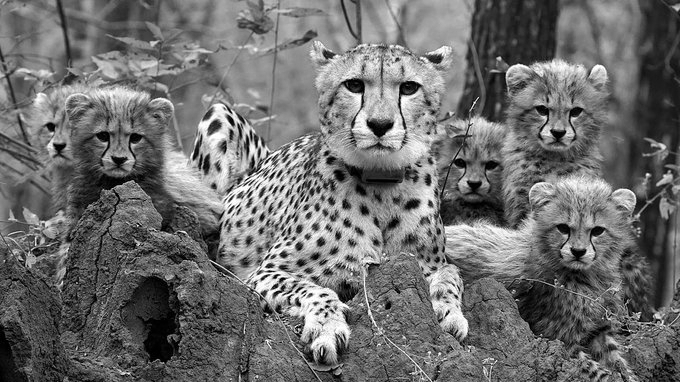
A major breakthrough came in March 2023, when the first cheetah cubs were born in India in decades. Breeding gathered momentum in 2024, and 13 India-born cubs survived beyond one year, an important step towards establishing a naturally reproducing population.
In 2025, cheetahs began moving into open forest areas and were monitored around the clock across an interstate landscape covering 12 districts. The programme also expanded beyond Kuno, with Gandhi Sagar Wildlife Sanctuary becoming the second Indian landscape to hold cheetahs.
In February 2026, nine cheetahs arrived from Botswana. Another milestone followed in April, when an India-born female gave birth to four cubs in the wild at Kuno, showing that cheetahs born in India were beginning to reproduce under natural conditions.
The population now stands at 52, including 32 born in India. Forty-nine are in Kuno and three in Gandhi Sagar. Of the Kuno population, 17 are in open forest, while 32 remain in soft-release enclosures, including 19 cubs below one year.
The project has also faced losses. Nine of the 20 cheetahs initially brought from Namibia and South Africa have died, with reported causes including kidney failure, infections and injuries. India-born cubs have also died.
The government’s next goal is a long-term cheetah metapopulation, expanding to suitable habitats beyond Kuno. It has set a stated target of 60-70 cheetahs across about 17,000 sq km by 2032. The Centre had initially allocated ₹38.70 crore for the 2021-22 to 2025-26 programme, apart from separate metapopulation funding.
The bigger test now is whether India can turn a successful reintroduction into multiple, breeding and viable wild populations requiring progressively less intensive human management.