
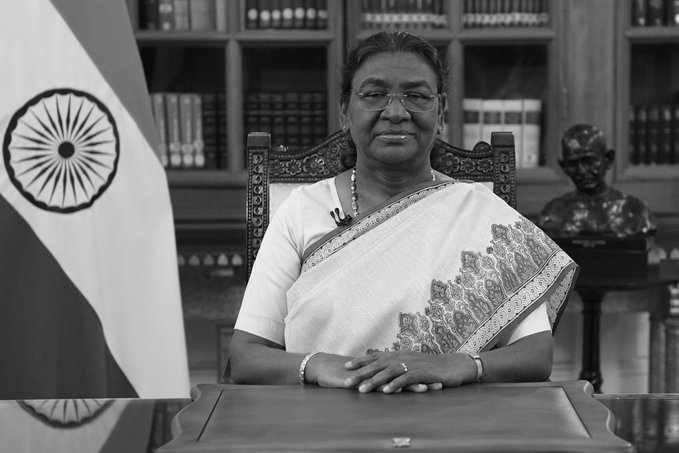
President Murmu to visit Sabarimala; first woman president at the temple
President Droupadi Murmu is set to make history as the first woman President of India to visit the Sabarimala Ayyappa temple in Kerala, a move that carries deep symbolic and cultural significance for women devotees across the country. Scheduled for October 22, during the concluding day of the Thulamasa Pooja, the visit is being closely watched not just as a ceremonial event but as a powerful message about inclusivity, women’s participation, and the blending of tradition with progressive values.
Sabarimala has long been a site where tradition and gender roles intersect. Historically, women of menstruating age (roughly between 10 and 50 years) were not allowed entry, in keeping with the belief that Lord Ayyappa is a celibate deity. Women could visit the temple after menopause, marking a natural transition that the temple tradition recognizes. This rule, rooted in centuries-old customs, has been a point of both religious observance and social debate. In 2018, the Supreme Court ruled that women of all ages have the right to enter Sabarimala, yet in practice, young women entering the temple has remained rare due to social pressures, protests, and resistance from traditionalist groups.
President Murmu’s visit thus carries immense symbolic weight. By being the first woman President to enter the temple, she exemplifies the empowerment of women within traditional frameworks. Her presence is expected to encourage more women, especially those who have reached menopause, to participate in temple rituals and festivities, reaffirming that tradition need not be a barrier to inclusion. PS Prasanth, president of the Travancore Devaswom Board, described the visit as “a blessing and a proud moment” for Sabarimala, underlining its cultural and spiritual significance.
The historic nature of this visit goes beyond symbolism. It represents progress in bridging the gap between tradition and gender inclusivity. By highlighting the role of post-menopausal women as active participants in religious life, President Murmu’s presence can serve as an inspiration for many women who have hesitated to visit Sabarimala due to cultural or societal restrictions. Religious scholars and women’s rights activists alike view this as a step forward in normalizing women’s participation while respecting long-standing practices.
Her Kerala tour, lasting from October 22 to 24, will also include visits to Thiruvananthapuram, Kottayam, Varkala, Pala, and Kochi, combining ceremonial duties with cultural and educational engagements. The visit not only emphasizes the President’s role as a unifying figure but also underscores the broader message of empowering women to take their rightful place in religious, social, and public life.
With this visit, President Murmu sets a historic precedent, showing that tradition and progress can coexist. For many women, particularly those beyond menopause, this moment is more than ceremonial, it is an affirmation that religious spaces can be inclusive and empowering, heralding a new chapter in Sabarimala’s history.