
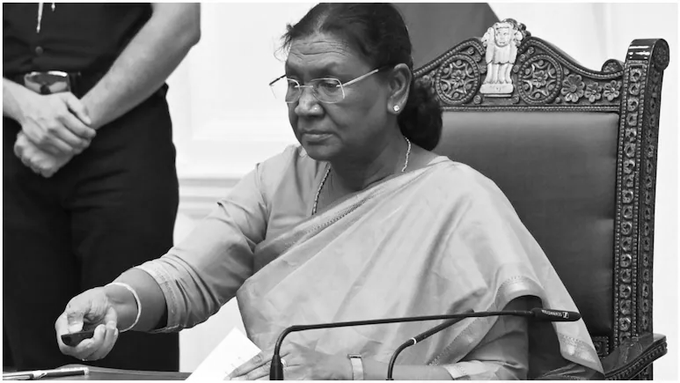
President Approves Gujarat UCC Bill, State to Notify Implementation Date
The Gujarat Uniform Civil Code (UCC) Bill, 2026 has received the assent of President Droupadi Murmu, paving the way for implementation of the legislation in the state, according to a notification published in the Gujarat Government Gazette.
The Act received presidential assent on September 17 and was published in the extraordinary gazette dated October 1. It will come into force on a date to be notified separately by the Gujarat government through the Gazette.
The legislation provides a common legal framework governing marriage, divorce, succession and live-in relationships. It will apply across Gujarat and also cover Gujarat residents living outside the state.
Members of Scheduled Tribes covered under Article 342 of the Constitution and persons or groups whose customary rights are protected under Part XXI have been excluded from the ambit of the Act.
The UCC prohibits bigamy and makes monogamy a condition for marriage. It prescribes the minimum marriageable age as 21 for men and 18 for women. Marriages can continue to be solemnised according to customary and religious practices, including Saptapadi, Nikah, Anand Karaj and Mangal Fera.
Marriage registration is mandatory, with couples required to submit a memorandum within 60 days of marriages solemnised after the Act comes into force. Wilful failure to comply can attract a penalty of up to Rs 10,000.
The Code lays down common grounds for divorce, including adultery, cruelty, desertion, conversion and prolonged disappearance. It also permits divorce by mutual consent where the parties have lived separately for at least one year.
The legislation also introduces mandatory registration of live-in relationships. Children born from such relationships will be treated as legitimate. In specified cases, information submitted for registration will be shared with the local police, while parents or guardians will be informed if either partner is below 21.
The Bill was passed by the Gujarat Assembly on March 24 after a debate of more than seven hours, despite opposition from Congress and AAP, which sought its referral to a select committee.