
Preserving the Past, Inspiring the Future: The Story of India’s Cinema Museum
On July 7, 1896 , audiences gathered at Mumbai's Watson's Hotel to witness something extraordinary. The moving pictures of the Lumière Brothers were screened in India for the first time, introducing a technology that would eventually grow into one of the world's largest film industries. Just 17 years later, Dadasaheb Phalke released Raja Harishchandra (1913), laying the foundation for Indian cinema.
More than a century later, that remarkable journey is being preserved and celebrated at the National Museum of Indian Cinema (NMIC) in Mumbai, a unique institution that has become the public face of India's efforts to protect its cinematic heritage.
The museum recently achieved a significant milestone, welcoming more than 17,000 visitors in May 2026 , one of the highest monthly footfalls in its history. While the number reflects its growing popularity among tourists and cinema enthusiasts, it also signals a broader cultural shift: Indians are increasingly looking beyond the latest releases to reconnect with the history that shaped the country's cinematic identity.
A Museum Unlike Any Other
Functioning under the National Film Development Corporation (NFDC) and the Ministry of Information and Broadcasting , NMIC is the only museum in India dedicated exclusively to chronicling the complete history of Indian cinema.
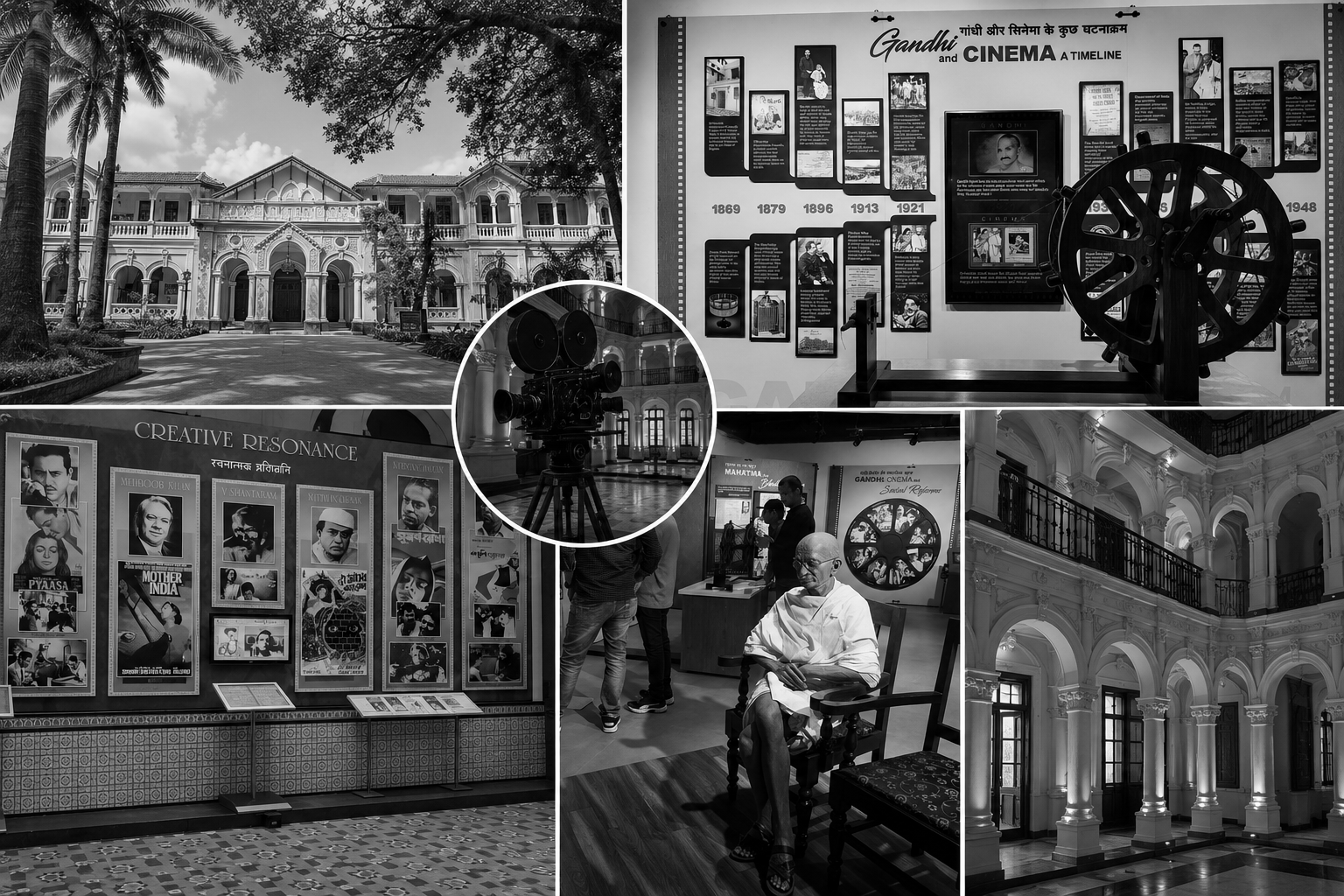
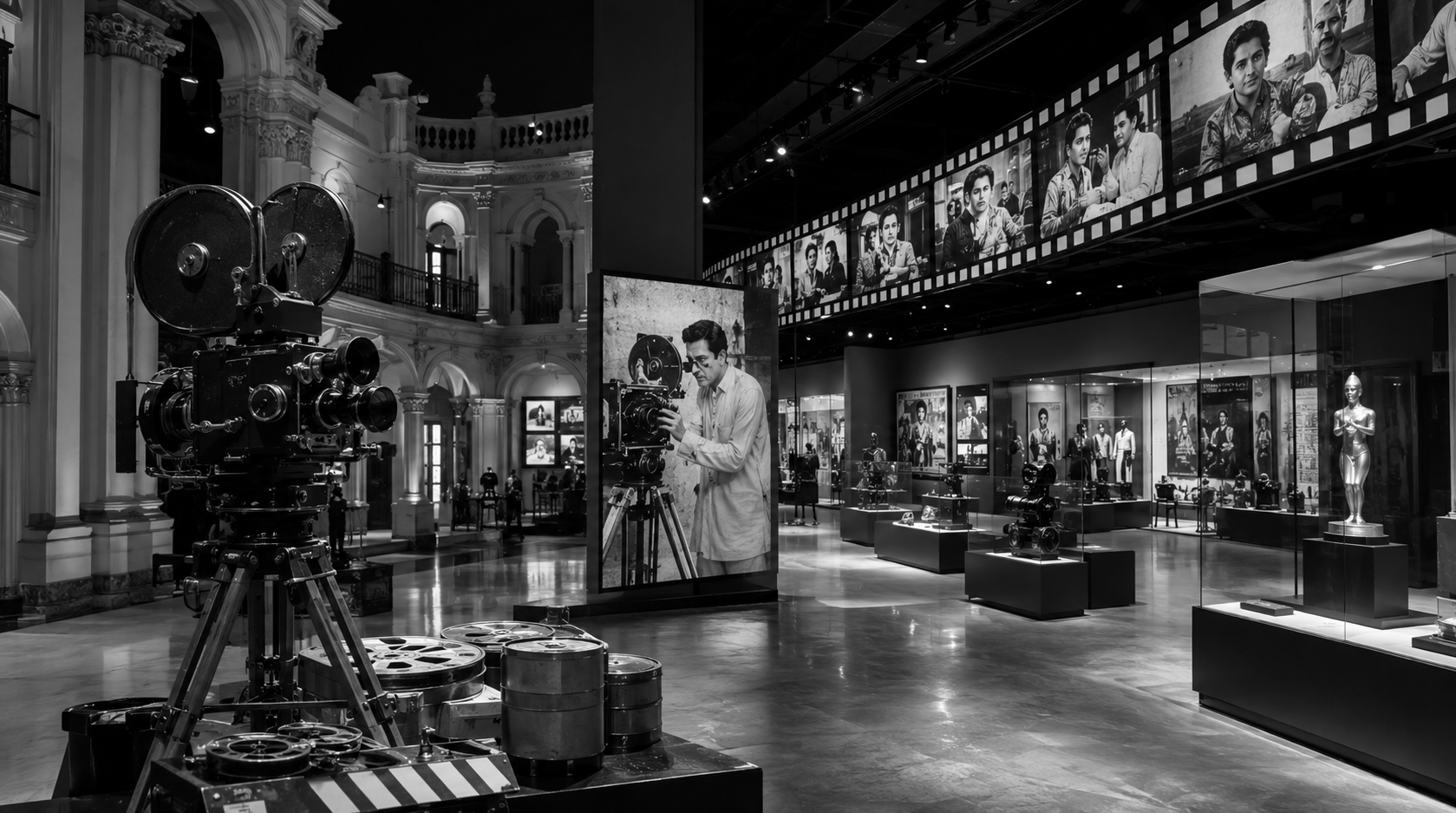
The museum occupies two contrasting structures that symbolically bridge the past and the future: a beautifully restored Victorian-Gothic mansion known as Gulshan Mahal and a modern exhibition building equipped with state-of-the-art multimedia technology. Together, they tell the story of Indian cinema from its earliest silent films to the digital era.
Visitors encounter rare cameras, vintage projectors, costumes, posters, photographs, scripts, film memorabilia, and interactive installations that bring more than a century of filmmaking to life. Dedicated sections explore the evolution of sound, editing, animation, visual effects, cinematography, and film music.
Among the most popular attractions is the gallery dedicated to legendary filmmaker Satyajit Ray , whose work continues to influence filmmakers across the world. The museum also examines how cinema evolved through India's freedom movement, the years surrounding Partition, and the nation's post-Independence journey, demonstrating how films often reflected the hopes, anxieties, and social transformations of their time.
Preserving a Heritage That Was Nearly Lost
The existence of NMIC is closely tied to a difficult chapter in India's cultural history.
For decades, film preservation remained a neglected area despite India's enormous filmmaking output. Thousands of films were stored under inadequate conditions, while many silent-era works disappeared forever. Film reels deteriorated due to age, humidity, and neglect, leaving significant gaps in the country's cinematic record.
The situation became even more alarming after a devastating fire at the National Film Archive of India (NFAI) in 2003 destroyed hundreds of film reels and underscored the urgent need for a systematic preservation strategy.
The crisis prompted renewed efforts to protect India's cinematic heritage. Momentum gathered during the centenary celebrations of Indian cinema in 2013 , eventually leading to the launch of the National Film Heritage Mission (NFHM) one of the world's largest film preservation initiatives.
When NMIC was inaugurated in 2019, it became a visible symbol of this larger national mission to ensure that India's film history would never again be at risk of being forgotten.
The Massive Archive Behind the Museum
While NMIC serves as the public-facing showcase of India's film heritage, the preservation work itself is carried out by NFDC-National Film Archive of India (NFAI) .
Today, the archive preserves more than 30,000 film titles , making it one of the largest collections of moving-image heritage in Asia. Its holdings extend beyond films to include more than 2 lakh still photographs , 40,000 film posters , 24,000 song booklets , hundreds of thousands of press clippings, thousands of cinema-related books, and an extensive collection of scripts and production records.
Much of this archive owes its existence to the pioneering efforts of P.K. Nair , widely regarded as the father of film archiving in India. Beginning in the 1960s, Nair travelled across the country rescuing film prints that were often abandoned, discarded, or on the verge of destruction. His work laid the foundation for the preservation movement that continues today.
The Science Behind Saving a Film
Film restoration is a painstaking process that combines historical research, conservation science, and advanced digital technology.
According to government data, 1,469 titles , including feature films, documentaries, and short films, have already been restored and digitized under the National Film Heritage Mission, covering more than 4.3 lakh minutes of footage .
Before restoration begins, researchers examine original negatives, release prints, scripts, censorship certificates, production notes, publicity material, and historical reviews. Technicians then assess damaged reels for scratches, fading, missing frames, audio deterioration, and chemical decay.
The films are scanned in high resolution, often in 2K or 4K formats, and painstakingly repaired frame by frame. Every colour correction, sound enhancement, and visual adjustment is guided by research to ensure that the restored version remains faithful to the filmmaker's original vision.
Bringing Classics Back to Life
Among the most celebrated recent achievements has been the 4K restoration of the complete feature filmography of Ritwik Ghatak , one of India's most influential filmmakers.
Landmark works such as Meghe Dhaka Tara , Subarnarekha , Komal Gandhar , and Ajantrik have been restored for contemporary audiences and are now being showcased at international film festivals.
The museum also serves as a platform for reconnecting audiences with restored classics. Through initiatives such as "NMIC Chronicles of Timeless Treasures," visitors can experience iconic films on the big screen, including classics such as Guru Dutt's Pyaasa , allowing new generations to engage with some of Indian cinema's most important works.
A Classroom for Filmmakers and Film Societies
The importance of NMIC extends far beyond preservation.
Film societies, researchers, students, and aspiring filmmakers increasingly view the museum as a learning centre where cinema can be studied as both an art form and a technical discipline. Restored classics provide invaluable insights into cinematography, editing patterns, sound design, visual composition, storytelling techniques, and production practices.
Every restored film becomes a living textbook, helping contemporary creators understand how cinematic aesthetics evolved across decades.
For India's independent film community, institutions such as NMIC play a vital role in cultivating audiences that appreciate cinema beyond mainstream commercial entertainment. By introducing visitors to regional cinema traditions, pioneering directors, and alternative storytelling approaches, the museum helps sustain a richer and more diverse film culture.
India's Growing Place in Global Film Preservation
Despite being one of the world's largest film-producing nations, India historically lagged behind countries such as the United States, France, and the United Kingdom in film preservation, archival research, and cinema studies.
That narrative is now changing.
The rise of NMIC and the expansion of the National Film Heritage Mission represent a growing recognition that cinema is not merely entertainment, it is a vital part of the nation's cultural memory.
The museum's record-breaking visitor numbers are therefore more than a tourism statistic. They reflect a growing public appreciation for the importance of preserving the stories, technologies, artistic innovations, and cultural movements that shaped Indian cinema.
As thousands of visitors walk through NMIC's galleries each month, they are not simply looking at old film reels and posters. They are engaging with a living archive of India's creative history, a history that nearly disappeared, but is now being preserved for generations to come.