
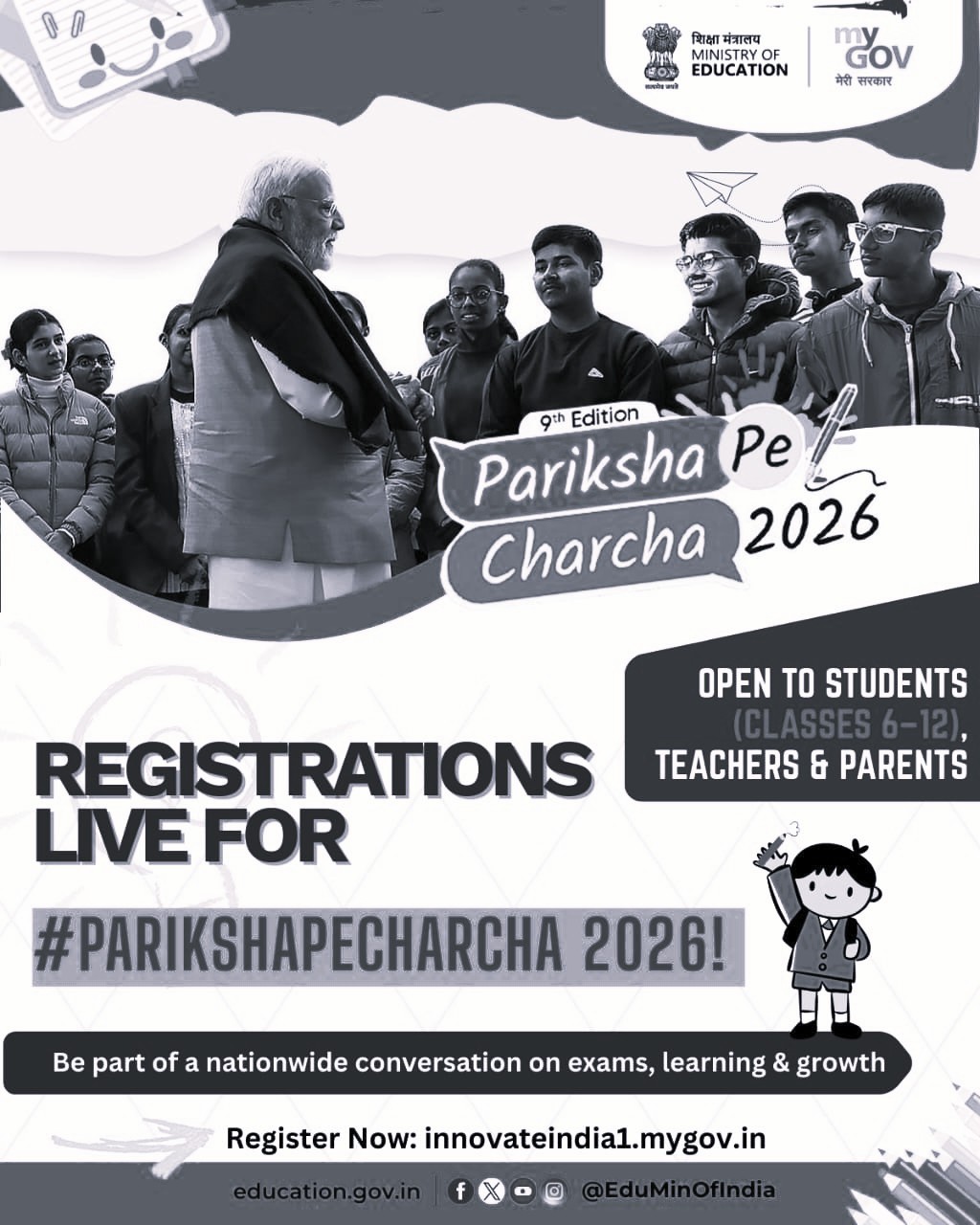
PPC 2026: A timely intervention amid rising academic pressure and dropout rates
The education landscape in India is currently experiencing a crucial moment shaped by rising academic pressure, mental-health challenges, and persistent dropout issues. Recent data from the National Crime Records Bureau shows a worrying increase in student suicides nearly 65% over the last decade indicating that exam stress, fear of failure, and overwhelming parental expectations continue to affect millions of children. At the same time, reports such as the 2024–25 UDISE+ data reveal that although primary-level dropout rates have improved significantly, secondary-level dropout remains a major concern, with retention up to Class 12 still far below ideal levels. Against this backdrop, national programs such as Pariksha Pe Charcha (PPC) have become more relevant and necessary than ever. With registrations now open on the MyGov portal from 1st December 2025 to 11th January 2026, PPC 2026 once again offers students, parents, and teachers an opportunity to engage directly with Prime Minister Narendra Modi on managing exam-related stress and embracing a positive approach toward learning and evaluation.
The cultural shift that PPC advocates treating exams as a celebration rather than a burden—is particularly significant in a climate where academic stress is contributing to rising mental-health crises among students. Each edition of PPC carries strong messaging for parents, urging them to avoid undue pressure, comparison, and harsh expectations while reminding them that marks alone do not determine their child’s future success. Complementing PPC, initiatives like the Exam Warriors movement, the MANODARPAN mental-health support program, and the National Education Policy (NEP 2020) collectively work to create awareness among parents about healthy behavior during examinations and the importance of fostering a positive learning environment at home. These interventions emphasize empathy, open communication, patience, and emotional security factors proven essential for reducing stress-induced decisions among children.
In parallel, the government continues to tackle dropout challenges through campaigns under Samagra Shiksha, School Chale Hum, Beti Bachao Beti Padhao, and the PM SHRI Schools initiative, all of which focus on improving access, infrastructure, community involvement, and parental understanding of why completing schooling is crucial. These initiatives recognize that dropout is often rooted not just in economic constraints but also in social attitudes, lack of awareness, or insufficient academic and emotional support. Through awareness drives, counselling sessions, and community mobilization efforts, parents are increasingly being educated on the long-term value of education and the consequences of withdrawing children from school prematurely.
The intersection of rising suicide rates, dropout patterns, and intense academic competition makes these initiatives more urgent than ever. The reopening of PPC in January 2026, with its registration deadline of 11th January 2026, stands as a timely reminder of the need to maintain nationwide engagement on student well-being and parental awareness. While programs alone cannot immediately reverse long-standing cultural pressures, they represent a strong step toward shifting India’s educational mindset from one of fear, pressure, and comparison to one built on confidence, support, and holistic growth. By reaching millions of students and families every year, PPC and associated campaigns hold the potential to influence real behavioral change, prevent emotional distress, and ensure more children remain in school, complete their education, and pursue their dreams without the overwhelming burden of unrealistic expectations.