
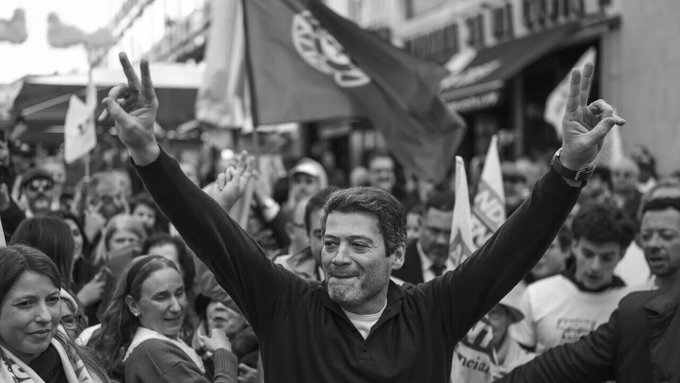
Portugal presidential election heads to historic runoff as far‑right leader surges
In a dramatic first round of Portugal’s presidential election on Sunday, centre‑left Socialist candidate António José Seguro and far‑right Chega leader André Ventura emerged as the top two finishers, setting up a runoff on February 8 that will shape the country’s political direction for the next five years. With nearly all ballots counted, Seguro won about 31 per cent of the vote while Ventura secured roughly 23-24 per cent , marking the first time in over four decades that a presidential race in Portugal has required a second round.
The election drew strong turnout from the country’s more than 11 million registered voters , producing an abstention rate significantly lower than in the last presidential election reflecting heightened public interest and concern over national issues.
João Cotrim de Figueiredo of the liberal Liberal Initiative finished third with around 16 per cent of the vote , followed by independent candidate Henrique Gouveia e Melo at about 12 per cent and Social Democratic‑backed Luís Marques Mendes at around 11 per cent . Their combined support underscored the fragmentation of the political right and complicated traditional party dynamics.
Ventura’s strong showing and his advancement to the runoff alongside Seguro represents a remarkable rise for Chega , a party he founded less than seven years ago that has since become Portugal’s main opposition force in parliament . In last year’s legislative elections, Chega captured nearly 23 per cent of the vote and became the second‑largest party, breaking the long‑standing dominance of Portugal’s two traditional parties.
Ventura, a former sports commentator turned populist politician, has campaigned aggressively on issues of immigration, national identity, and law and order , using provocative slogans such as “This isn’t Bangladesh” messages that have drawn both support and controversy. A court in Lisbon required him to remove some campaign posters after they were judged discriminatory.
Seguro, a former Socialist Party secretary‑general who returned to frontline politics for this election, positioned himself as a defender of democracy and non‑extremist values. He sought to unite “all democrats, progressives and humanists” behind his candidacy and has called the election’s first-round result a victory for democracy itself .
Reactions from other party leaders highlighted the divisions on the right: Prime Minister Luís Montenegro and the centre‑right Social Democrats declined to endorse either runoff candidate, signalling unease with Ventura’s rise and affirming the party’s neutrality. Cotrim de Figueiredo also refused to back Ventura, calling the runoff choice “lousy” and predicting a Socialist victory.
Portugal’s president holds a largely ceremonial post, but with powers that include vetoing legislation, dissolving parliament, and calling early elections tools that give significant influence over the country’s political balance. The incumbent, Marcelo Rebelo de Sousa , is completing his constitutionally limited second term.
As the February 8 runoff approaches, polls suggest that Ventura’s high rejection rate among many voters could make securing a majority difficult. Analysts argue that while his first-round performance was strong, his ability to broaden support beyond his core base remains uncertain.