
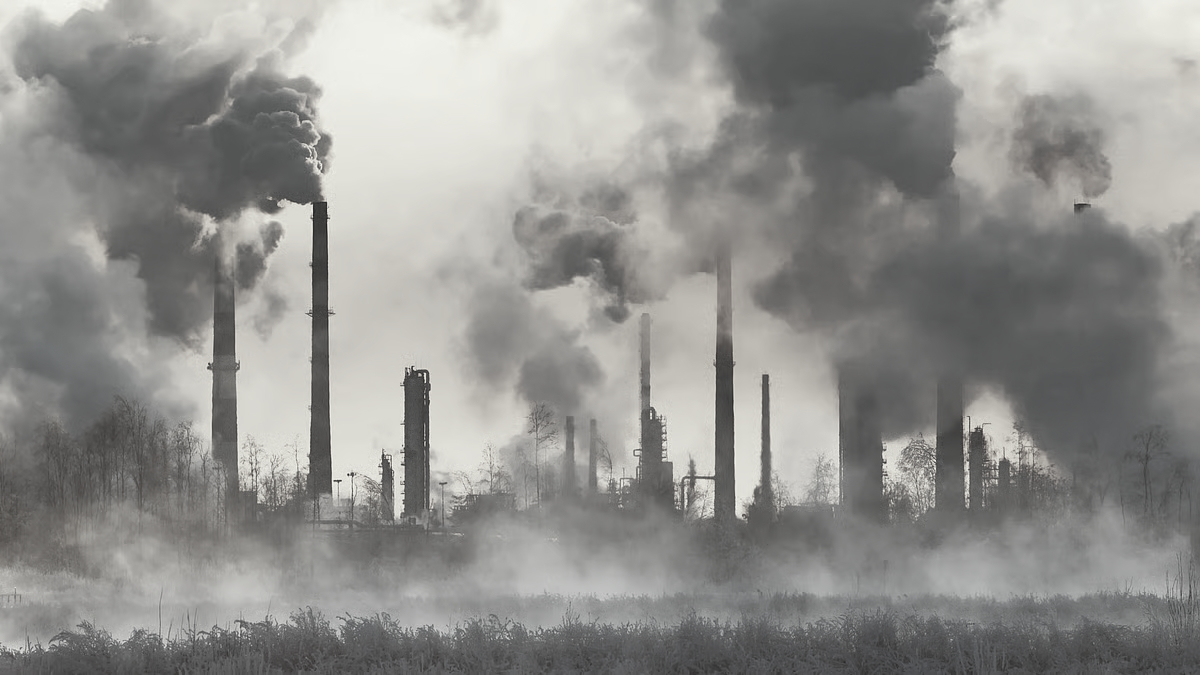
Pollution watch tightens: CPCB mandates cameras and sensors in NCR factories
In a significant move to combat persistent air pollution in the National Capital Region (NCR), the Central Pollution Control Board (CPCB) has directed Delhi, Haryana, Rajasthan, and Uttar Pradesh to ensure the installation and operation of real-time emission monitoring systems and cameras in all major polluting industries by December 31, 2025. This initiative aims to enhance surveillance and self-regulation among industries amid ongoing concerns over air quality.
Why these four states?
The inclusion of Delhi, Haryana, Rajasthan, and Uttar Pradesh is strategic, as these states collectively encompass the NCR, a region that significantly contributes to Delhi's air pollution. Industrial emissions, vehicular exhaust, and construction activities in these states directly impact the capital's air quality. By targeting these areas, the CPCB aims to address pollution at its source and ensure a coordinated approach to emission control across state boundaries.
The role of CPCB in pollution monitoring
Established in 1974 under the Ministry of Environment, Forest and Climate Change, the CPCB serves as the apex body for pollution control in India. It coordinates with state pollution control boards to ensure uniformity and consistency in air quality data and provides technical assistance and guidance. The CPCB is responsible for maintaining national standards under various environmental laws and conducts environmental assessments and research to advise the central government on pollution control measures.
Is CPCB the sole body monitoring Delhi's pollution?
While the CPCB plays a central role, it collaborates with other agencies to monitor and control pollution. The Delhi Pollution Control Committee (DPCC) is the primary agency responsible for implementing pollution control measures within Delhi. Additionally, the Commission for Air Quality Management (CAQM) oversees air quality management in the NCR, including Delhi, Haryana, Punjab, Rajasthan, and Uttar Pradesh. These agencies work in tandem to address the multifaceted issue of air pollution in the region.
Winter and Delhi's pollution
Delhi's air quality typically worsens during the winter months due to a combination of factors. The phenomenon of temperature inversion traps pollutants close to the ground, preventing their dispersion. Additionally, the burning of crop residues in neighboring states contributes significantly to the pollution levels in Delhi. The CPCB's directive to install real-time emission monitoring systems and cameras in industries aims to mitigate these sources of pollution and improve air quality during the critical winter period.
The CPCB's directive marks a proactive step towards addressing industrial pollution in the NCR. By implementing real-time monitoring systems and cameras, the initiative seeks to enhance transparency, accountability, and compliance among industries. However, the success of this measure will depend on effective enforcement and collaboration among all stakeholders involved in pollution control.