
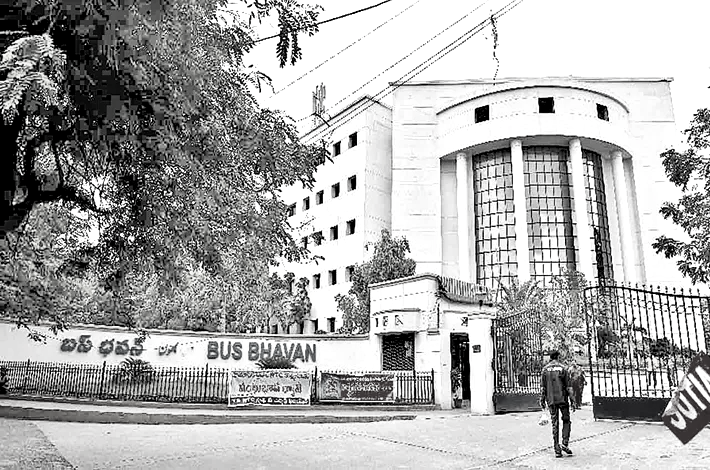
Policy decisions, not core operations, behind RTC losses in AP, Telangana
State-run road transport corporations in Andhra Pradesh and Telangana continue to post financial losses , but official audit records and Assembly replies indicate that the deficits are largely due to policy decisions such as free travel schemes, delayed government reimbursements, and staff-related liabilities , rather than unviable core bus operations.
A comparison with the Delhi Transport Corporation (DTC) , which has accumulated losses of about ₹97,000 crore , shows that while RTCs in Telugu states remain under financial stress, their accumulated losses are significantly lower and stem from different structural factors , officials and auditors noted.
According to Comptroller and Auditor General (CAG) reports and Assembly responses, the Andhra Pradesh State Road Transport Corporation (APSRTC) has accumulated losses of ₹20,000–23,000 crore , with annual losses around ₹3,000–4,000 crore . CAG findings indicate that fare revenue covers a substantial portion of operating costs, but revenue gaps arise due to concessional travel for women, students, senior citizens and welfare beneficiaries , with annual shortfalls estimated at ₹1,500–2,000 crore . Delayed or partial reimbursements, pension liabilities, rising fuel costs , and stagnant fares have further strained APSRTC’s finances.
In Telangana , the TGSRTC has accumulated losses of ₹10,000–13,000 crore , with annual losses around ₹1,500–2,000 crore . The 2020 decision to absorb RTC employees into the state government eased cash flow pressures but did not erase accumulated losses. Pension obligations and legacy deficits remain on the books. Telangana also operates fewer free travel schemes, limiting revenue impact, but rising costs and stagnant fares continue to challenge the corporation.
In contrast, Delhi’s DTC faces far larger deficits, driven by policy discontinuity, outsourcing of operations to DIMTS , and mounting staff and pension costs . Audit records classify the financial stress on RTCs in Telugu states as “policy-induced” , emphasizing the need for transparent subsidy budgeting, timely reimbursements , and a clear separation of operational performance from social obligations .