
‘Policies made through WhatsApp’: TMC criticises EC over electoral roll revisions
The Trinamool Congress on Saturday accused the Election Commission of India of selectively targeting West Bengal through the ongoing Special Intensive Revision (SIR) of electoral rolls, alleging that the process is being manipulated to aid the ruling Bharatiya Janata Party ahead of the 2026 Assembly polls.
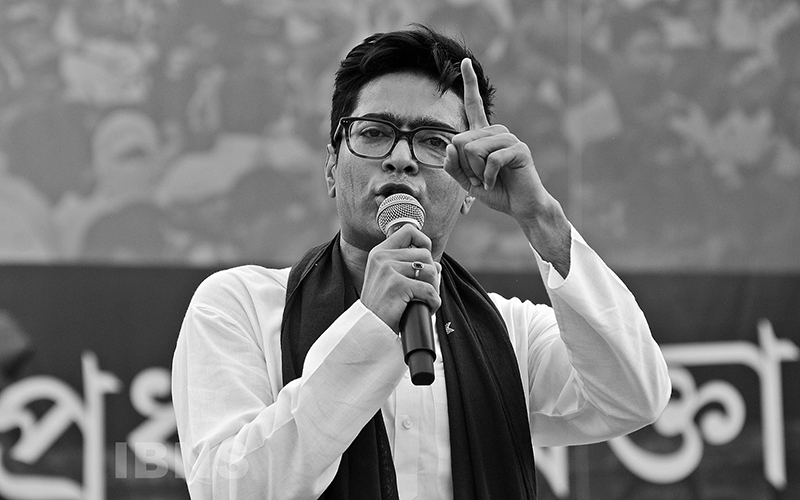
Addressing a press conference, Abhishek Banerjee , TMC national general secretary, demanded that the EC reveal how many of the 58.20 lakh names deleted from the draft voter list belong to illegal Bangladeshis and Rohingyas . He said the deletions are part of a broader agenda to harass the people of Bengal since the TMC’s 2021 assembly election victory. “Bengal’s population is 10.05 crore, and the number of voter deletions in the SIR exercise is 58.20 lakh. This is just 5.79 per cent of the population, the lowest among all states where SIR is being conducted,” Banerjee said.
Banerjee also highlighted the human cost of the SIR exercise, saying that 45 people lost their lives and six were hospitalised, while 29 Booth Level Officers attempted suicide during the process. He claimed that repeated questions posed to the EC went unanswered, with the Commission merely telling the media that responses had been given.
The TMC leader criticised the deployment of a micro observer in West Bengal but not in Gujarat , calling it selective implementation. He also pointed to contradictions in the EC’s statements regarding voter data, noting that while the Commission previously said 40 to 50 percent of mapping could not be verified, the draft list now shows nearly 80 percent of data mapped. “This proves the entire exercise is politically motivated. Policies are being made through WhatsApp. That is why we are calling it a WhatsApp Commission,” he said.
Earlier in the day, a TMC delegation including ministers Chandrima Bhattacharya , Sashi Panja , Aroop Biswas , Manas Bhuniya , and Malay Ghatak met Chief Electoral Officer Manoj Agarwal and submitted a memorandum listing grievances. Bhattacharya alleged that the EC has omitted around 58 lakh genuine voters by branding them as “unmapped,” while Biswas said the EC mobile application prevents unmapped voters from submitting forms, depriving them of their voting rights. The delegation claimed that the EC and CEO office were acting at the behest of the BJP, pointing to arbitrary changes in hearing dates and truncated deadlines for addressing grievances.
Biswas added that names of local representatives, including councillors and their relatives, were struck off electoral rolls without explanation, and he demanded that the EC upload all details of unmapped voters for transparency. Bhuniya said he had witnessed 41 elections in the past but had never seen the Constitution treated in such a manner.
While the TMC maintains that the deletions are politically motivated, the BJP has repeatedly claimed that a significant number of illegal migrants were included in Bengal’s voter lists, suggesting that the SIR exercise is necessary to maintain electoral integrity. This perspective places the ruling party in a defensive position, as the TMC argues that the scale and method of deletions have unfairly targeted genuine voters and disproportionately affected the state.
Banerjee announced that he will personally meet Chief Election Commissioner Gyanesh Kumar in New Delhi on December 31 to discuss the SIR draft list. He accused the EC of hiding the correct voter data and alleged that a private individual named Seema Khanna was managing the Commission’s mobile application, which he claimed had serious flaws.
“If the EC has a list of illegal migrants, it should make it public. Otherwise, it must apologise to the people of Bengal. If we do not get a response by December 31, we will gherao the Election Commission,” Banerjee warned.
The draft voter list under the Special Intensive Revision was published last week, and the controversy over voter deletions has intensified political tensions in the state, raising questions about the neutrality and transparency of the electoral process.