
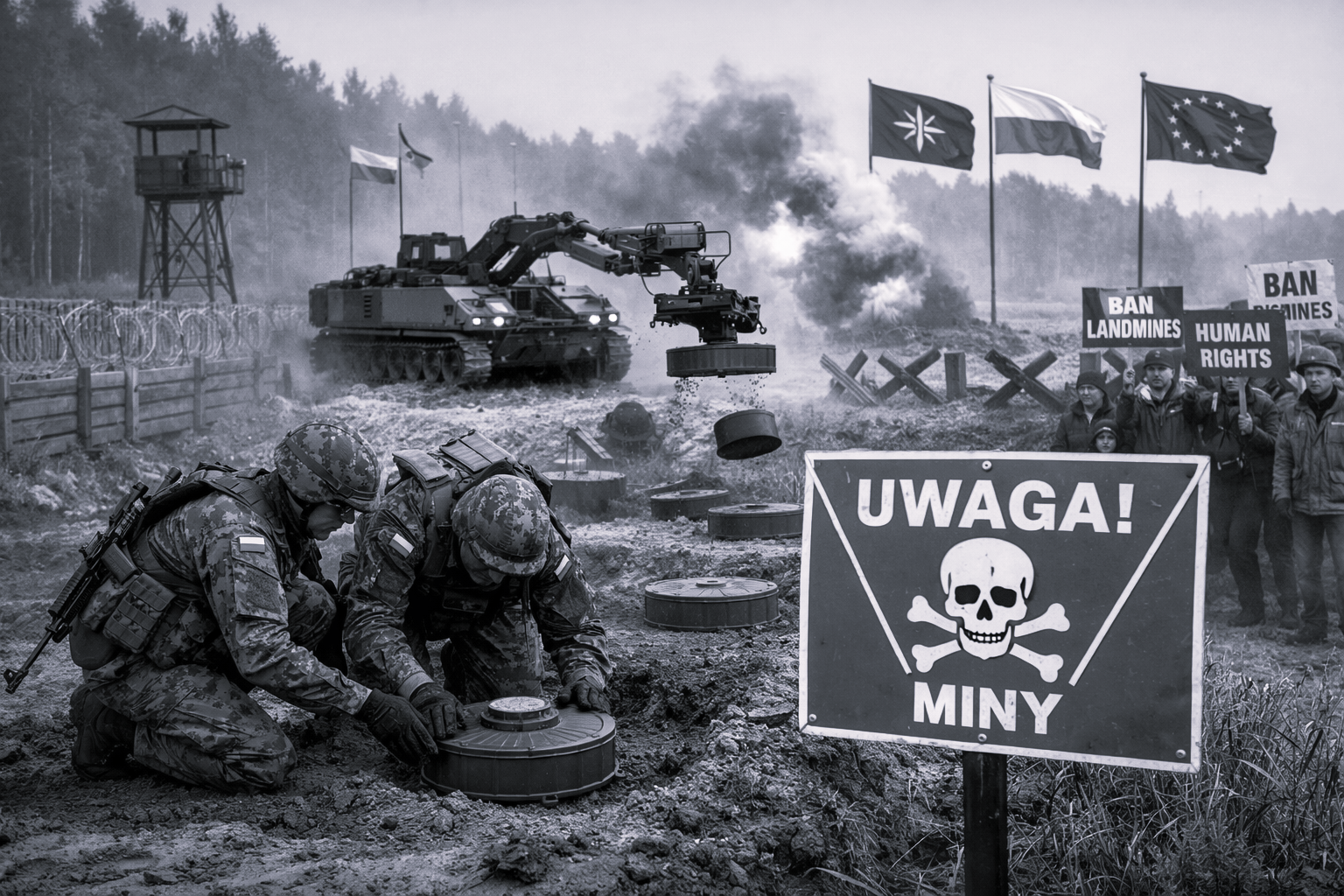
Poland Quits Mine Ban Treaty, Signals Defence Industry Push Amid Rising Russia Tensions
Poland’s decision to withdraw from the Ottawa Convention and resume domestic land-mine production marks not only a strategic military shift but also a development with economic, legal and geopolitical ramifications across Eastern Europe.
The move comes amid heightened regional insecurity following the Ukraine war , which has intensified defence planning among frontline states. Polish officials argue that the deteriorating security environment particularly the perceived threat from Russia and instability along borders with Belarus has compelled Warsaw to prioritise deterrence and territorial defence infrastructure.
Deputy Defence Minister Paweł Zalewski said land mines would form part of Poland’s broader Eastern Shield fortification programme, aimed at strengthening NATO’s eastern flank. He stressed that the country intends to build the weapons domestically, a policy that could channel significant government spending into Poland’s defence industry and reduce reliance on foreign suppliers.
Prime Minister Donald Tusk has indicated that Poland could rapidly mine sections of its eastern frontier if faced with a direct threat, suggesting future demand for large stockpiles and logistics systems. Defence analysts note that such programmes often trigger secondary investments in surveillance, transport, engineering and maintenance, potentially benefiting Poland’s wider military-industrial ecosystem and contractors linked to NATO procurement networks.
However, the policy has also sparked significant humanitarian concerns . Anti-personnel mines have long been criticised for causing civilian casualties decades after conflicts end, particularly in countries such as Cambodia, Angola and Bosnia. Human rights organisations warn that Poland’s withdrawal risks weakening the global norm against the weapons and could encourage other states to reconsider treaty commitments.
Environmental experts have also raised alarms, noting that land mines can contaminate soil, forests and farmland for years, limiting economic activity and creating costly long-term clean-up obligations. From a business standpoint, this raises the prospect of future expenditure not only on weapons production but also on demining operations, rehabilitation projects and compensation frameworks.
Legally, Poland’s exit from the treaty underscores a broader shift in international security thinking, where states increasingly prioritise defence autonomy over multilateral arms-control commitments. Analysts say this may fuel debates within Europe about whether deterrence requirements justify revisiting humanitarian conventions designed for post-Cold War stability.
Reactions among allies have been mixed. Some Eastern European partners privately acknowledge the security pressures facing Poland, while others fear that loosening restrictions on land mines could complicate collective diplomatic efforts and damage Europe’s moral authority in advocating humanitarian norms abroad.
At the core of the debate lies a fundamental strategic dilemma: whether the perceived deterrent value of land mines outweighs their humanitarian, environmental and reputational costs. Poland maintains that deployment would occur only in the event of a credible threat and that the weapons will otherwise remain in reserve.
For investors and policy observers, the decision highlights a broader regional trend rising defence budgets, localisation of military production and expanding infrastructure spending across Eastern Europe. Poland’s policy shift therefore represents not just a security recalibration, but also a signal that defence manufacturing and border fortification projects may become a key pillar of the region’s economic planning in the years ahead