
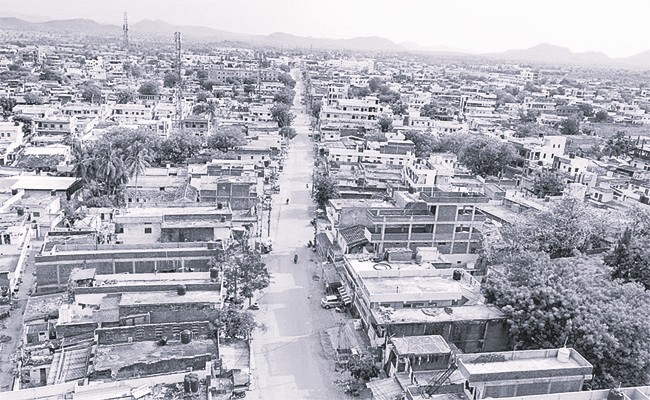
Pochampally: The Silk City of India
On the land of Telangana, Bhoodan Pochampally stands not merely as a geographical location but as an enduring memory. It is a living canvas where sacrifice, art, and the human spirit converge. This soil is a witness to the nobility of thousands of hearts that donated land in response to Vinoba Bhave's call.
Every thread in the Ikat sarees is not just a blend of colors; it is the result of the generational skill of the weavers' fingers, their dreams, tears, and waiting. Each saree tells a story: the hope and dedication of a hardworking family, the echo of a profound tradition. Through its textile art, and through its historic movement, this village offers to our generations an invaluable treasury of heritage that delivers both culture and equality.
Approximately 45-50 kilometers from the capital Hyderabad, in the Yadadri Bhuvanagiri district of Telangana state, lies a quiet little village, Bhoodan Pochampally. When one hears of this village, two main things usually spring to mind, the magnificent, historical sarees, and a momentous social movement that changed the nation. While it may look like an ordinary village on the outside, every thread and every color here tells a unique story. A legacy interwoven with time, the lifestyle of many people, and numerous social changes have all made this village stand out globally.
The glory that placed Pochampally on the world map belongs to the fabrics woven here. Due to the worldwide fame of these spectacular sarees, Pochampally is proudly called the "Indian Silk City." The Ikat fabric sarees originating here are made with extremely complex designs and strong quality, earning praise from around the world. The skill of this Ikat art is already protected by the Geographical Indication (GI) tag. Recently, the United Nations World Tourism Organization (UNWTO) recognized Pochampally in its prestigious list of Best Tourism Villages.
The specialty of this village is not just limited to its traditional artistry. It is also the birthplace of a great social movement that resonated across the country. As it became the epicenter of the historic Bhoodan (Land Gift) Movement , started by Acharya Vinoba Bhave in 1951, the village is known today as Bhoodan Pochampally .
The Historical Background of the Weaving Art in Pochampally
The Pochampally region has a very ancient history in the art of textiles. India has had an incredible textile heritage since ancient times, and Pochampally is a part of that lineage. Long ago, the weavers in this region initially started weaving small cloths, rumals (handkerchiefs), and small garments using local cotton threads. In those days, these were made with simple designs for daily needs.
Over time, these woven designs became more complex and appealing. The weavers developed their technical skills. Specifically, geometric designs like the “Chouka” (square or diamond shape) gained popularity. They then started incorporating attractive colors using naturally available dyes, which gave a new dimension to their artistic skill.
What is Ikat? - The Art and the Method
What elevated Pochampally sarees to an international level is the unique method used in their production: Ikat . The word "Ikat" actually comes from the Malay-Indonesian language, meaning "to tie or bind."
The Ikat method differs from other textile manufacturing techniques. Usually, fabrics are first woven and then dyed. But in Ikat, the yarn (thread) is dyed using the "tie-and-dye" method before being woven into fabric. This process makes the design appear not as if it is printed on the fabric, but intrinsically and beautifully merged within the thread itself.
Steps in the Ikat Process
Design Layout:
First, the design to be woven is rigorously drawn up on a graph or blueprint. Tying: According to this design, certain sections of the yarn are tightly tied with rubber bands or ropes. This tying prevents the dye solution from penetrating the thread. Dyeing: The yarn is then dipped into the dye solution. The tied areas remain white or in their previous color, as they do not absorb the dye. Untying and Repeating: After dyeing is complete, the tied areas are removed. For complex designs, this tying and dyeing process may have to be repeated multiple times. Weaving: Finally, these dyed threads are placed on the loom and the saree or fabric is woven. The design previously created in the yarn then clearly emerges on the fabric.
This method requires extreme precision, coordination, and strong management of the threads . A minor deviation during weaving can completely alter the design. Furthermore, every step of the Ikat process is still carried out through handiwork.
Specialties of Pochampally Ikat
Pochampally Ikat designs are uniquely identifiable even from other Ikat regions in South India. The main reasons for this are the geometric designs and the variety of colors.
Geometric Designs:
The sarees from this region mostly feature simple, yet attractive geometric shapes, lines, and square patterns. There is great appeal hidden in their simplicity. Color Palette: Ikat sarees also feature a wonderful combination of colors. In some cases, colors are still applied using dye particles extracted from natural sources. Strong Weave: The weave is a specialty. In Pochampally, fabrics are woven using silk, cotton, or a blend of silk and cotton ( sico ). The weave is of very high quality and sturdy. The handloom weavers here use traditional looms dating back hundreds of years, which gives these fabrics a unique authenticity.
The Shift from Cotton to Silk: A Phase that Strengthened the Art
A significant change occurred in the Pochampally weaving art in the mid-20th century. Weavers shifted their focus from cotton yarn to weaving sarees using higher-value silk yarn. After silk weaving began, these sarees gradually gained a superior position in the market. Silk-woven sarees received the highest praise for their luster, style, and durability.
This evolution was greatly supported by local weavers, the handloom cooperative societies that coordinated them, and government encouragement programs. Through this collective effort, Pochampally Ikat reached the international market. This also improved the economic status of the region.
Geographical Indication (GI)
To protect the authenticity and uniqueness of the Pochampally Ikat weave, it was granted Geographical Indication (GI) protection or Intellectual Property Rights in 2004-05 . This GI tag legally ensures that the name and style of Ikat sarees apply only to authentic textiles originating from the Pochampally region.
The GI tag brings these benefits to the weave:
• Indirect protection for authentic handloom from counterfeit and power-loom fabrics.
• Better pricing and benefits for the skills of local weavers in the international market.
• Higher recognition and trust among consumers and in the international industry.
The Bhoodan Movement - A Step Towards Social Change
The significance of Pochampally is not limited to textiles. This village is also the hub of a great social movement in Indian history: the Bhoodan Movement .
On April 18, 1951 , Acharya Vinoba Bhave, a disciple of Mahatma Gandhi, visited the village. At that time, many farmers and agricultural laborers in Pochampally were suffering greatly due to lack of land. Moved by their plight, Vinoba Bhave appealed to wealthy landlords to voluntarily donate land. In response to this request, a large amount of land was donated right in this small village.
Inspired by this historic event, the Bhoodan Movement spread across the country. It greatly helped in the redistribution of millions of acres of land to the poor and landless. As the focal point of this movement, Pochampally remains in history as Bhoodan Pochampally. A memorial related to this movement also stands in the village, serving as a testament to the unity, benevolence, and social change of the people.
Tourism Perspective and Recognition
In 2021, Pochampally village received a historic international recognition. The United Nations World Tourism Organization (UNWTO) selected the village as a "Best Tourism Village." It stands as one of the few villages in India to receive international recognition.
This recognition is not just about attracting tourists. It is about uplifting the cultural heritage of the area. It contributes to environmentally sustainable tourism development and increases better employment opportunities for the local population.
Currently, several measures are being taken for tourism development in the village. A Rural Tourism Complex has been established. Weaving galleries and Ikat museums are being set up here. Demonstrations are arranged for tourists to witness the Ikat weaving and dyeing process firsthand. These tours provide opportunities to learn about Ikat craftsmanship from the locals, details of the Bhoodan Movement, and allow close inspection of the weaving process.
Issues and Future Challenges
The continuation of this ancient, wonderful art with quality and authenticity currently faces some significant challenges:
• The increasing influx of fabrics made by power-looms and printed fake Ikat sarees into the market is putting severe pressure on authentic handloom textiles.
• The newer generation is moving away from the weaving profession, pursuing better and diverse career paths. This is leading to a decline in the specific skill of Ikat weaving, causing a shortage of heritage artisans.
Therefore, to keep this art alive, measures are needed to connect handloom to modern marketing, increase digital presence, and strongly promote our state's handloom in international markets.
A Living Legacy
Bhoodan Pochampally is not just a small village in Telangana. It is a unique culture situated between brilliant art, strong tradition, historical social consciousness, and deep spiritual values. The Ikat weave here has evolved into a globally trusted art. The Bhoodan Movement inspired India with the great ideals of benevolence and equality. Now, this village thrives as a prestigious tourist destination.
Every saree woven in Pochampally, every thread in it, tells a story to the world. The village is a tourist center embodying the narratives of human skill, unity, and heritage.
Details on Transport, Accommodation, and Food
Pochampally village is approximately 45 to 50 kilometers from the capital of Telangana, Hyderabad. The main mode of transport to reach Pochampally is by road . Government or private buses are available from Hyderabad's Mahatma Gandhi Bus Station or Jubilee Bus Station to Pochampally via Bhuvanagiri, Choutuppal, or Ramannapet in the Yadadri Bhuvanagiri district. The most convenient option, especially for wedding shopping, is to book a taxi or rental car directly from Hyderabad. This journey usually takes 1.5 to 2 hours . Pochampally does not have its own railway station or airport. The nearest airport is Rajiv Gandhi International Airport, Hyderabad. The nearest railway stations are in Bhuvanagiri or Nalgonda.
Since Pochampally is a small village, luxury hotels or large hotels are scarce. Tourists usually stay in nearby towns like Hyderabad or Choutuppal and visit Pochampally as a day trip. Some homestays, small lodges, or guesthouses set up by the government tourism department may be available in the village and surrounding areas, which are suitable for those who wish to experience the local environment.
Food and Other Amenities
Mainly local Telangana cuisine is available in Pochampally. Small restaurants or dhabas are commonly available where you can enjoy local meals (vegetarian and non-vegetarian). If you are traveling from Hyderabad, there are also many good restaurants on the highway. You can also inquire about breakfast or lunch at the homes of local weavers, which provides a true rural experience. As a tourism village, cooperative society shops and local weavers' centers selling Ikat sarees and textiles are abundant. Also, basic facilities and information for tourists are available at centers like the "Rural Tourism Complex."
Bhoodan Pochampally is not just a village in Telangana. It is a living testament to India's great cultural heritage, social awakening, and incredible craftsmanship. The famous Ikat weave here creates world-renowned masterpieces. Additionally, by being the birthplace of the historic Bhoodan Movement started by Vinoba Bhave in 1951, the village inspired the nation. This blend of art, history, and social values has elevated Pochampally to an international Best Tourism Village. It is undoubtedly a living heritage center that art lovers, historians, and tourists must visit.