
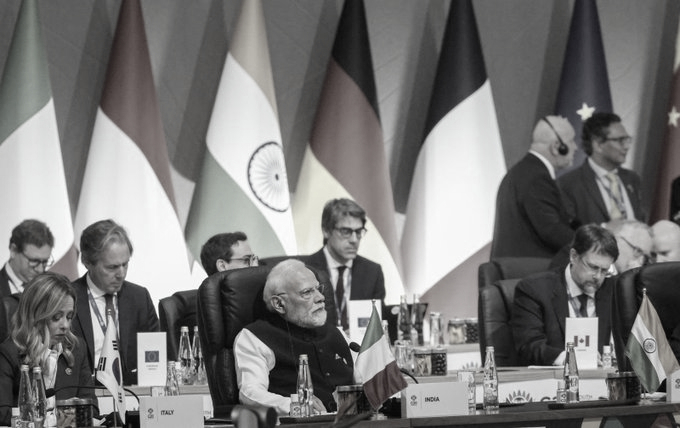
PM Narendra Modi unveils 3 major global initiatives at G20 summit in South Africa
The G20 Summit in Johannesburg, the first to be hosted on African soil, convened world leaders for the group’s annual meeting to address pressing global economic, climate, and development challenges. Despite geopolitical strains and the absence of the United States which boycotted the summit citing unresolved concerns regarding South Africa, negotiations concluded with the adoption of a comprehensive leaders’ declaration largely focused on the priorities of developing nations. India played a prominent role in the proceedings, with Prime Minister Narendra Modi presenting a set of initiatives aimed at strengthening global cooperation across health, skills, traditional knowledge, and security.
Speaking at the session on inclusive and sustainable economic growth, Modi stressed the need for development models that ensure equitable access to resources and safeguard the environment, noting that such concerns are particularly acute across Africa. He announced three new global initiatives: a Global Traditional Knowledge Repository to preserve and share long-standing medicinal and wellness practices; the G20 Africa Skills Multiplier Initiative, which aims to train one million certified trainers across the continent over the next decade; and the G20 Initiative on Countering the Drug Terror Nexus, designed to enhance international cooperation against narco-terror networks. He also proposed the creation of a Global Healthcare Response Team that could deploy trained medical professionals during emergencies and natural disasters.
Modi held bilateral discussions with several world leaders, including South African President Cyril Ramaphosa, focusing on skilled migration, food security, and tourism. Interactions with leaders from Brazil, Indonesia, and South Korea covered renewable energy cooperation, digital public infrastructure, global trade frameworks, and climate action. Modi emphasised the importance of amplifying the voice of the Global South in multilateral bodies and shared India’s experience in digital inclusion, healthcare preparedness, and women-led development. In a message on X, he underscored the need to revisit global development strategies and referred to India’s civilizational idea of Integral Humanism as a guiding approach for sustainable growth.
UN Secretary-General António Guterres urged the G20 to use its political and economic weight to address what he described as a “perfect storm” confronting developing nations. He pointed to escalating conflicts, climate disruptions, reduced fiscal space, rising debt burdens, and declining development aid as factors eroding stability, particularly across Africa. Guterres called for broad reforms in global governance institutions to give developing countries greater representation in multilateral development banks, the UN Security Council, and global financial systems.
Although the United States and Argentina declined to endorse the final declaration, the remaining G20 members adopted a document reaffirming their commitment to multilateralism and signalling policy continuity as the U.S. prepares to assume the G20 presidency in 2026. The Johannesburg Declaration placed strong emphasis on scaling up climate finance especially for adaptation, improving access to renewable energy technologies, and supporting energy-efficiency measures. It also advanced reforms to streamline debt restructuring for vulnerable countries, enhance transparency, and improve creditor coordination. Leaders further backed strengthening Africa’s representation in global forums and supporting mineral-rich nations in moving up the manufacturing value chain, alongside reiterating humanitarian support for crises in Sudan, the Democratic Republic of Congo, the occupied Palestinian territories, and Ukraine.
For Africa, the summit marked an important moment in gaining recognition for its long-standing governance and development demands. For India, it affirmed its position as a crucial bridge between advanced and developing economies. The real impact of the summit will depend on how effectively the commitments made by member states are implemented in the years ahead.