
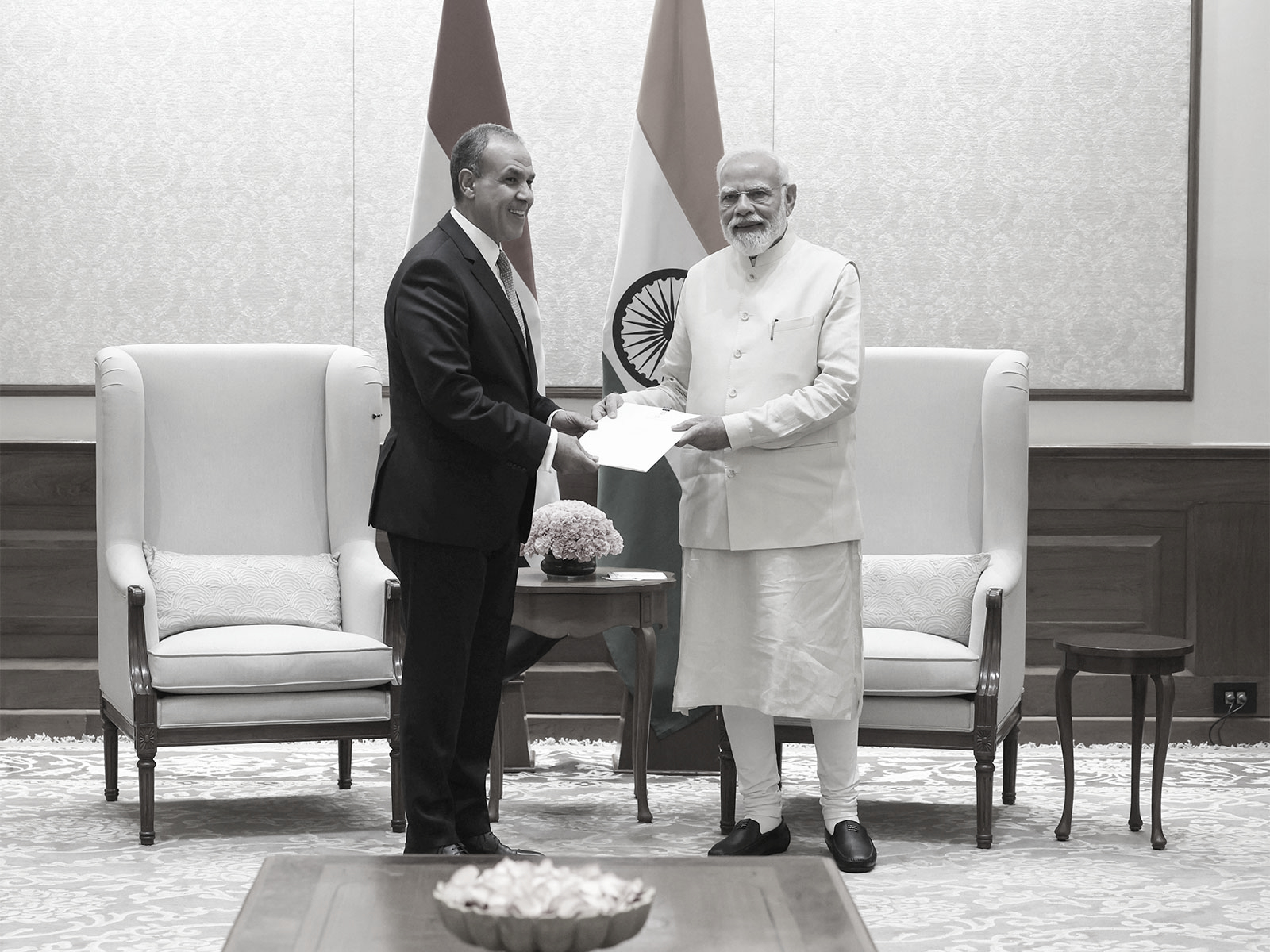
PM Narendra Modi meets Foreign Minister of Egypt, Dr Badr Abdelatty.
Prime Minister Narendra Modi on Friday met Egyptian Foreign Minister Dr. Badr Abdelatty, underscoring the strengthening of India-Egypt relations and the growing momentum of their strategic partnership.
PM Modi described Egyptian President Abdel Fattah al-Sisi as “a friend” and expressed deep appreciation for his pivotal role in the Gaza Peace Agreement. “Pleased to receive Foreign Minister of Egypt, Dr. Badr Abdelatty. Conveyed deep appreciation for my friend, President Sisi, for his crucial role in the Gaza Peace Agreement. India-Egypt Strategic Partnership continues to grow from strength to strength for the benefit of our people, our shared region, and humanity,” PM Modi tweeted.
Abdelatty is on a two-day visit to India, following his participation in the Gaza Peace Summit in Sharm El-Sheikh on October 13, where he engaged with President Sisi and other world leaders. India welcomed the signing of the landmark Gaza Peace Agreement, with Ministry of External Affairs spokesperson Randhir Jaiswal emphasizing the country’s hope that it “will lead to lasting peace in the region.” PM Modi also praised the release of hostages, noting that their freedom reflected the courage of their families and the peace efforts of global leaders, including former US President Trump and Israeli Prime Minister Netanyahu.
While Prime Minister Modi did not attend the Sharm El-Sheikh summit, possibly due to concerns over trade tensions with the US and the risk of misattributed diplomatic credit regarding India-Pakistan relations, India was represented by Minister of State for External Affairs Kirti Vardhan Singh. The upcoming visit of Abdelatty provides an opportunity for direct high-level engagement with India.
During his visit, Abdelatty held discussions with External Affairs Minister S. Jaishankar and Commerce and Industry Minister Piyush Goyal, and co-chaired the inaugural India-Egypt Strategic Dialogue with Jaishankar. Describing the dialogue as “a milestone,” Jaishankar said it provided a platform to review progress and set future goals. “Since elevating our relationship to a strategic partnership in 2023, we have witnessed intensified cooperation across multiple domains,” he added.
The discussions focused on expanding collaboration in trade, investment, defence, renewable energy, and digital innovation, while also exchanging views on regional and global developments, including West Asia stability and promoting the voice of the Global South. Jaishankar highlighted India and Egypt’s shared commitment to the progress of the Global South and the independence of nations in global affairs, and acknowledged Egypt’s solidarity following the Pahalgam terrorist attack.
Abdelatty noted that the dialogue reflected the shared vision of both leaders to unlock the full potential of the partnership. “This is a testament to the commitments made by our two leaders since signing the strategic partnership agreement in June 2023. We have a long-standing relationship bound by history, geography, and shared interests, but we must do more for the benefit of our two great peoples,” he said, calling for closer economic engagement and encouraging business communities from both countries to explore joint ventures and trade opportunities.
India and Egypt, two of the world’s oldest civilizations, have a long history of contact, formally establishing ambassadorial-level diplomatic relations on August 18, 1947. Both nations were founding members of the Non-Aligned Movement and have strengthened ties through regular high-level bilateral visits since the 1980s. Egypt has emerged as a key partner for India in the Middle East, particularly in energy security, regional stability, and economic cooperation, offering Indian investors alternatives amid US tariffs on Egyptian exports.
Earlier on Friday, Abdelatty met Indian business leaders and CEOs exploring investment and trade opportunities in Egypt, reaffirming the mutual commitment to expanding economic, security, energy, and technological partnerships, while consolidating diplomatic alignment on regional and multilateral issues.