
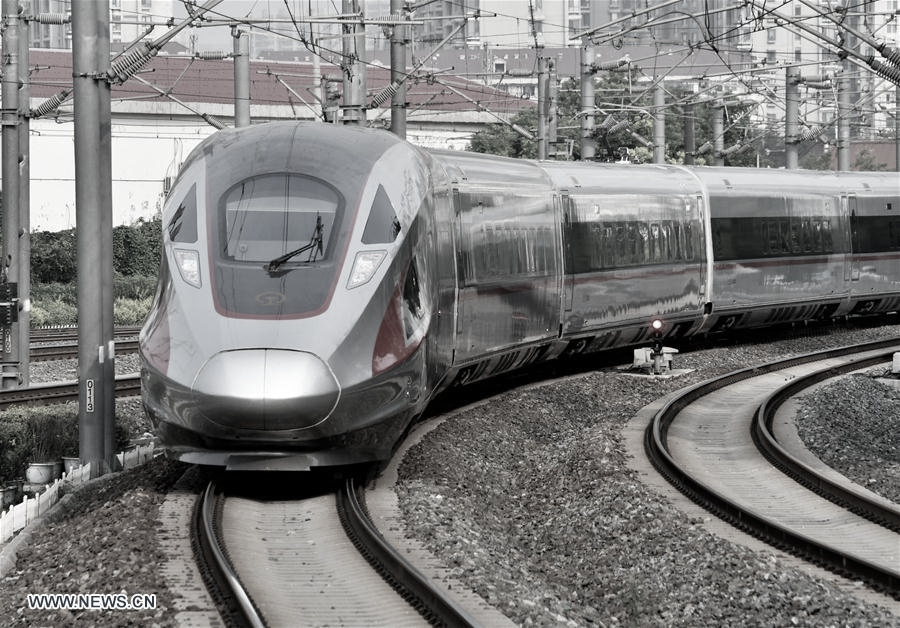
PM Modi to review Surat bullet train station, Project delayed but set for 2027–29 rollout
Prime Minister Narendra Modi will visit Gujarat today to review the progress of the Mumbai–Ahmedabad High-Speed Rail Corridor (MAHSR), India’s first bullet train project(India’s most ambitious transportation initiatives).
The 508-km MAHSR corridor, based on Japanese Shinkansen technology, will significantly cut travel time between Mumbai and Ahmedabad to approximately two hours, compared to the current 6–7 hours. The route covers 352 km in Gujarat and Dadra & Nagar Haveli and 156 km in Maharashtra, with major stops including Sabarmati, Ahmedabad, Vadodara, Surat, Vapi, Thane, and Mumbai. Around 85% of the corridor is being built on elevated viaducts, ensuring enhanced safety and minimal land disruption.
The project, announced in 2017, has faced delays mainly due to land acquisition challenges in Maharashtra, particularly in Palghar district where local resistance and legal disputes slowed progress. Political changes in the state further held up approvals and tenders. Alongside administrative hurdles, the corridor involves complex engineering works, including a 21-km underground tunnel between Thane and Virar with a 7-km undersea stretch a first for India. The COVID-19 pandemic added additional setbacks by disrupting labour supply, equipment imports, and the movement of Japanese technical experts.
Estimated to cost around ₹1.1 lakh crore , the Mumbai–Ahmedabad bullet train is being built with Japanese Shinkansen technology, funded largely through a soft loan from Japan at 0.1% interest. The Shinkansen system was chosen due to its unmatched safety record, precision engineering, and proven performance at speeds of 320 km/h. With land acquisition now nearly complete and construction accelerating, the government aims to open the Surat–Bilimora section by 2027 and complete the full corridor by 2029, with major civil works such as viaducts and river bridges already nearing advanced stages.
Officials say the bullet train project will deliver major economic and social benefits, including drastically reduced travel time, improved business and tourism links, large-scale job creation, and a shift toward cleaner, electric-based transportation. The Prime Minister’s visit today is expected to give a significant push to the project as India prepares to enter the era of high-speed rail travel.