
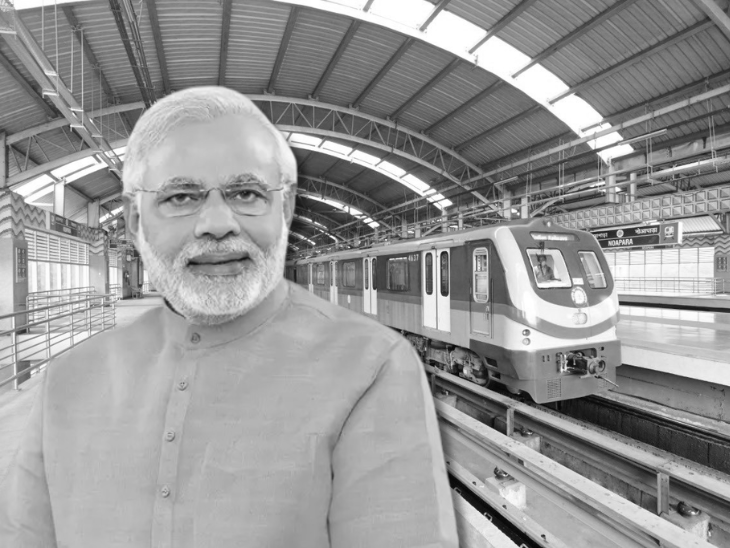
PM Modi to launch ₹33,500 crore Delhi metro & housing drive, boosting connectivity
In a major push to modernize the national capital, Prime Minister Narendra Modi is set to inaugurate and lay the foundation stone for multiple development projects worth ₹33,500 crore on 8th March , marking one of the largest infrastructure packages ever announced for Delhi.
The announcement comes after delays in the Phase IV Delhi Metro corridors , which were originally scheduled for completion by 2022-23 but were delayed by 3-4 years due to land acquisition hurdles, complex construction, pandemic disruptions, and administrative bottlenecks. The new Phase V-A corridors aim to bridge these connectivity gaps and provide faster, more efficient travel across the national capital.
A substantial portion of the package, ₹18,300 crore , is dedicated to the Delhi Metro , including the inauguration of two new corridors: the Majlis Park-Maujpur Babarpur (Pink Line) spanning 12.3 km , and the Deepali Chowk-Majlis Park (Magenta Line) of 9.9 km . These lines will connect key neighborhoods such as Burari, Bhajanpura, Yamuna Vihar, Madhuban Chowk, and Majlis Park, significantly easing daily commutes.
Further strengthening connectivity, the Prime Minister will lay the foundation stone for three new Phase V-A Metro corridors covering 16.10 km : R.K. Ashram Marg-Indraprastha, Aerocity–IGI Airport Terminal-1, and Tughlakabad-Kalindi Kunj. These corridors are expected to improve travel between Noida, South Delhi, and the airport , offering faster and direct routes for thousands of daily commuters.
Another major focus is the ₹15,200 crore redevelopment of General Pool Residential Accommodation (GPRA) colonies , including Sarojini Nagar, Netaji Nagar, Kasturba Nagar, and Sriniwaspuri . The redevelopment plan will deliver over 9,350 modern flats for government employees while creating 48 lakh sq. ft. of office space to enhance administrative efficiency.
Residents currently living in GPRA colonies will be temporarily relocated to nearby government accommodations and will receive priority allotment in the new flats . Emphasizing inclusivity, female allottees are receiving keys first, ensuring safe and modern housing for families.
The redevelopment follows an innovative self-sustaining financial model , where a portion of the land is monetized for commercial and residential development . Private developers , selected through competitive bidding, construct and sell this portion, and the revenue fully finances the modernization of housing and public facilities without burdening taxpayers .
This record-scale initiative reflects a strategic push to address Delhi’s growing population, commuter demands, and administrative needs. With expanded Metro connectivity, modernized housing, and smart financial planning, the national capital is poised for a historic leap in urban infrastructure and quality of life .