
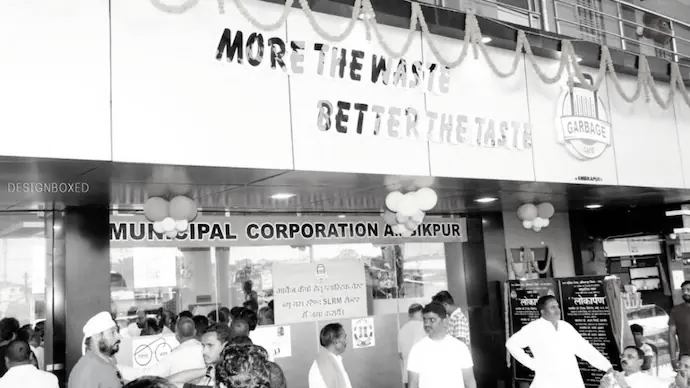
PM Modi praises Chhattisgarh’s Garbage Cafe in Mann Ki Baat
Prime Minister Narendra Modi, in his latest Mann Ki Baat radio address, praised the innovative Garbage Cafe in Ambikapur, Chhattisgarh, calling it an inspiring example of combining cleanliness with compassion.
The Garbage Cafe, run by the Ambikapur Municipal Corporation, offers free meals to people in exchange for plastic waste. This unique initiative aims to reduce plastic pollution while also helping the poor and homeless get nutritious food. The cafe follows a simple rule - anyone who brings one kilogram of plastic waste can get a full meal, while half a kilogram earns a breakfast or snack. The idea is captured in the slogan - “More the waste, better the taste.”
Started in 2019, the cafe is part of the city’s larger cleanliness campaign. Ambikapur has already earned praise as one of India’s cleanest cities, and this cafe has become a model for waste management and social welfare. The collected plastic is later used in road construction and other recycling projects, ensuring that it does not end up in landfills or pollute the environment.
PM Modi highlighted the cafe in his 127th Mann Ki Baat episode, saying it reflects how local ideas can create national impact. “This initiative not only tackles the problem of plastic waste but also provides food to those in need. Such efforts show how people’s participation can drive real change,” he said.
The Garbage Cafe has gained national attention for its dual benefits - promoting cleanliness and feeding the hungry. Officials say it has inspired similar projects in other parts of the country. With growing awareness, Ambikapur’s simple yet powerful idea is proving that even waste can be turned into a tool for welfare and sustainability.
Since its launch, the Garbage Cafe has served over 24,000 meals to beneficiaries in exchange for around 19,000 kilograms of plastic waste. The Ambikapur Municipal Corporation funds the cafe, with an initial budget of about ₹5-6 lakh from its waste management allocation.
Over the years, the cafe has helped Ambikapur collect nearly 23 tonnes of plastic waste, averaging around 4-6 tonnes per year. Experts estimate that recycling one tonne of plastic prevents about 1.5 tonnes of carbon emissions. Based on this, the cafe may have helped avoid roughly 35 tonnes of CO₂ emissions since it began - a modest but meaningful contribution to cleaner air and climate protection.
Ambikapur’s innovative waste management system, supported by women’s self-help groups, has made it a landfill-free city, saving nearly ₹25-30 lakh per year that would otherwise be spent on transporting and disposing of garbage. The revenue earned from selling recyclables and compost further strengthens the city’s waste management efforts, showing how sustainability can also make economic sense.
Inspired by Ambikapur, similar “waste-for-reward” models have appeared in other cities. In Mysuru, some Indira canteens have tried meal-for-plastic drives. Indore, India’s cleanest city, promotes “buyback” centres where citizens get money or goods for segregated plastic waste. Internationally, the “Trash for Cash” program in the Philippines offers digital rewards or shopping vouchers in exchange for recyclables. These models all share a common goal - turning waste into value and encouraging citizens to treat garbage as a resource.
Although the Ministry of Housing and Urban Affairs and the Swachh Bharat Mission - Urban (SBM-U) have not announced a national rollout of the Garbage Cafe model, the idea has been recognized as a best practice under the “Garbage-Free Cities” framework. The ministry encourages local bodies to replicate successful innovations like Ambikapur’s, depending on their local needs and resources.
Despite its success, the Garbage Cafe faces some challenges. It depends largely on municipal funds, has limited storage space for collected waste, and needs strict hygiene measures since food and waste handling occur nearby. Public participation is also uneven, with most contributors being ragpickers or low-income individuals. Yet, its symbolic value and community impact remain strong.
The Garbage Cafe shows that small local ideas can inspire national change. By combining cleanliness, compassion, and creativity, Ambikapur has shown the country that sustainability is not only about technology or investment - it can begin with a meal, a plastic bottle, and a community willing to act.