
PM Modi Calls Cultural Ties Key To Peace, Seeks Stronger SCO Cooperation
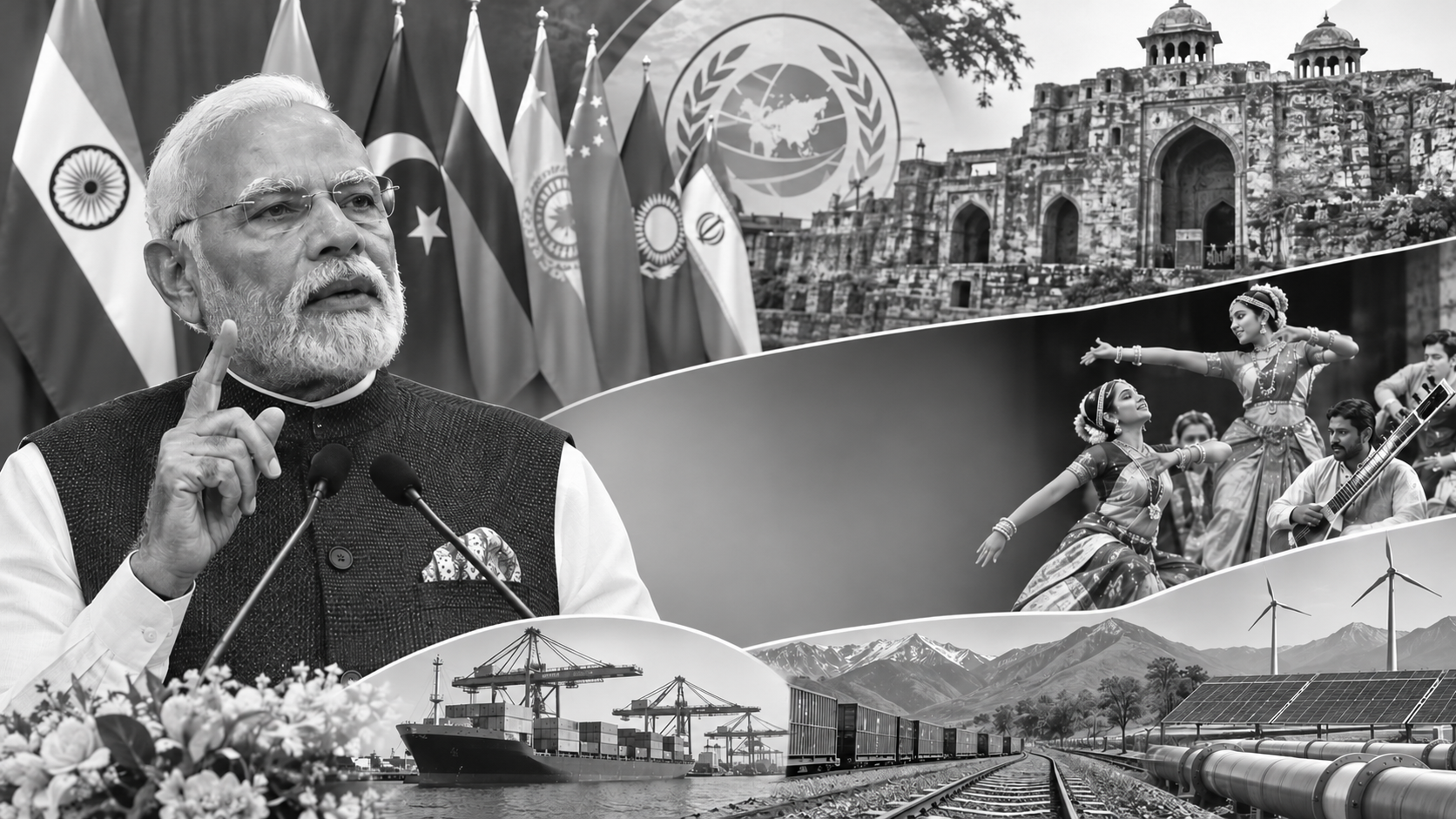
Prime Minister Narendra Modi on Friday said cultural connections are the strongest guarantee of global peace, calling for greater civilisational cooperation among member countries of the Shanghai Cooperation Organisation (SCO) to strengthen international relationships amid growing geopolitical tensions. Inaugurating the first SCO Civilisational Dialogue Forum at Delhi's historic Purana Qila, Modi said the initiative could become an important platform for shaping global thinking, adding that while empires had changed the geographical map of the world, civilisational dialogues had transformed the way people think. The three-day gathering has assumed additional diplomatic significance with Pakistan sending its Climate Change and Environmental Coordination Minister Musadik Masood Malik to New Delhi, marking the first Pakistani ministerial-level visit since May 2023.
Addressing delegates, Modi highlighted ancient trade relations between the Indus Valley Civilisation and Mesopotamia, dating back approximately 5,000 years, and said historical networks connected India, China, Central Asia and Eurasia through exchanges of goods, languages and traditions. He urged SCO countries to leverage digital technology to preserve manuscripts, historical documents and cultural heritage while expanding international collaboration.
Founded in 2001, the SCO has expanded from six founding members—China, Russia, Kazakhstan, Kyrgyzstan, Tajikistan and Uzbekistan—to 10 permanent members, with India and Pakistan joining in 2017, Iran in 2023 and Belarus in 2024. Its cooperation now extends beyond regional security and counterterrorism to trade, energy, technology and connectivity.
Beyond cultural diplomacy, India is seeking greater access to Eurasian markets, critical minerals, energy resources and alternative trade routes. At the September 17 SCO trade ministers' meeting in Dushanbe, countries agreed on a 2026–2030 Action Plan for Multilateral Trade and Economic Cooperation, covering customs facilitation, digital payments, supply chains, pharmaceuticals, agriculture, manufacturing and renewable energy.
India is also advancing the Chabahar Port in Iran, backed by a US250 million credit window, alongside the International North-South Transport Corridor to improve access to Afghanistan, Central Asia and Russia without relying on Pakistani transit routes. Pharmaceuticals, IT, textiles, agriculture, critical minerals and green hydrogen offer further cooperation opportunities.
Pakistan's participation comes amid strained bilateral relations following the May 2025 military hostilities. Malik's visit provides a multilateral engagement opportunity, although disputes over terrorism and the Indus Waters Treaty remain unresolved. Pakistan is scheduled to assume the SCO chairmanship for 2026–27 and host the next summit in 2027.
More than 25 countries were invited, including China, Iran, Kazakhstan, Saudi Arabia, Türkiye, Nepal, Sri Lanka and other regional partners. The forum's four thematic sessions cover performing arts, textiles, cuisine, architecture, literature, manuscripts and philosophical traditions. Modi also visited the Anant Mahabharata scroll pavilion and the Astitva exhibition showcasing Delhi's archaeological history.
The gathering could strengthen Eurasian trade networks, diversify energy supplies and expand regional financial cooperation. However, no SCO-wide free trade agreement or common currency has been announced. The initiative builds on Modi's 2025 proposal at the Tianjin summit, subsequently welcomed in the 2026 Bishkek Declaration, positioning cultural diplomacy alongside India's wider economic and geopolitical engagement.