
PM Mitra Park: India’s industrial game-changer?
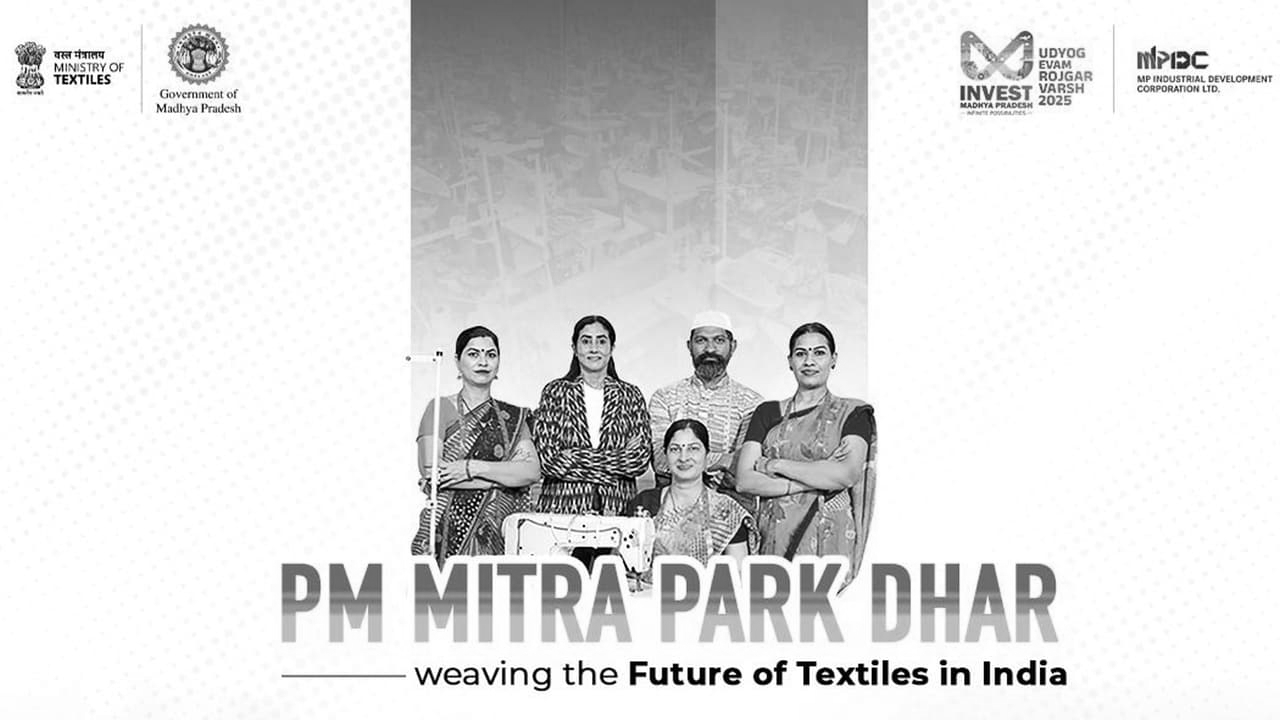
On his 75th birthday, Prime Minister Narendra Modi laid the foundation stone for India’s first Pradhan Mantri Mega Integrated Textile Region and Apparel (PM MITRA) Park in Dhar, Madhya Pradesh, marking a significant milestone in the country’s industrial journey. This project is not just a symbolic gesture but a strategic push to strengthen India’s textile and apparel sector while creating large-scale employment, modern infrastructure, and sustainable industrial ecosystems.
Spanning over 2,158 acres in Bhainsola village, the Dhar PM MITRA Park is designed as a state-of-the-art textile hub, with world-class facilities aimed at integrating every aspect of production. The park will include 81 plug-and-play units for textile companies, a 20 Mega Litres per Day common effluent treatment plant to handle industrial wastewater, a 10 Megavolt-amperes solar power plant for sustainable energy, modern roads, and continuous supply of water and electricity. Housing, social facilities, and amenities for workers, particularly women employees, are also planned, making it more than just an industrial zone,it is intended to become a model industrial town where work-life balance and community living are prioritized.
The PM MITRA initiative is part of a larger vision by the government to establish seven such integrated textile hubs across Madhya Pradesh, Telangana, Gujarat, Karnataka, Uttar Pradesh, and Maharashtra. The idea is to attract investments, modernize the textile sector, and reduce India’s dependence on imports for value-added textile products. Already, leading textile companies have shown confidence in this project, offering investment proposals worth over ₹23,000 crore. For cotton farmers, this promises a steady market for raw materials, potentially boosting rural income and regional economic growth.
Strategically, the PM MITRA Park reflects Modi’s approach to combining industrial growth with social and environmental responsibility. The inclusion of effluent treatment, solar power, and worker-centric infrastructure indicates a focus on sustainable industrialization. By creating modern, self-sufficient industrial ecosystems, the government aims to reduce bottlenecks in production, enhance export potential, and make India a globally competitive textile hub.
Beyond economics, the park also aligns with broader developmental campaigns launched simultaneously, such as ‘Swasth Nari Sashakt Parivar’ and ‘Rashtriya Poshan Maah,’ which focus on women’s health, adolescent wellness, and nutrition. This integration of industrial and social development signals a more holistic approach to growth,where infrastructure, human capital, and social welfare are interconnected.
Critically, the PM MITRA Park could serve as a template for future industrial parks in India. By combining high-end industrial facilities with sustainable practices and social infrastructure, it aims to redefine how industrial growth is planned. The success of Dhar’s PM MITRA Park could influence investments in other sectors, inspire similar integrated hubs across the country, and potentially position India as a global textile powerhouse. However, challenges remain, such as ensuring timely execution, attracting consistent private sector participation, and maintaining environmental safeguards. If these are managed well, the park could truly transform the region’s economy and set new standards for industrial planning in India.