
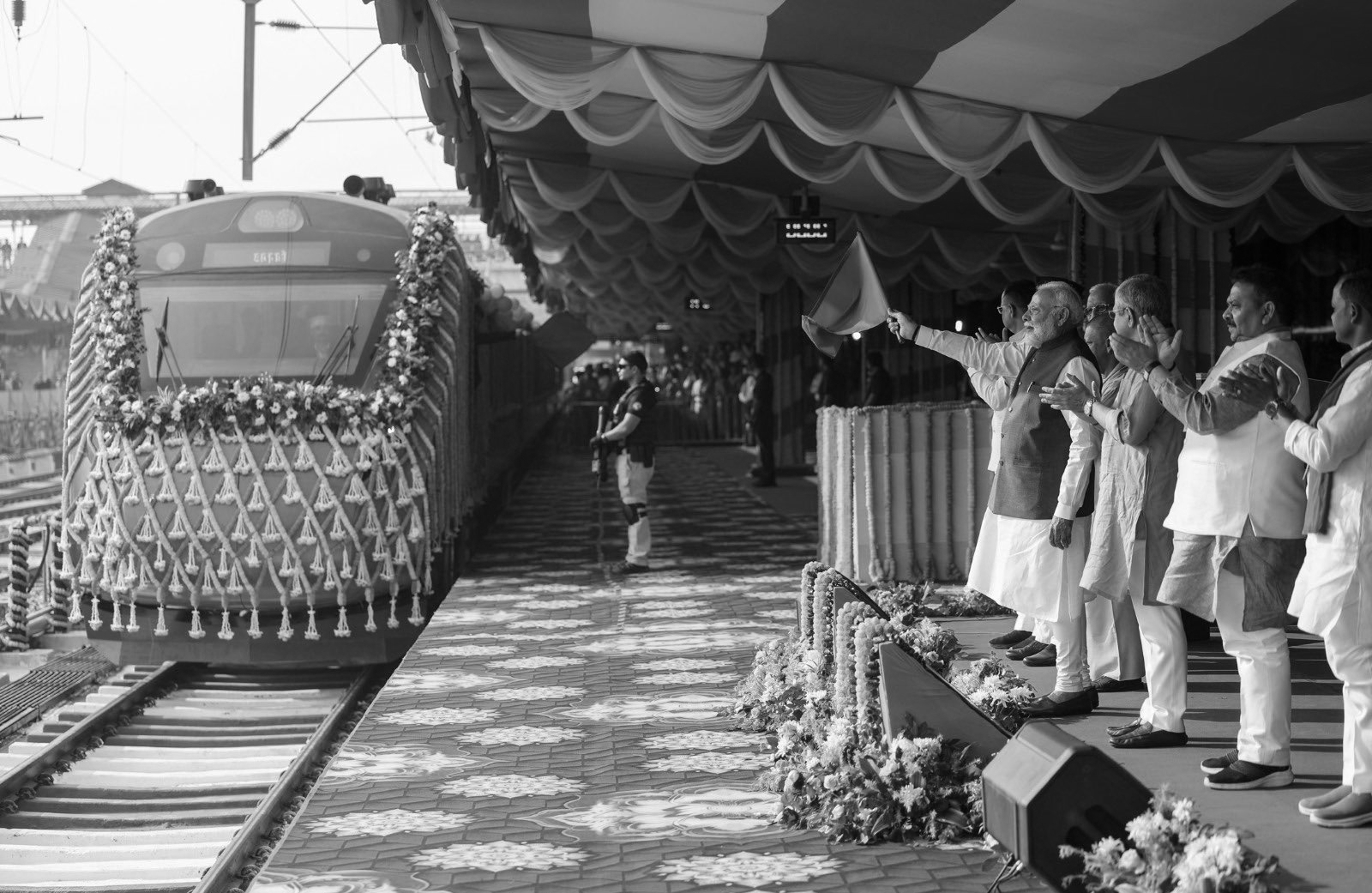
PM flags off four new Vande Bharat trains, but challenges remain
Prime Minister Narendra Modi on Saturday flagged off four new Vande Bharat Express trains from Varanasi, adding more routes to India’s expanding semi-high-speed rail network. The new services will run on the Banaras-Khajuraho, Lucknow-Saharanpur, Firozpur-Delhi, and Ernakulam-Bengaluru sectors, taking the total number of operational Vande Bharat trains to over 160.
The Banaras-Khajuraho Vande Bharat will reduce travel time by around 2 hours and 40 minutes, offering faster connectivity between major cultural and pilgrimage centers including Varanasi, Prayagraj, Chitrakoot, and Khajuraho. The Lucknow-Saharanpur service will complete the route in roughly 7 hours and 45 minutes, saving nearly 1 hour. The Firozpur-Delhi train becomes the fastest on the route, covering the journey in 6 hours and 40 minutes, while the Ernakulam-Bengaluru train will shorten travel by over 2 hours, improving access between key IT and commercial hubs in the south.
Addressing the gathering, the Prime Minister said that trains like Vande Bharat, Namo Bharat, and Amrit Bharat represent the transformation of Indian Railways into a modern, passenger-focused network. He noted that linking pilgrimage destinations with faster trains is not just an infrastructure project but an economic driver, citing the increase in visitors to Varanasi and Ayodhya and the resulting income for local tourism, hospitality, and small enterprises.
However, the expansion of Vande Bharat services also comes with ongoing operational challenges. On many sections, the trains are still unable to run at their designed top speed due to track limitations, curve restrictions, or sections where speed upgrades are yet to be completed. Additionally, reports of delays on some long-distance routes have highlighted the need for further signaling modernization, dedicated high-speed corridors, and route prioritization to ensure consistent performance.
Railway officials say these issues are being addressed through track strengthening, electrification upgrades, and station modernization, but acknowledge that achieving the full potential of semi-high-speed travel will require phased infrastructure improvements.
The Prime Minister also spoke about the broader development of Varanasi, noting improvements in hospitals, road networks, ropeway construction, sports infrastructure, and digital connectivity aimed at enhancing the living and travel experience in the city. He interacted with students at the event and encouraged more cultural and academic exchange programs among children across regions.
Chief Minister Yogi Adityanath, Union Railway Minister Ashwini Vaishnaw and other dignitaries attended the ceremony in person, while state and central representatives from Kerala joined via video link.