
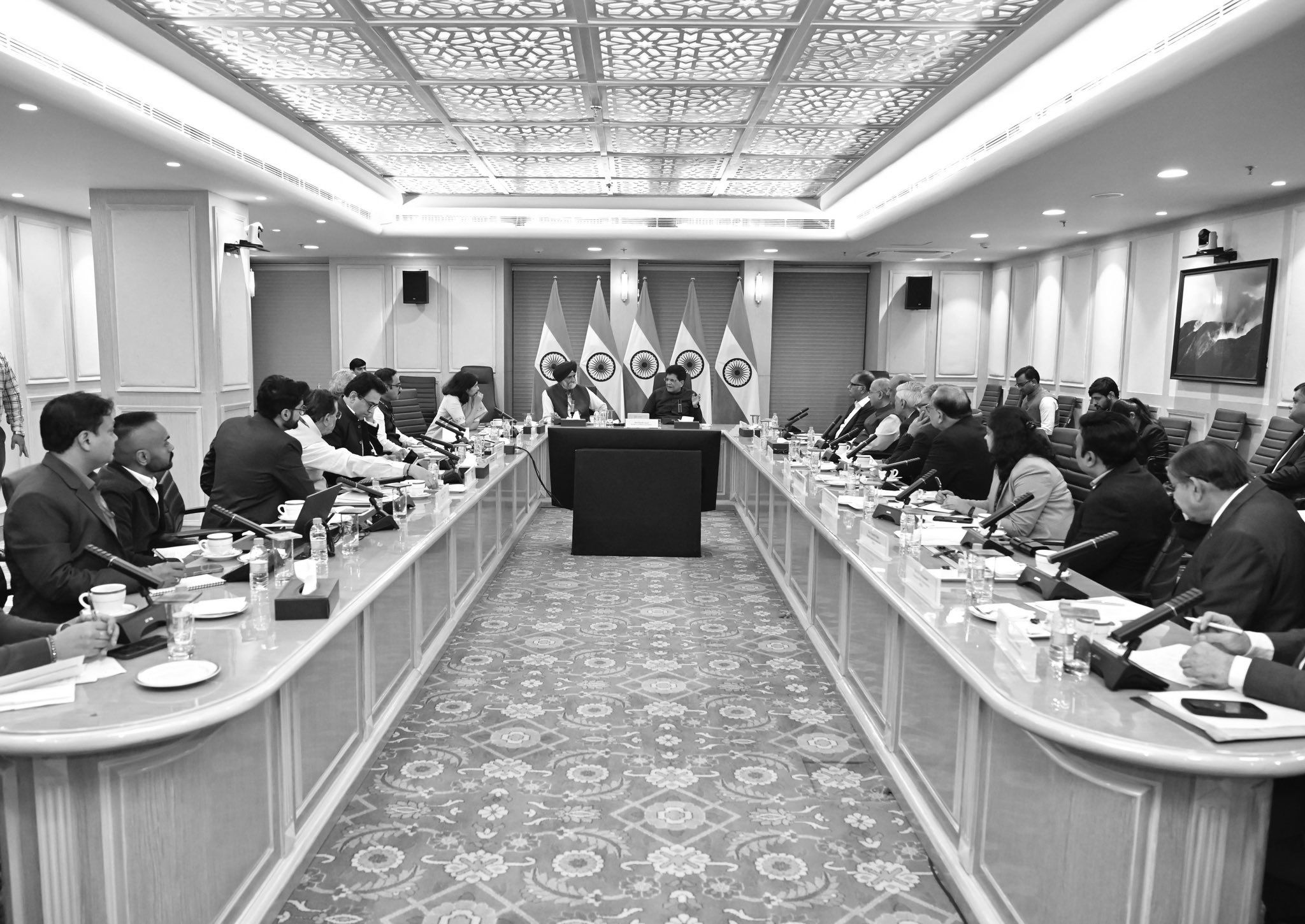
Piyush Goyal holds key talks with pharma stakeholders amid U.S. tariff uncertainty
Union Commerce and Industry Minister Piyush Goyal on Monday held an extensive interaction with leading representatives of India’s pharmaceutical industry, focusing on strengthening regulatory systems, boosting manufacturing scale and preparing the sector for emerging global challenges.
Goyal, in a social media post after the meeting, said the discussions centred on enhancing innovation, data-protection frameworks, investment commitments and long-term strategies to reinforce India’s position as a global pharmaceutical hub. He reiterated the government’s commitment to building a future-ready, innovation-driven pharma ecosystem capable of delivering high-quality, affordable healthcare. “Our focus remains on scaling manufacturing in India and creating an environment that attracts sustained, high-value investments,” he wrote.
The meeting comes at a time when the global industry is assessing the potential impact of the United States’ proposed tariff measures. In September, U.S. President Donald Trump announced a 100 per cent tariff on branded and patented pharmaceutical imports starting October 1, 2025, unless companies shift production to the U.S. The implementation, however, remains pending.
Indian industry bodies have expressed confidence that the proposed tariff will not significantly affect India’s exports. Their reasoning is rooted in India’s export profile: the U.S. primarily imports generic drugs and active pharmaceutical ingredients (APIs) from India segments not covered under the tariff announcement. Senior industry voices, including Indian Pharmaceutical Alliance (IPA) General Secretary Sudarshan Jain, argue that India’s dominance in generics provides a natural buffer against such policy disruptions.
India supplies nearly half of America’s generic drug demand and continues to expand its presence in regulated markets. With several Indian companies already operating or acquiring manufacturing facilities in the U.S., experts say firms have enough flexibility to adapt if the tariff regime evolves.
At the same time, India sees significant opportunities to scale up manufacturing and attract high-quality investments. These include global supply-chain diversification under the “China+1” strategy, expansion of API and bulk-drug production through dedicated parks, and a growing shift toward complex generics, biosimilars, high-potency APIs and other high-value segments. Regulatory modernisation, digital transformation and strong CDMO/CMO capabilities are further strengthening India’s investment appeal.
According to government data, the U.S. remains India’s largest pharmaceutical market, accounting for over 31 per cent of total drug exports. Shipments to the U.S. stood at USD 2.62 billion in September 2025, underscoring the sector’s resilience despite global uncertainties.