
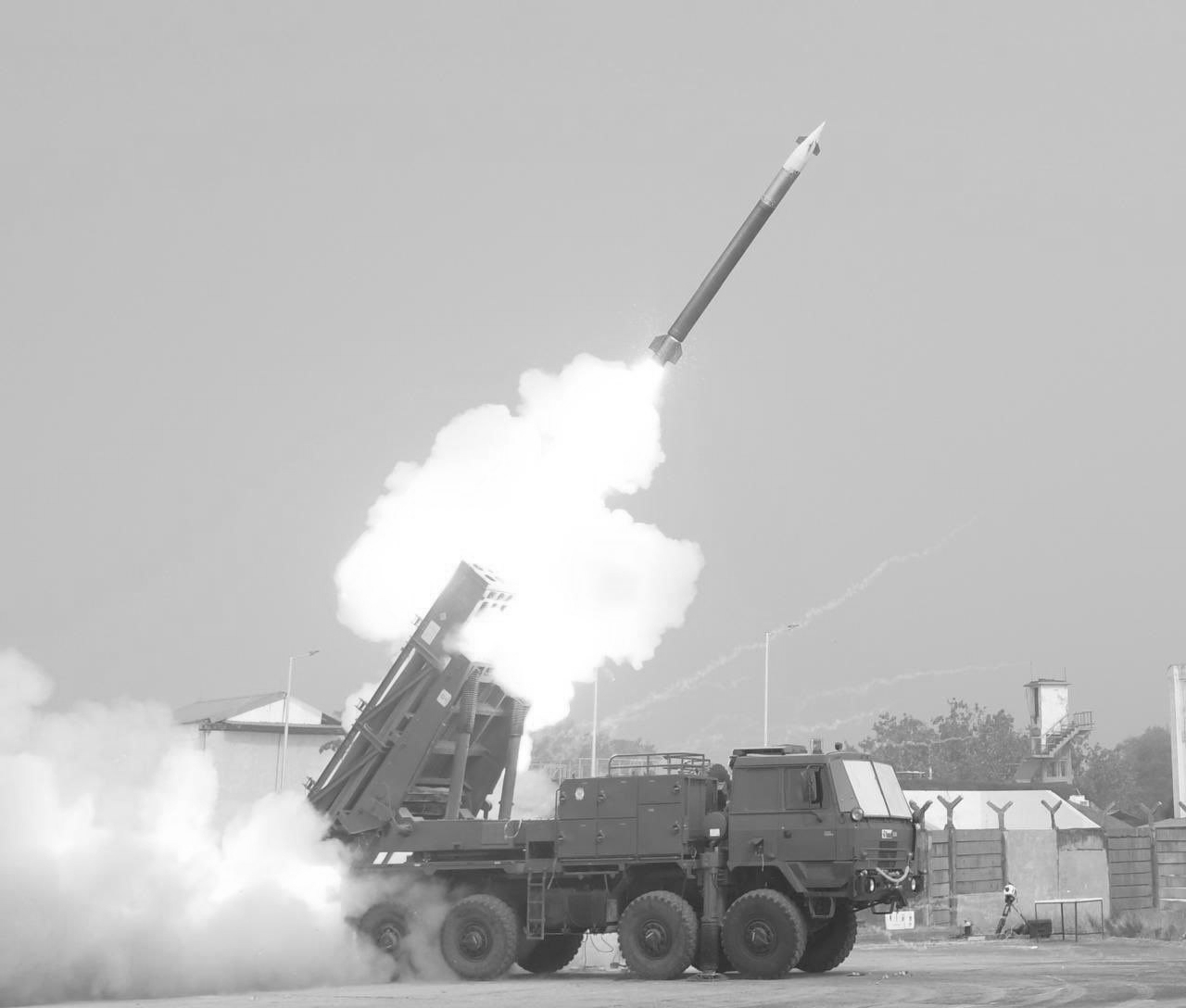
Pinaka LRGR-120: The Guided ‘Rocket’ That Blurs the Line With Missiles
The successful test of India’s 120-kilometre-range Pinaka Long Range Guided Rocket (LRGR-120) has drawn attention not only for its precision and extended reach, but also for the terminology used to describe it. Despite its guidance capability and accuracy, the weapon continues to be classified as a “rocket” rather than a missile, a distinction rooted in military doctrine rather than technological limitation.
In defence terminology, rockets are generally considered artillery weapons, designed for battlefield support and fired in large numbers from mobile launchers. Missiles, by contrast, are standalone systems with independent propulsion and guidance throughout flight, often intended for strategic or high-value targets. The Pinaka LRGR-120 , though guided, remains an artillery asset as it is fired from an in-service Pinaka multi-barrel rocket launcher and is meant to operate within existing artillery formations.
Officials point out that this classification allows the LRGR-120 to be integrated seamlessly into the Army’s artillery regiments without altering command structures or operational doctrine. It also enables commanders to conduct deep-strike missions using rocket artillery without triggering the strategic signalling usually associated with missile deployment.
The LRGR-120 marks a significant advancement over earlier Pinaka variants, which had ranges of 40 to 75 kilometres and relied largely on area saturation. By extending the range to 120 kilometres and adding precision guidance, the system narrows the gap between traditional rocket artillery and tactical missiles, offering improved accuracy while retaining the ability to fire in rapid salvos.
In comparison, missile systems such as BrahMos and Pralay serve different operational roles. BrahMos is a supersonic cruise missile designed for strategic land and maritime targets, while Pralay is a quasi-ballistic missile intended for deep precision strikes against hardened targets. Unlike these systems, the Pinaka LRGR-120 is designed for sustained battlefield use, providing both reach and volume of fire.
Defence analysts note that the evolution of guided rocket artillery reflects a broader trend in modern warfare, where rockets are increasingly acquiring missile-like accuracy while remaining within artillery frameworks. The Pinaka LRGR-120, they say, strengthens India’s ability to conduct precise long-range strikes without escalating to missile employment.
The successful test of the LRGR-120 therefore highlights not only a technological achievement, but also a deliberate doctrinal choice. By retaining its classification as a rocket, India is reinforcing the role of advanced artillery in future conflicts, where precision, flexibility and controlled escalation are becoming as important as range and firepower.