
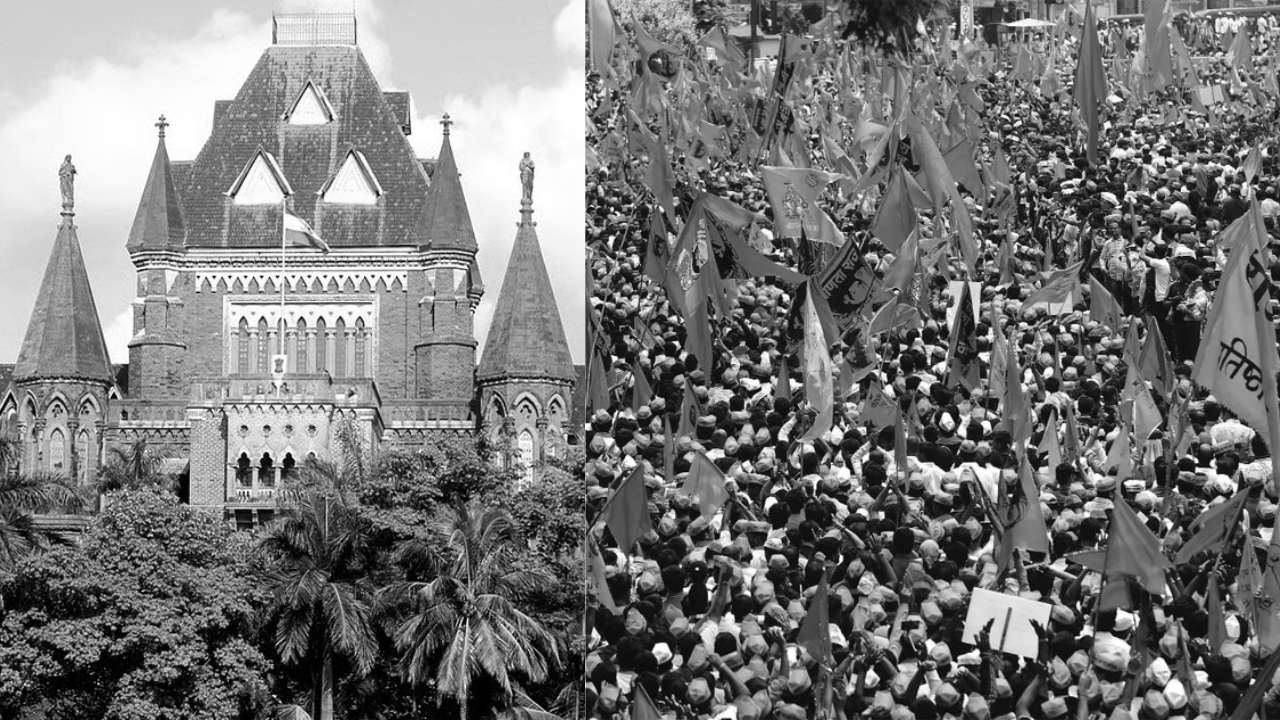
PIL against Maratha quota rejected: Bombay HC
The Bombay High Court has dismissed a public interest litigation (PIL) challenging the Maharashtra government's decision to issue Kunbi caste certificates to Maratha community members, making them eligible for OBC reservations. The court ruled that the petitioner, an advocate, was not an aggrieved party and therefore had no legal standing to file the PIL.
The bench, headed by Chief Justice Shree Chandrashekhar and Justice Gautam Ankhad, emphasized that only those directly affected by government decisions,here, individuals from the Other Backward Classes (OBC) category,can challenge such actions in court. The High Court noted that several genuine petitions from aggrieved OBC members are already pending and will be heard by another bench on September 22.
The PIL in question argued that issuing Kunbi caste certificates to Marathas was arbitrary and unconstitutional. However, the court underlined that the legal system discourages “multiplicity of litigation,” meaning a PIL cannot be filed by someone without direct stakes in the matter. The petitioner retains the option to intervene in cases filed by legitimately affected parties if the court sees fit.
The backdrop of this controversy is significant. The state government’s decision came after quota activist Manoj Jarange conducted a five-day hunger strike, pressuring authorities to act. Subsequently, a resolution was issued referencing the Hyderabad Gazetteer, enabling Marathas who could demonstrate Kunbi ancestry to apply for caste certificates. Kunbis, historically an agrarian OBC community in Maharashtra, are thus legally extended quota benefits.
This episode highlights the delicate balancing act between social justice and legal propriety. While the Marathas gain temporary OBC status, genuine OBC members are actively monitoring the process to ensure fair representation. Critics argue that awarding reservations through administrative resolutions, rather than broad-based legislative review, can spark tensions among communities vying for limited opportunities in education and government employment.
The High Court’s decision underscores a fundamental principle: PILs are meant to amplify voices of the genuinely affected and protect public interest, not serve as tools for personal or political agendas. In a state as socially and politically complex as Maharashtra, the legal system is tasked with maintaining order while navigating the competing claims of caste, history, and equity.
In essence, this ruling clarifies the legal boundaries of PILs while reflecting the continuing struggle to balance community demands, judicial oversight, and social justice in Maharashtra.