
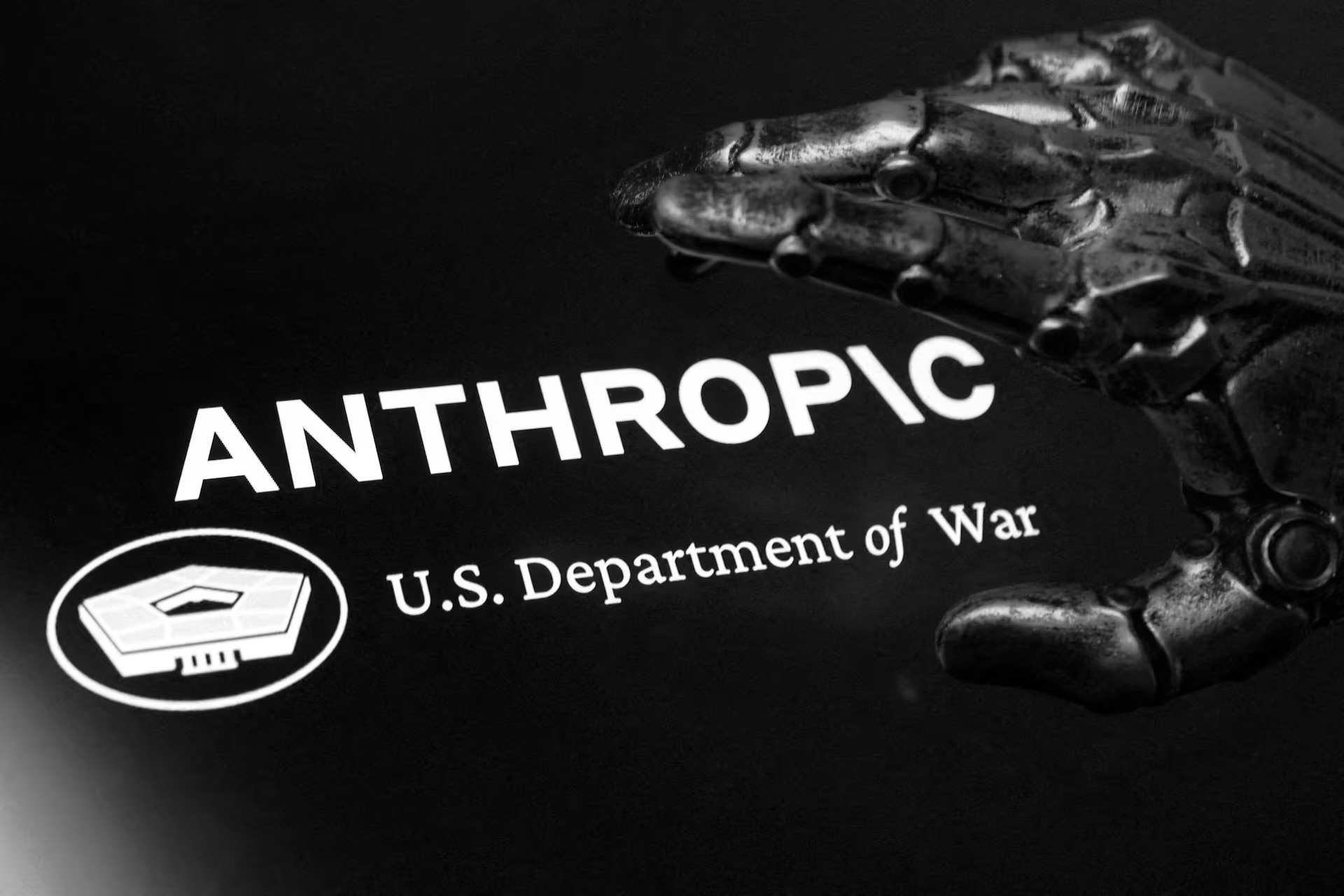
Pentagon’s ‘Risk’ Tag on Anthropic Triggers Landmark AI Legal Battle
The legal confrontation between Anthropic and the United States Department of Defense has evolved into a defining dispute at the intersection of artificial intelligence , national security , and corporate ethics, with far-reaching implications for the future of warfare and technology governance. The conflict was triggered after the Pentagon labelled Anthropic a “supply chain risk” and President Donald Trump ordered all federal agencies to stop using its AI systems, including the widely deployed chatbot Claude, citing concerns over reliability and security. Anthropic, led by CEO Dario Amodei , has challenged these actions in court, arguing that the administration’s measures amount to an “unlawful retaliation” for its refusal to allow unrestricted military use of its technology and violate First Amendment and due process protections.
At the core of the dispute lies a fundamental disagreement over how AI should be used in modern warfare, with Anthropic imposing strict safeguards against applications such as mass surveillance and autonomous weapons , while US defence officials, including Defence Secretary Pete Hegseth , insist that companies supplying critical technologies must comply with all lawful military requirements. The standoff escalated when Anthropic refused to relax its ethical restrictions, prompting the government to question its reliability as a defence partner and raise concerns that AI systems, being vulnerable to manipulation, could be altered or disabled during sensitive operations. Represented by the US Department of Justice , the administration has argued that its actions are rooted in national security considerations rather than an attempt to curb free speech, warning that allowing a private company to retain control over AI behaviour in wartime scenarios could pose unacceptable operational risks.
The case, currently being heard by US District Judge Rita Lin , has also brought scrutiny to the Pentagon’s internal processes, including an undated memorandum by Defence Undersecretary Emil Michael , raising questions about the timing and rationale behind the risk designation. Beyond the courtroom, the dispute reflects a broader divide within the AI industry, where some firms are increasingly aligning with government defence initiatives while others, like Anthropic, prioritise ethical constraints. The outcome of this case could set a crucial precedent on whether governments can compel private technology companies to support military objectives, or whether firms retain the right to enforce their own ethical boundaries, ultimately shaping the future trajectory of AI governance in an era where technological dominance is central to geopolitical power.