
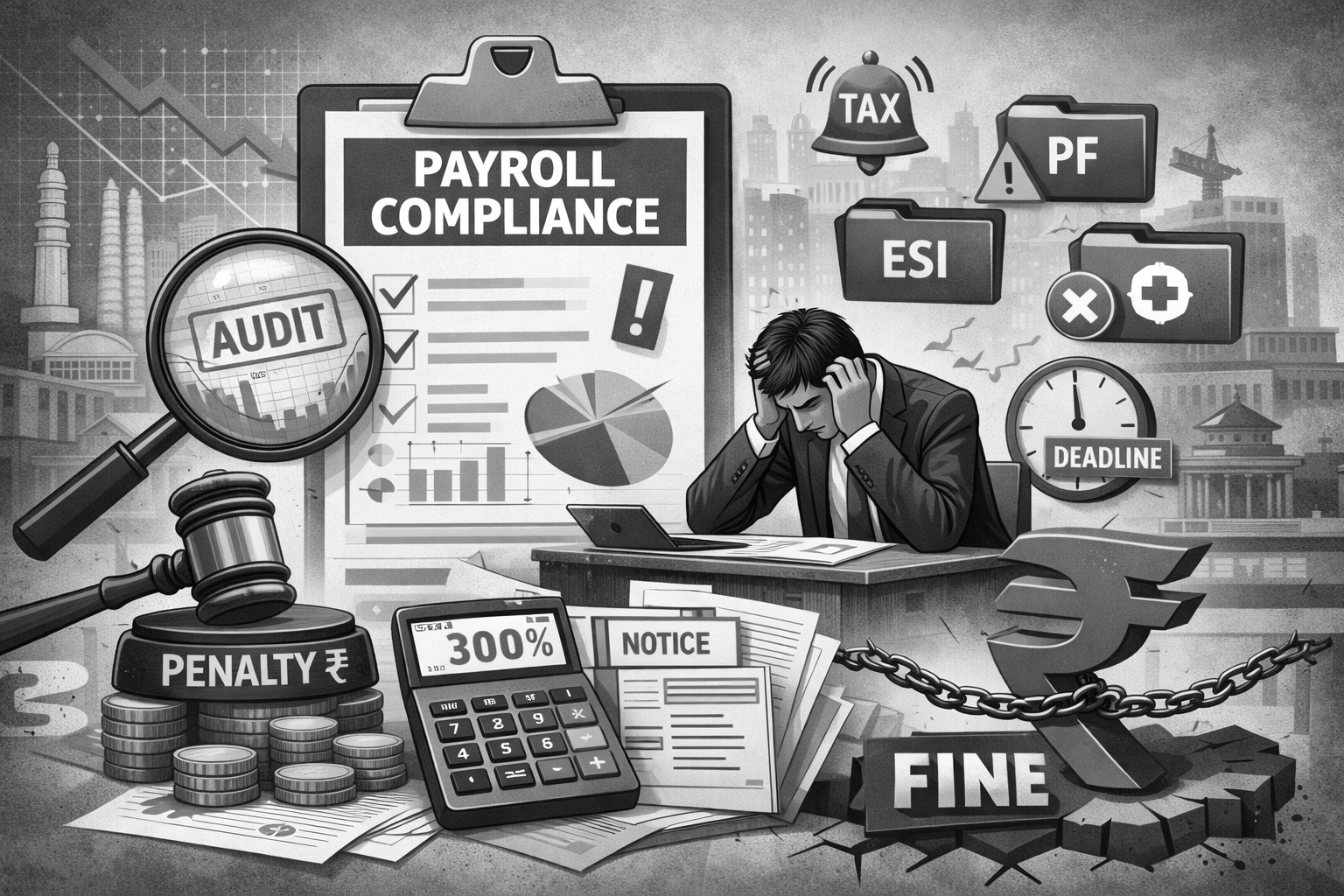
Payroll Pitfalls in India: Rising Complexity, Increasing Penalties
Payroll management in India has evolved into a complex compliance function , far beyond simply processing salaries. It now sits at the intersection of tax laws, labour regulations, and social security systems , where even minor mistakes can trigger penalties, audits, and employee disputes . As regulatory oversight tightens, businesses are increasingly finding that payroll errors are not just operational lapses but significant financial risks.
One of the most common challenges companies face is the misclassification of employees and contract workers . Incorrect categorization often leads to errors in Provident Fund (PF) and Employee State Insurance (ESI) contributions, along with flawed Tax Deducted at Source (TDS) calculations. These mistakes can go unnoticed initially but are frequently flagged during audits, resulting in compliance violations.
Another critical issue is the inaccuracy or delay in TDS deductions . Mid-year salary revisions, incomplete investment declarations, and switching between tax regimes often complicate calculations. Without timely updates, organizations risk attracting interest and heavy penalties under tax laws . Similarly, non-compliance in PF and ESI such as using outdated rates or incorrect wage components remains one of the most penalized areas in payroll management.
The problem is further compounded by India’s dynamic regulatory environment . Frequent updates to Professional Tax slabs, Labour Welfare Fund rules, and upcoming labour codes require constant monitoring. Businesses operating across multiple states face an added burden of managing varied compliance requirements, increasing the likelihood of oversight.
Errors are also prevalent during full and final settlements , where miscalculations in gratuity, leave encashment, or bonuses can lead to disputes and legal complications. At the same time, the growing use of digital compliance systems by authorities has made it easier to detect discrepancies through automated cross-verification of employer data, reducing the scope for unnoticed errors.
The financial consequences of such lapses are severe. Penalties under PF laws can accumulate daily, TDS defaults can result in fines of up to 300% of the tax amount , and ESI violations may add substantial damages over pending dues. For many organizations, the question is no longer whether errors will occur but when.
In response, companies are increasingly turning to automation and payroll outsourcing solutions . Modern systems enable real-time tax calculations, automatic statutory filings, and continuous tracking of regulatory changes. These tools not only reduce human error but also ensure that businesses remain audit-ready and compliant at all times.
Ultimately, payroll compliance in India is no longer a back-office function it is a strategic necessity . Organizations that invest in accurate, technology-driven payroll systems can mitigate risks, enhance transparency, and build long-term operational resilience in an increasingly regulated environment.