
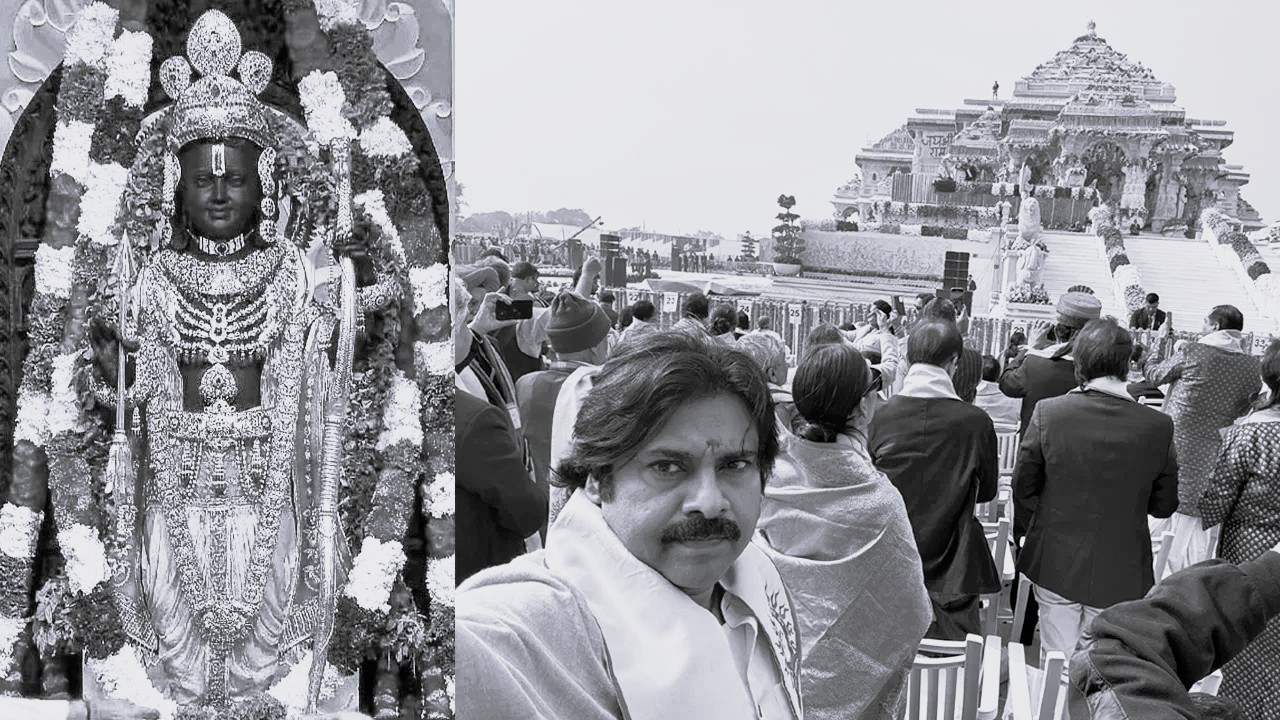
Pawan Kalyan hails ‘Flag Hoisting’ at Ayodhya Ram Mandir as a symbol of cultural revival
Andhra Pradesh Deputy Chief Minister Pawan Kalyan described the recent flag-hoisting ceremony at the Sri Ram Janmabhoomi temple in Ayodhya as a symbol of cultural revival and civilizational affirmation.
On Tuesday morning, Prime Minister Narendra Modi ceremoniously hoisted the saffron flag atop the Ram temple, officially marking the completion of the temple complex. Speaking on the occasion, Pawan Kalyan emphasized that the flag-hoisting was not merely about completing a construction project - it represented a revival of cultural values and the reaffirmation of India’s civilizational heritage.
The actor-turned-politician called the event a “powerful awakening” aimed at restoring Indian identity. He urged people to take pride in their heritage, reconnect with cultural roots, and apply ancient wisdom to help shape a “New India.”
According to officials, the flag-hoisting signifies the official completion of the Ram temple complex. The 2.77-acre land, assigned to the temple following the Supreme Court’s 2019 verdict, has now seen nearly six years of construction come to fruition. The saffron flag, measuring 22 feet in height and 11 feet in width, made of parachute-grade fabric and thick nylon ropes, was hoisted atop the 161-foot temple spire. The flag bears symbols including the sun (representing Lord Ram’s solar dynasty), the Om symbol, and the ‘Kovidara’ tree, symbolizing the ideal governance of Ram Rajya.
The Ram temple project began after the Supreme Court’s unified judgment on November 9, 2019. Following this, the central government established the Shri Ram Janmabhoomi Teerth Kshetra Trust, announced by Prime Minister Modi on February 5, 2020. The foundation stone was laid on August 5, 2020, the Ram Lalla idol was consecrated on January 22, 2022, and the Ram Darbar opened to devotees on June 14, 2025.
In his social media post, Pawan Kalyan elaborated on the broader cultural significance. He said India’s culture, civilization, and ethics have always been the foundation of the nation. The deep wisdom of Sanatana Dharma teaches tolerance, social harmony, universal brotherhood, peace, and respect for all creation. Moral principles and dharma guide individuals toward duty and righteousness, which form the bedrock of modern India’s democracy.
Kalyan also reflected on the impact of colonialism, noting that British colonial policies systematically eroded India’s intellectual and cultural heritage, creating a sense of inferiority. He cited French Marxist thinker Frantz Fanon, stressing the importance of recognizing and removing colonial mindsets from both our land and consciousness.
He applauded current efforts under the Prime Minister’s leadership to reclaim national identity, including renaming roads and landmarks and replacing colonial symbols with ones reflecting Indian heroes and values. For instance, Race Course Road became Lok Kalyan Marg, and the Kingsway (Rajpath) was renamed Kartavya Path. Similarly, the Indian Navy flag replaced the colonial St. George’s cross with the Chhatrapati Shivaji Maharaj emblem. These actions, Kalyan said, are symbolic steps toward cultural emancipation.
“The flag-hoisting at the Sri Ram Janmabhoomi temple is not just a project milestone,” Kalyan concluded. “It is a powerful cultural awakening, a reaffirmation of civilization. India’s future lies within each of us. Let us take pride in who we are, reconnect with our roots, and use ancient knowledge to build a New India. This is not just a ceremony - it is a call to bring Indian values back into every thought and action. Jai Hind!”