
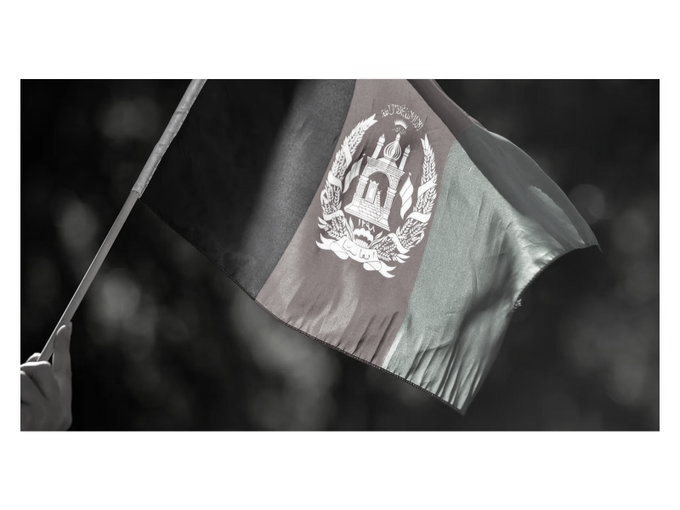
Pashtun, Baloch, Sindhi, and PoJ Kashmiri activists unite at Afghan United Front online meet against Pakistani control
In a powerful virtual meeting organised by the Afghan United Front, leading Pashtun, Baloch, Sindhi, and PoJ Kashmiri political and human rights activists reaffirmed their commitment to continue the struggle for independence and freedom from Pakistani occupation.
The Afghan United Front (AUF), a political platform comprising Afghan scholars, exiled leaders, and regional activists, aims to promote democratic governance, regional peace, and resistance against extremism and foreign domination. Known for amplifying the voices of ethnic and oppressed communities across South and Central Asia, the AUF frequently engages in dialogues that link Afghanistan’s stability with the broader struggles for autonomy and justice in neighbouring regions. By hosting this meeting, the AUF sought to create a shared space for Pakistan’s suppressed ethnic groups to express their grievances, strengthen cross-border solidarity, and build a unified stance against Islamabad’s centralized and militarized control.
The meeting’s details were shared by PoJK activist Amjad Ayub Mirza on his official X handle, where he posted extensive updates about the discussion, key statements, and the joint resolution adopted at the end. His post highlighted that the participants came together to expose Pakistan’s long-standing policies of suppression and exploitation of ethnic minorities and to strengthen cooperation among freedom movements seeking justice and sovereignty.
Speakers accused the Pakistani state of using education, media, and religious seminaries (madrassas) as instruments of ideological manipulation. They recalled that under General Zia-ul-Haq’s rule (1977–1988), the number of madrassas in Khyber Pakhtunkhwa rose sharply from just 89 to nearly 10,000 registered institutions. According to the participants, Zia-ul-Haq described these seminaries as the “forts of Islam,” designed not only to spread rigid Islamist ideology into Afghanistan but also to weaken Pashtun nationalism within Pakistan.
Pashtun speakers argued that the creation of Khyber Pakhtunkhwa province and the concept of a distinct ‘Pashtunistan’ were deliberate political strategies aimed at dividing the Pashtun identity-an identity deeply rooted in Afghanistan’s cultural and historical fabric.
During the meeting, participants also raised serious concerns about the pattern of terrorist attacks in Pakistan, questioning why such incidents never occur in Punjab, where most extremist groups’ leadership and operational bases are located.
Sindhi representatives condemned what they described as the systematic domination of the Pakistan Army, pointing out that no Sindhi has ever served as Chief of Army Staff, Corps Commander, or in any top military post. They underlined the economic disparity that Sindh faces despite contributing nearly 70% of Pakistan’s GDP, 72% of its gas, and 52% of its oil. The province, they added, holds lignite coal reserves worth billions, yet its population continues to live in poverty and political marginalisation.
Baloch speakers rejected the “separatist” label, asserting instead that they are freedom fighters. They described Pakistan’s control of Balochistan as an occupation, strongly condemning military crackdowns, enforced disappearances, and widespread human rights abuses in the region.
Meanwhile, Kashmiri activists urged the formation of a united front among all oppressed groups - Pashtuns, Baloch, Sindhis, and Kashmiris - living under Pakistani rule. They emphasised that the shared oppression faced by these communities represents a “crisis of direction” and called for unity among political and resistance movements to achieve true freedom, dignity, and justice.
The meeting also highlighted that decades of alleged human rights violations, censorship, and suppression of dissenting voices within Pakistan have driven these groups to come together in solidarity. Activists accused Islamabad of silencing regional leaders, targeting journalists, and carrying out arbitrary arrests and enforced disappearances, particularly in Balochistan, Sindh, and Khyber Pakhtunkhwa.
They argued that Pakistan’s internal repression mirrors its external aggression, especially in its long-standing war and interference in Afghanistan, which they claimed destabilized the region under the guise of “strategic depth.” Now, through international platforms such as the Afghan United Front, these activists have found a global stage to expose and criticise Pakistan’s actions, both its internal repression and its regional militarism, before the world community.
The meeting concluded with a joint declaration, reaffirming a collective vow to continue the struggle for self-determination and sovereignty until all oppressed nations secure their independent rights free from Pakistani domination. The event holds wider significance as it marks a rare moment of multi-ethnic solidarity among Pakistan’s marginalised groups, each facing decades of suppression but now finding common cause in their opposition to Islamabad’s Punjabi-dominated military establishment. By uniting across regions and ethnic lines, these groups are signalling a shift from isolated local movements to a coordinated transnational resistance narrative. The meeting has drawn international attention for giving visibility to Pakistan’s internal ethnic grievances and for framing them as part of a broader struggle for justice, representation, and identity.